How Light Travels Through Your Lens and Shapes Every Photo
Light slows to 158,000,000 m/s inside high-index glass, and that physics shapes every optical decision your lens maker ever made.
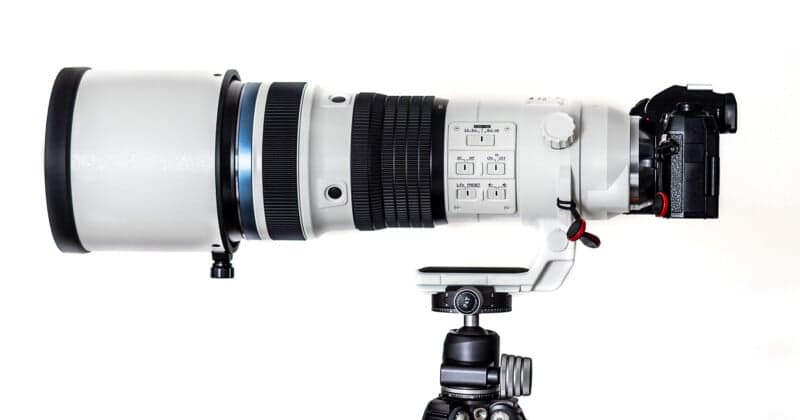
Photography has everything to do with light. Therefore, the more we know how it behaves and interacts with our equipment, the greater the chance of getting a successful photo." Ivor Rackham wrote those lines for PetaPixel, and they land with the weight of something obvious that somehow still gets overlooked. Most photographers think about light in terms of golden hour, harsh midday sun, or a well-placed reflector. Far fewer think about what happens to light in the 50 or 100 milliseconds after it enters the front element of their lens. That journey, measured in fractions of a meter but governed by some of the most elegant physics in the natural world, determines everything from corner sharpness to color fringing to whether that $2,000 prime was worth the credit card bill.
Refraction: The physics behind every element in your kit
The bending of light as it moves through your lens has a name: refraction. It happens whenever light crosses from one medium into another, and your lens uses it deliberately, bending incoming rays so they converge at a precise point on the sensor or film. Every optical device humans have ever built, from eyeglasses to telescopes to the 24-70mm f/2.8 sitting in your bag, relies on this one phenomenon.
The everyday version most people have seen is a spoon in a glass of water. The submerged portion appears shifted or bent, not because the spoon changed shape, but because light travels at different speeds in different media. The moment it crosses the boundary between air and water, it slows down, and that change in speed causes it to change direction. Lens designers harness that same principle, engineering the exact curvature and material composition of each glass element to steer light exactly where they need it to go.
The speed numbers involved are worth sitting with for a moment. In a vacuum, light travels at 299,792,458 meters per second. In air, it is 89,911 m/s slower, a difference so small relative to the total that light in air behaves almost identically to light in space. Water is a far more dramatic case: it slows light by a further 74,702,547 m/s, bringing it down to 225,000,000 m/s. Glass slows it more still. In low-refractive-index glass, light travels at around 200,000,000 m/s. In high-refractive-index glass, that figure drops to 158,000,000 m/s, a speed the research describes as roughly 52.7% slower than in a vacuum. The refractive index of a glass type is essentially a measure of how dramatically it bends light, and higher-index glass bends it more sharply, which is why it appears in specific elements designed to handle challenging optical corrections.
What happens inside your lens
Your lens is not a single piece of glass. It is, as Rackham describes it, "a complex array of individual elements" working in concert to collect light and focus it on the sensor or film. A modern zoom might contain 15 or more separate elements arranged in groups. A fast prime typically has fewer, but each one is precisely calculated and positioned.
The problem, and it is a problem that every lens designer has to make peace with, is this: "Every time light passes through an element, there is a loss or distortion of the light." Some of that loss is literal, light absorbed by the glass or scattered at the air-to-glass boundary. Some of it is distortion, slight errors in how different wavelengths of light bend at different angles, or how rays entering the lens at different angles from the optical axis don't quite converge at the same point. These are the optical aberrations that show up on MTF charts and in pixel-peeping comparisons: chromatic aberration, spherical aberration, coma, field curvature, distortion.
Here is the trap that makes lens design genuinely difficult: "lens designs are a compromise. While intended to address issues, each corrective measure introduces another attribute that is, most often, unwanted." Add an element to correct chromatic aberration, and you may introduce a small amount of spherical aberration. Curve a surface more aggressively to sharpen the corners, and you might introduce distortion at the center. Every decision is a negotiation between competing optical behaviors, and the final product is always a carefully managed set of tradeoffs rather than a perfect solution.

Why you pay more and what you actually get
"If you look at the cost of lenses, they vary enormously. Generally, the more you pay, the better the lens's optical performance. So, what is the difference in performance down to?" Rackham poses that question as the entry point into the optical discussion, and the answer flows directly from everything above.
Higher-end lenses use glass formulations with tightly controlled refractive indices, allowing designers to correct aberrations more precisely without stacking in extra corrective elements that would introduce their own problems. They use specialized glass types, think extra-low dispersion elements that keep different wavelengths of light more tightly grouped through the element, reducing chromatic fringing at the sensor. They apply multi-layer anti-reflection coatings to each air-to-glass surface, reducing the light scatter and contrast loss that accumulates every time light crosses a boundary. The mechanical tolerances are tighter, the quality control is more stringent, and the result is a lens where "for light to reach your sensor with minimal error," fewer of those hurdles trip it up along the way.
Budget lenses work the same physics with lower-grade materials, simpler element counts, and less precise manufacturing. The aberrations are larger, the coatings thinner or absent, and the compromises more visible, especially wide open and in the corners.
The software factor that changes the equation
One genuinely important development worth understanding is how far computational correction has shifted the cost-to-quality calculus. As Rackham notes, "even if you cannot afford the highest-quality lenses, recent improvements in some software can yield far better results from lower-quality glass than was once possible." Camera manufacturers embed lens correction profiles that account for the known distortion, vignetting, and chromatic aberration signatures of specific lenses, correcting them in-camera or at the raw processing stage. Third-party software takes this further, with AI-driven sharpening and aberration correction tools that can recover meaningful detail from optically compromised glass.
This does not mean all lenses are equal now that software can patch the gaps. Optical light loss, scatter, and low contrast from poor coatings cannot be fully reconstructed after the fact. But for photographers working within a real budget, the gap between what they can afford and what they might ideally want has narrowed considerably. The newest lens technologies and improved optical designs are pushing quality upward at every price tier, and software is pulling the floor upward at the same time.
The physics of light moving through glass at 158,000,000 m/s has not changed since the first camera lens was ground. What has changed is how precisely designers can work with those physics, and how much software can compensate when the glass falls short. Understanding that process, from refraction in a water glass all the way to the multi-element compromise sitting on your camera body, is what turns lens shopping from guesswork into something closer to informed decision-making.
Know something we missed? Have a correction or additional information?
Submit a Tip

