How to Get Started With Retro Film Photography in a Digital Age
Film photography sales have surged 127% since 2020, and getting started is easier than you think — here's exactly how to pick a camera, choose your first film stock, and actually shoot.
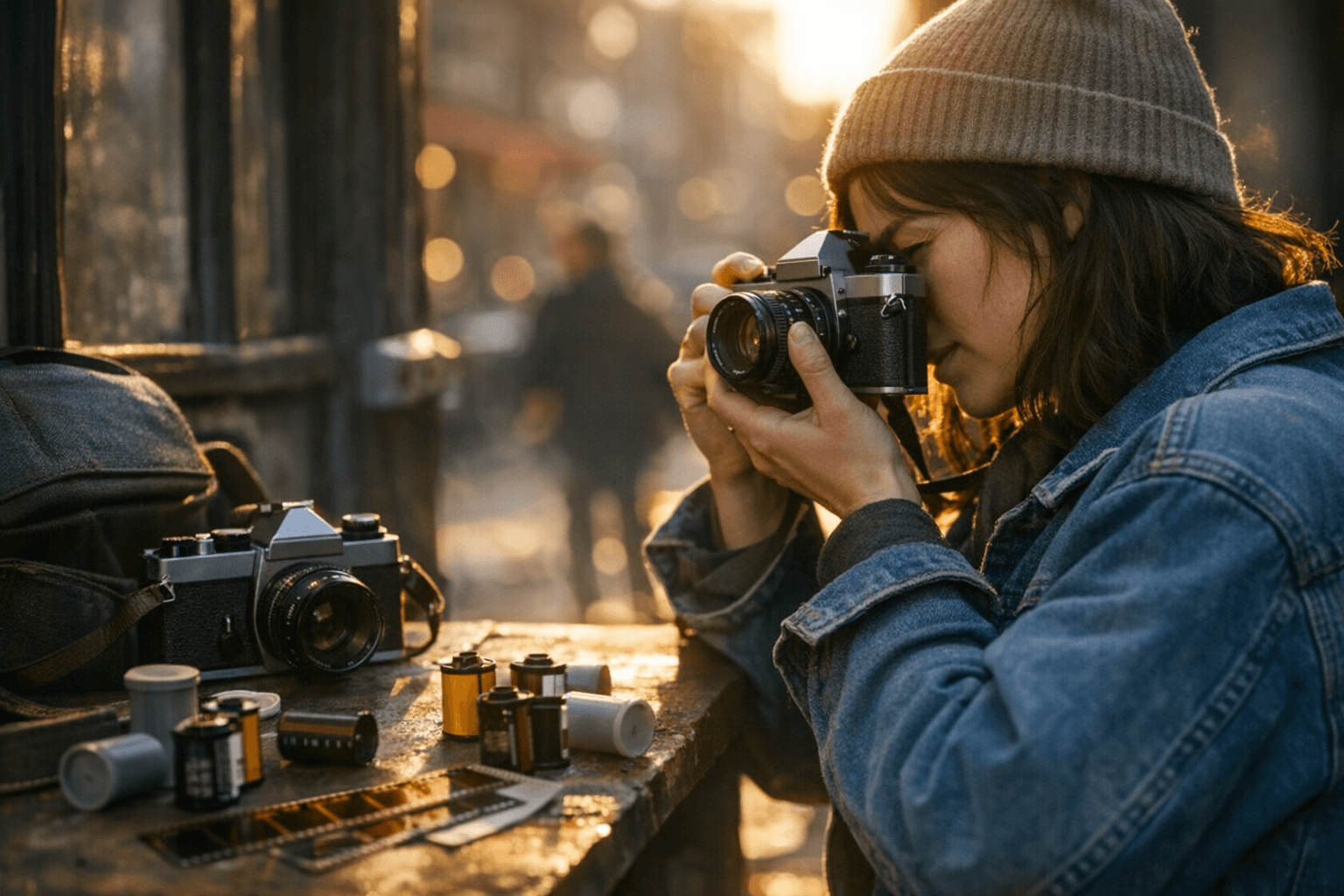
Why the analog revival is the real deal
Film photography sales have increased by 127% since 2020, with 2026 tracking as the strongest year for wholesale film demand on record. That number isn't driven by nostalgia alone. Gen Z photographers are deliberately picking up 35mm cameras on college campuses, camera shops are dusting off decades-old inventory to meet demand, and manufacturers like Kodak, who filed for bankruptcy as recently as 2012, have leaned fully back into production, re-releasing discontinued stocks and introducing Kodak Gold 200 in a larger format that the newer generation of photographers specifically demanded. Digital fatigue is real: in an era where smartphone cameras shoot 4K and AI can retouch a face beyond recognition, more photographers are actively seeking the constraints and unpredictability that film imposes. The appeal mirrors why vinyl outlasted CDs; it's the aesthetic, the tactile process, and the intentionality.
If you've been curious about jumping in, the barrier is lower than it looks. Here's how to approach it.
Choosing your first camera
The single most important decision is matching the camera format to your patience level and budget. There are three main entry points: instant cameras, point-and-shoots, and 35mm SLRs.
*Instant cameras* are the most immediately satisfying. The Polaroid Now is the modern flagship from a brand synonymous with the format, while Fujifilm's Instax line, including the widely gifted Instax Mini 12, delivers palm-sized prints within seconds of shooting. Hybrid instant cameras have also emerged, combining retro print appeal with smartphone connectivity, so you can review a digital copy while still getting a physical print. The tradeoff is cost per shot: instant film packs are expensive relative to a roll of 35mm.
*Point-and-shoot 35mm cameras* are the sweet spot for most beginners. The Olympus Stylus (also known as the Mju II) is consistently praised for its compact body and exceptionally sharp optics. The Canon Sure Shot shares similar praise for simplicity and lens quality. The Nikon L35AF is worth noting if you find the Olympus prices have climbed beyond your budget. One honest caveat: the electronics on cameras like the Mju II are aging, and the lens gaskets can deteriorate over time, so buying from a reputable seller who has tested the camera is worth the extra few dollars.
*35mm SLRs* give you room to grow. The Canon AE-1 Program, released in 1979, remains one of the most recognizable beginner SLRs ever made, and used copies are plentiful. The Nikon F100 is a step up in capability, compatible with modern Nikon lenses including autofocus glass, making it a genuine long-term investment. The Pentax K1000 and Nikon FE2 are also frequently recommended for photographers who want to learn manual controls properly. If your budget is tight and you simply want to feel what shooting film is like before committing to a camera body, a Kodak Ektar H35N or a standard disposable camera is a perfectly legitimate starting point.
Picking your first film stock
Film stock is not a one-size-fits-all decision, but a few choices dominate the beginner conversation for good reason.
For color film, Kodak Portra 400 is the near-universal recommendation. At ISO 400, it handles a wide range of lighting conditions, delivers famously soft and natural skin tones, and is forgiving enough that slight exposure errors rarely ruin a shot. A useful technique: many experienced shooters rate Portra 400 at ISO 200 rather than box speed, which produces slightly lighter tones and reduces visible grain. Kodak Gold 200 is a more affordable everyday option with vivid, low-contrast colors. Fujifilm Superia 400 offers a vibrant, punchy alternative and is typically easier to find in stores.
For black and white, Ilford HP5+ at ISO 400 is considered one of the most versatile films available, well-suited to street photography and portraiture alike. Kodak Tri-X 400, a stock with roots going back decades, is prized for its contrast and character, and is the kind of film that shows up on professional sets; HBO's Euphoria shot its entire second season on Kodak film.
For slide or transparency film, Kodak Ektachrome E100 delivers bold, detailed colors, though it is less forgiving of exposure errors and costs more to develop. Save it for once you're comfortable with the basics.
Understanding light and the Sunny 16 rule
One of the first things film forces you to reckon with is exposure, because you can't immediately review a shot and adjust. The Sunny 16 Rule is the foundational shortcut: on a bright, sunny day, set your aperture to f/16 and your shutter speed to the closest match to your film's ISO. Shooting ISO 400 film? Set 1/400s at f/16. From there, you adjust for shade, overcast skies, or indoor light by opening the aperture or slowing the shutter. Most point-and-shoots and beginner SLRs handle metering automatically, but understanding the underlying logic makes you a more deliberate shooter and helps you diagnose problems when a roll comes back darker or lighter than expected.
Getting your film developed and scanned
Finishing a roll is an exercise in delayed gratification, and that's part of the appeal. Once you've shot through a roll, you have two practical routes: a local film lab, if one exists in your city, or a mail-in lab. Both typically offer C-41 processing for standard color negative film, which is the most common development chemistry. Development and scanning fees are a real ongoing cost of shooting film; factoring them into your per-roll budget before you start is worth doing.
When ordering scans, ask for high-resolution digital files if you plan to share images online or print larger sizes. Many labs offer basic scans as a default, which are fine for web sharing but limited if you want to print an image at any significant size.
Setting realistic expectations
Film photography sales have increased by 127% since 2020, with 2026 showing the strongest wholesale demand yet. The community is larger and better-resourced than at any point in recent memory, which means forums, local clubs, and YouTube channels dedicated to helping new shooters troubleshoot their first rolls are genuinely abundant. Kodak, who filed for bankruptcy in 2012, has leaned fully into this development through the re-release of previously discontinued films and introduced new film stocks as newer generation photographers demanded them.
The first roll you shoot will almost certainly have surprises, and not all of them will be pleasant. Light leaks, blown highlights, frames lost to shaky hands at slow shutter speeds: these are not failures, they're the curriculum. What film teaches faster than almost any other medium is compositional discipline, because scarcity drives composition; young photographers choosing 35mm deliberately embrace the constraints of film, creating a renaissance that has film manufacturers scrambling to meet demand and camera shops dusting off decades-old inventory.
The goal isn't to replicate what a phone or mirrorless camera does. It's to rediscover what photography feels like when the process itself has weight.
Know something we missed? Have a correction or additional information?
Submit a Tip

