Inside the ultra-minimalist Sigma BF, a teardown reveals hidden complexity
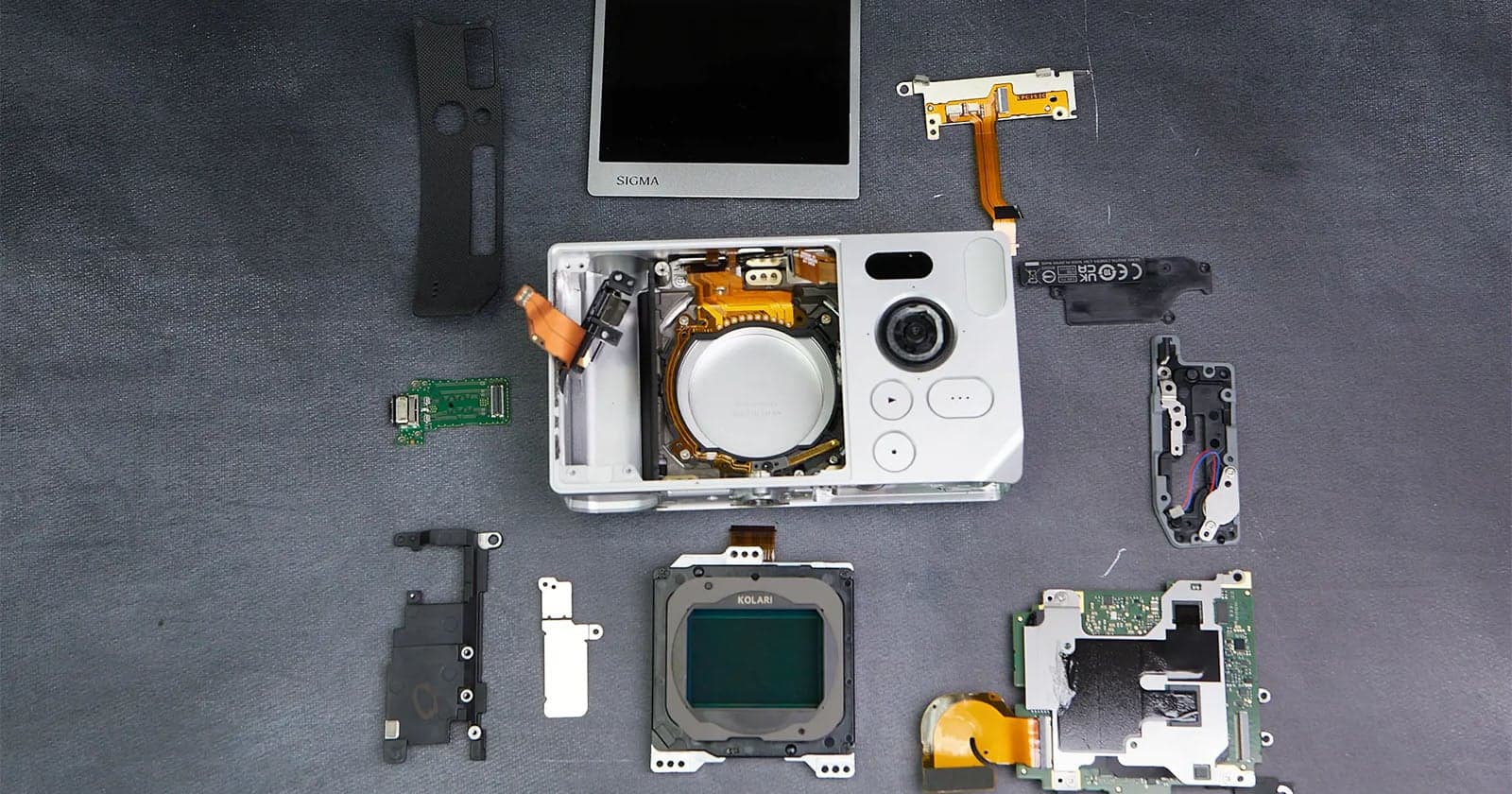
Sigma’s BF looks stripped to the bone, but the teardown shows a body packed with boards, cables, and hidden fasteners. The design sharpens shooting while making repair and service far less forgiving.
Inside the Sigma BF’s minimalist shell
The Sigma BF is one of those cameras that looks almost too pure to be a real working tool, until you see what is hiding inside it. The teardown turns the camera’s clean, architectural exterior into a very practical story about handling, service, and the price of radical simplicity in day-to-day use.

A body built to disappear in use
Sigma’s pitch for the BF is straightforward: strip away distraction so the photographer stays focused on the image, not the body. That idea is not just a styling exercise. The camera is milled from a single block of aluminum, and Sigma says that process limits output to about nine units per day, with roughly seven hours needed to machine one body. That level of effort explains why the BF feels less like a commodity mirrorless camera and more like a carefully engineered object with a very deliberate purpose.
For photographers, that philosophy changes the handling story in a real way. The BF’s minimalism is not about adding controls or bells and whistles, it is about removing visual and tactile noise. In practice, that can make the camera feel calm and uncluttered in hand, especially for shooters who want the body to get out of the way once they are working. The upside is obvious: a design that encourages a slower, more intentional relationship with the frame. The tradeoff is equally obvious: if you prefer a body packed with quick-access controls and obvious service access, the BF is asking you to adapt to its priorities.
The clean exterior hides a dense interior
Kolari Vision’s disassembly shows that the BF is far more complex than its surface suggests. Under the polished simplicity sits a layered construction built from multiple printed circuit boards, ribbon cables, brackets, and hidden fasteners. Even the places you would expect to be straightforward are not: screws are concealed beneath the rubberized bottom grip and under the scroll wheel, which is a clear sign that the body was assembled for compact integration rather than easy opening.
That matters because it reframes the camera’s minimalist look. The BF is not minimal because it is empty, but because the engineering has been buried deep inside the chassis. For day-to-day shooting, that kind of integration can help Sigma keep the body compact and visually clean, but it also means the camera is tightly committed to its design choices. Once a body is this densely packaged, everything from access to components to basic disassembly becomes a more careful, more specialized job.
What the teardown says about durability
A single-block aluminum body signals a serious structural approach, and that should matter to anyone thinking about long-term ownership. Metal construction and tight integration can give a camera a very solid, monolithic feel, the kind of build that suggests resistance to flex and a high level of manufacturing precision. That is part of the BF’s appeal: it feels like a product designed to endure regular use without looking or feeling flimsy.
At the same time, durability in the field is not the same thing as durability in service. A body can be physically robust and still be difficult to work on if the design hides fasteners and relies on adhesive-heavy assembly. The BF appears to live in that tension. It looks built to be carried, used, and admired, but not necessarily to be casually opened up, adjusted, or repaired without care.
Repairability is where the minimalist idea gets expensive
The most revealing part of the teardown may be the LCD. It can be removed, but only with controlled heat because of the adhesive holding it in place. That is a small detail with big implications, because it shows how far the BF leans into tight, layered construction. Adhesive and hidden hardware can make a camera feel seamless on the outside, but they also raise the bar for anyone attempting a repair or modification.
For owners, that means basic service is unlikely to feel simple. Accessing internals is not just a matter of removing a few obvious screws and lifting a panel, and the concealed hardware suggests that even routine work may require patience, the right tools, and a steady hand. In practical terms, that makes the BF more dependent on careful handling and less forgiving if something goes wrong. A camera this integrated rewards ownership by design, but it does not invite the kind of quick, user-friendly servicing that some more conventional bodies allow.
What this means for photographers who actually use it
The BF’s engineering choices shape the shooting experience in a very specific way. If you want a camera that removes visual clutter, feels sculpted rather than assembled, and pushes you to think about the photograph instead of the hardware, Sigma has made a convincing case. The body’s aluminum shell, compact integration, and stripped-down identity all reinforce that intent every time you pick it up.
But the teardown also shows what that purity costs. Hidden screws, adhesive-backed components, and a tightly layered interior mean the BF is less about open-ended tinkering and more about committed ownership. It is a camera that asks you to accept a trade: you get a distinct handling experience and a strikingly deliberate design, but you give up some of the easy access and straightforward repairability that many photographers take for granted.
That is why the BF has become such a talking point among experimental shooters, infrared converters, and design-minded users. It is not just a mirrorless camera with a pretty exterior. It is a statement about how far a still camera can go when industrial design is allowed to dominate the conversation, and the teardown makes the central truth impossible to miss: the simplicity is real, but it is built on top of a great deal of hidden complexity.
This article was produced by Prism’s automated news system from verified source data, official records, and press releases, then run through automated quality and moderation checks before publishing. The system is built and supervised by the people who set the standards it runs under. Read our full AI policy.
Did this article answer your question?