Madrid Disputes Cultural Future of Building Made Famous by Robert Capa
The International Center of Photography says it will not authorize use of Robert Capa's name or images at the Madrid building made famous by his 1936 Civil War photograph.
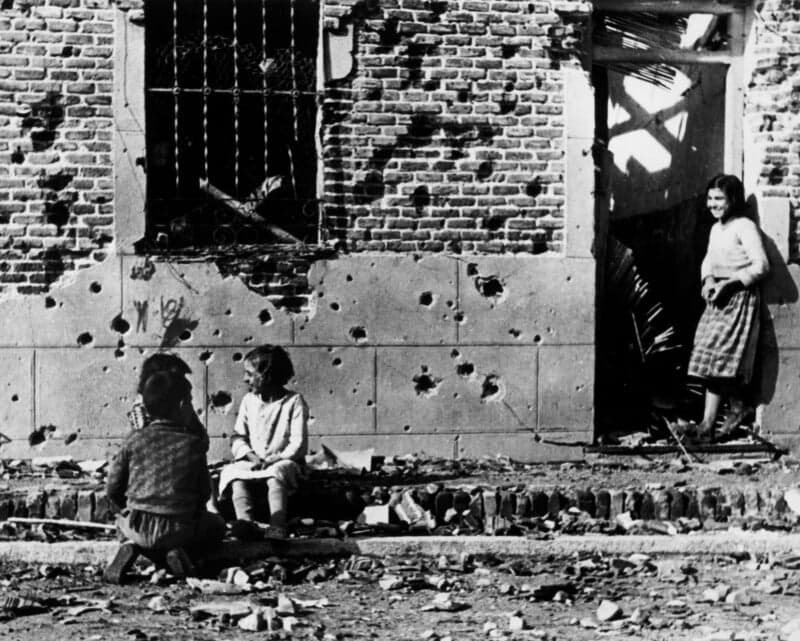
The shrapnel scars are still visible on the facade of 10 Peironcely Street in Madrid. Nearly 90 years after Robert Capa photographed children playing in front of that bullet-pocked brick building in the aftermath of a Civil War bombing, the address has become the flashpoint for a bitter argument over who controls a photographer's legacy and what a famous image actually owes the place it was made.
The International Center of Photography, the organization charged with managing Capa's legacy, has issued a categorical refusal to let Madrid's city council trade on the photographer's name for whatever the building becomes next. The ICP stated it will "not authorize, endorse, or permit the use of Robert Capa's name, image, or photographic legacy for any center, exhibition, or project located at Peironcely 10." In place of the council's vision, the ICP is pushing for the Save Peironcely 10 platform, a local campaign group that has fought for years to preserve the building, to spearhead any project there.
Capa visited the address in late 1936, in the aftermath of a bombing by Italian and German fascist forces supporting Spain's dictator Francisco Franco during the Civil War. His photograph shows three children near the heavily damaged building, two sitting on the curb among debris and one standing in a doorway, all in modest clothing, the facade behind them riddled with shrapnel marks. The Guardian's caption for the image puts it plainly: "Children, unaware of the horror of war, play in front of the shrapnel-hit facade of No 10 Peironcely street, Madrid in 1936."
Remarkably, the building is still standing. In recent decades it became home to families living in cramped and squalid conditions, and a long campaign by local activists pushed both to rehouse those tenants and to preserve the site as a place of historical memory. The tenants have since been moved to better accommodation, leaving the building vacant and contested.
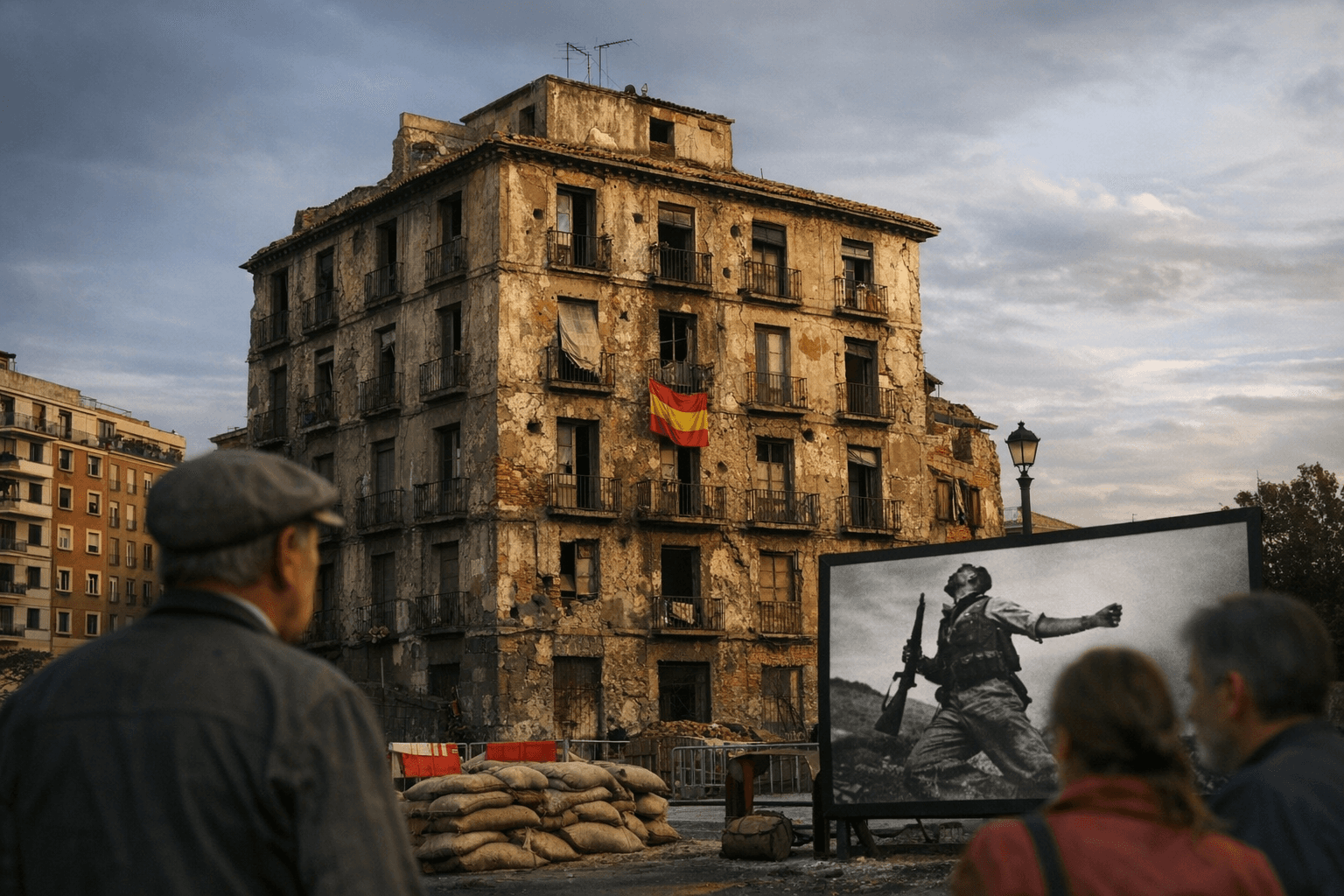
Madrid's previous leftwing city council had planned to convert the site into a cultural hub dedicated to Capa's work and a museum commemorating the bombs dropped by Nazi Germany and Mussolini's Italy during the Civil War. The current conservative administration abandoned those plans entirely. In their place, the council announced a new vision, stating in an official release that "the new space aims to become a centre for cultural experimentation, especially for children and young people at risk of social exclusion, offering them tools to develop their creativity and use culture as a vehicle for inclusion, learning, and opportunities." The council added that the centre "will also include a space dedicated to the memory and historical context of the building, which was the setting for the photograph taken by Robert Capa during the Spanish civil war, depicting three children affected by the ravages of the conflict."
The council's position is that while it will respect Capa's legacy, the purpose of the new centre matters more than what the facility is named. That framing has done little to satisfy the ICP or the campaigners who spent years advocating for a Capa-centred memorial, and who the Guardian reports have been sidelined under the current administration.
What remains unresolved is whether the ICP's prohibition carries legal weight or amounts to a public policy stance, and whether the council intends to proceed regardless. The rights landscape around using a photographer's name and images to brand a publicly funded cultural institution is murky territory, and neither the full text of the ICP's statement nor the council's detailed project plan, timeline, or budget have been made public. Save Peironcely 10 has not yet indicated whether it accepts the ICP's call for it to lead the project. The facade on Peironcely Street still bears its scars. What gets built behind it is far from settled.
Know something we missed? Have a correction or additional information?
Submit a Tip

