National Geographic Engineer Suspends 170-Pound Tire With Bioengineered Supersilk
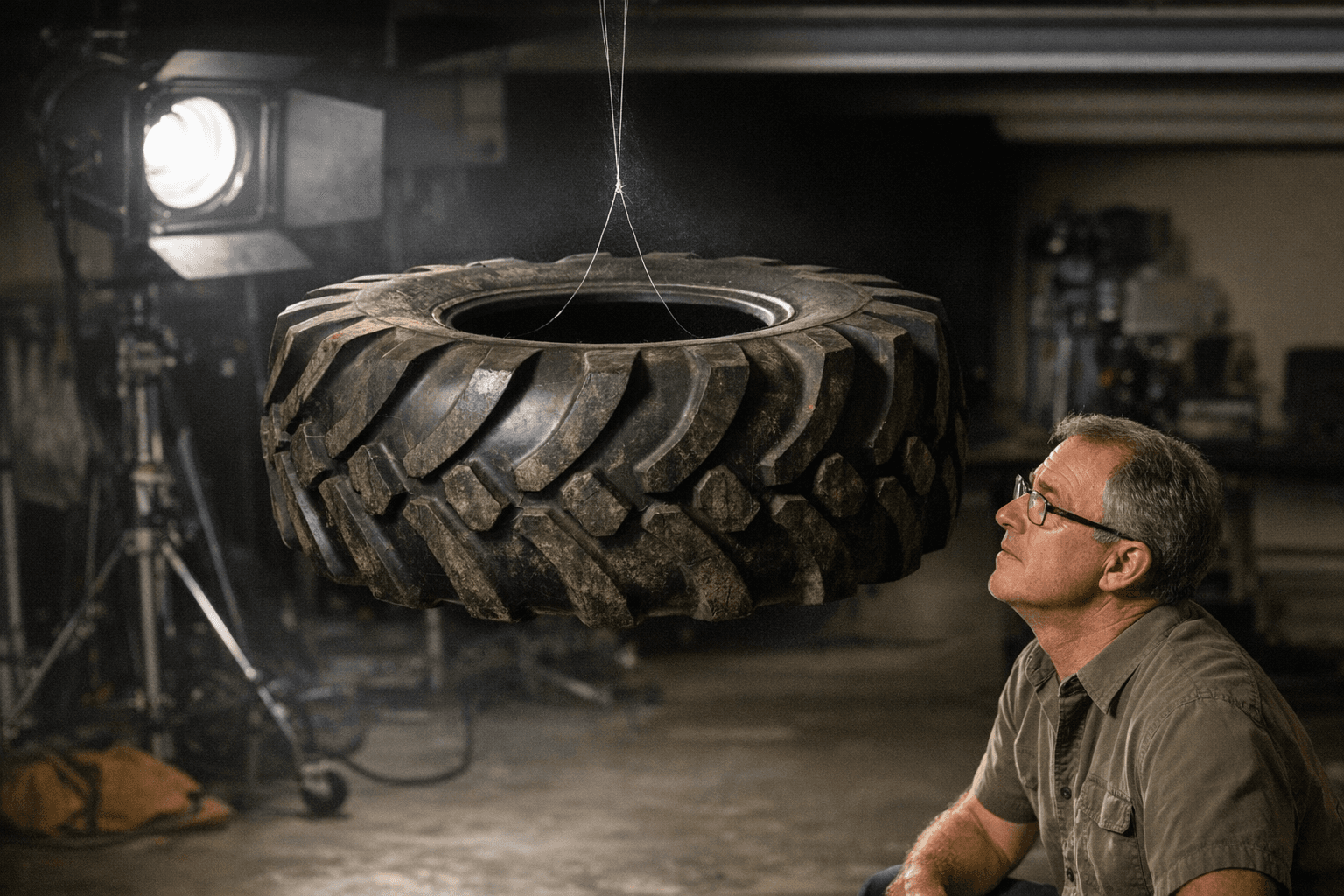
A 0.35-ounce loop of bioengineered silk held a 170-pound tractor tire aloft in National Geographic's studio, photographed by Mark Thiessen for the March 2026 issue.
A borrowed tractor tire weighing 170 pounds hung from the ceiling of National Geographic's photo studio, held up by a coil of silk weighing just 0.35 ounces. That image, spanning pages 40 and 41 of the magazine's March 2026 issue, is one of the more quietly extraordinary studio photographs to appear in a major publication recently, and the person who made it physically possible wasn't a photographer.
Photo engineer Eric Flynn rigged the entire setup using a loop of Kraig Biocraft's bioengineered supersilk. The caption puts it plainly: "Supersilk's almost miraculous ability to stretch without breaking gets put to the test in National Geographic's photo studio by photo engineer Eric Flynn, who rigged a 170-pound tractor tire from a 0.35-ounce loop of Kraig Biocraft's silk." Mark Thiessen, a National Geographic staff photographer, shot the resulting image.
The decision to use a tractor tire wasn't arbitrary. Staff photographers Thiessen and Rebecca Hale worked through the options before landing on it. An anvil was rejected early, described as too small to read visually at scale. The tire, borrowed from a local tire shop and rolled directly into the studio, solved both problems at once. "We settled on a large tire because it was the perfect weight, and it looked more impressive than a 200-pound anvil," Flynn explained.
The studio test was designed to give readers a visceral sense of what bioengineered spider silk can actually do. The March 2026 issue's internal feature, titled "Unlocking Nature's Miracle," argues that this material performs as well as its proponents claim, and the magazine leaned on the tire photograph to make that case visually. "To show that bioengineered spider silk is as strong as its champions claim in this issue's feature (Unlocking Nature's Miracle) required something heavy," the magazine explained.
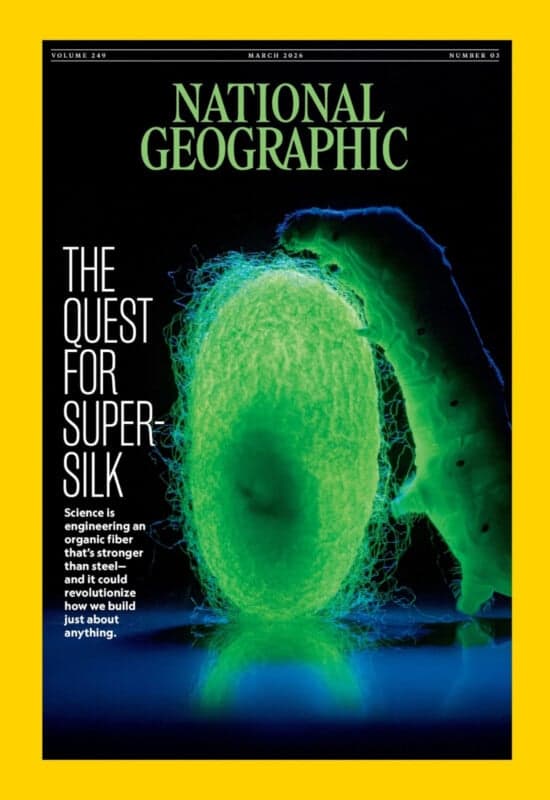
The March 2026 cover reflects the same theme: a microscope close-up of a silkworm and a silk cocoon glowing in blue and green against black, under the headline "The Quest for Super-Silk." Flynn's behind-the-scenes role earning a page-and-a-half spread in a 137-year-old publication built entirely around its photographers is itself a notable shift, one that puts the engineering infrastructure of editorial photography briefly in the foreground.
This article was produced by Prism’s automated news system from verified source data, official records, and press releases, then run through automated quality and moderation checks before publishing. The system is built and supervised by the people who set the standards it runs under. Read our full AI policy.
Did this article answer your question?