Olivia Rodrigo album cover draws plagiarism claims over swing photo comparison
Olivia Rodrigo’s upside-down swing cover set off plagiarism claims, and photographers are now parsing the thin line between homage and visual theft.
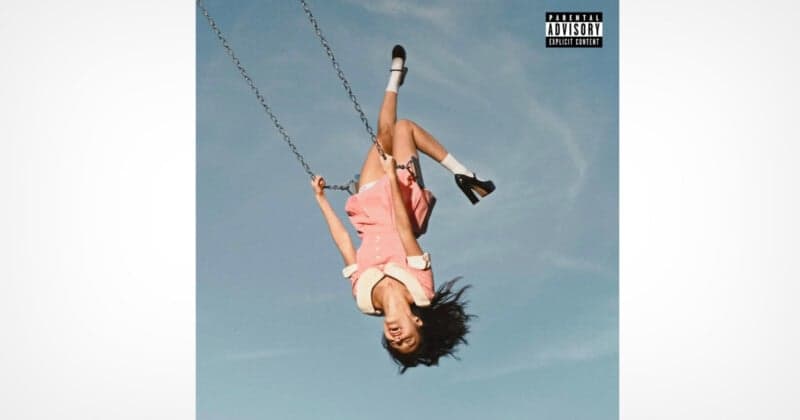
Olivia Rodrigo’s upside-down swing pose, pink outfit and black heels against a blue sky turned her new album artwork into a familiar photography argument fast: when does a reference become a copy? The cover for You Look Pretty Sad for a Girl So in Love, due June 12 from Geffen Records, drew immediate comparisons to Ryan McGinley’s 2010 portrait of M.I.A. on a swing above New York City.
Rodrigo announced the album on April 2 and said she was proud of the record and could not wait for fans to hear it. The image she shared shows her hanging upside down on the swing, with white crew socks and heels visible as the composition flips the body against a clean sky. That simple setup was enough for music fans and photographers to connect it to McGinley’s long-circulating frame, which appeared in The New York Times Magazine on May 30, 2010. Archive references describe that issue as including a cover, two full-page portraits and an eight-page photo portfolio by McGinley.
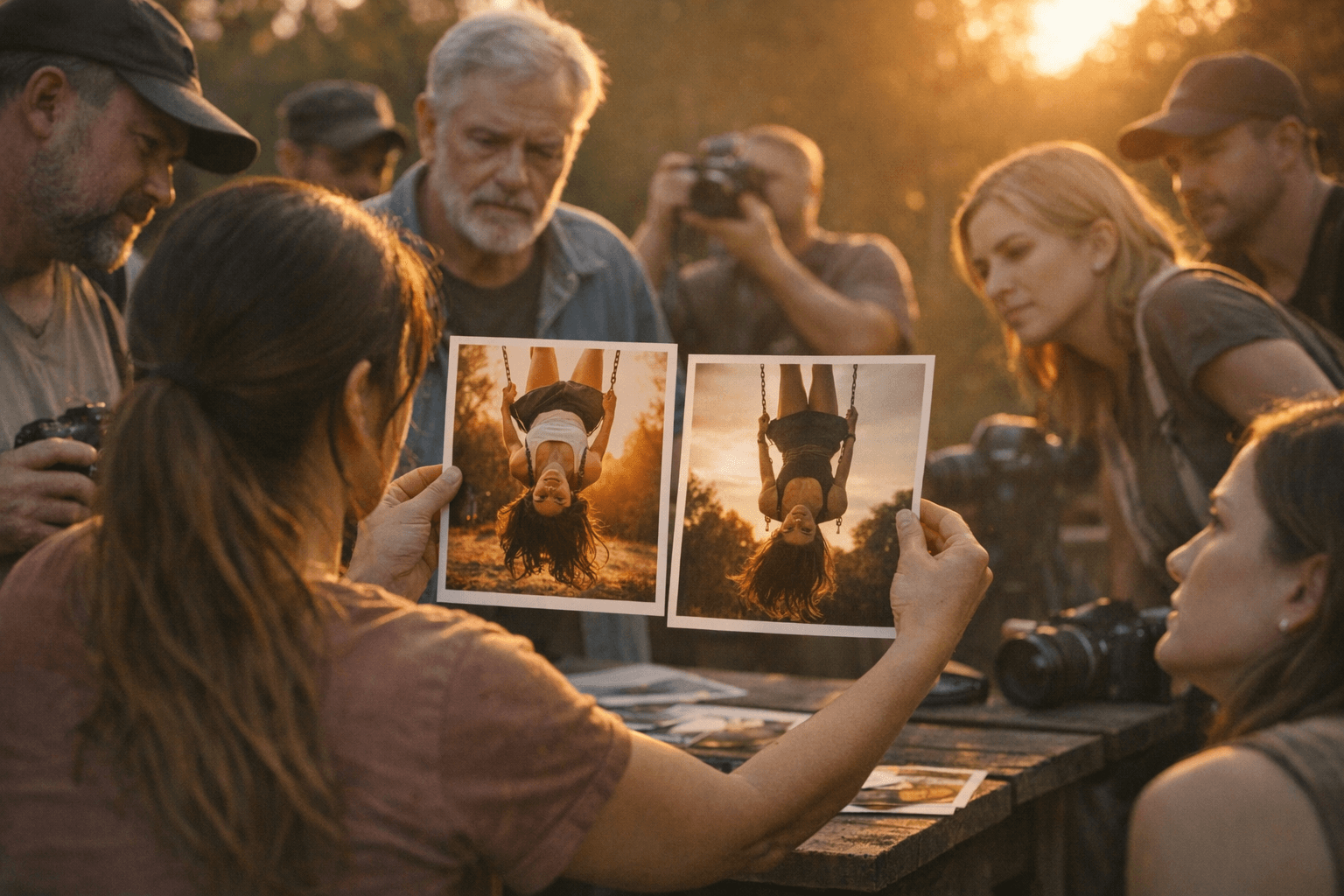
The comparison gained more traction when McGinley reposted the original M.I.A. image on Instagram after Rodrigo’s announcement. Some commentators and fans saw that as a quiet response, while others pointed out that the basic idea of a woman on a swing is much older than either image. Supporters of Rodrigo cited Jean-Honoré Fragonard’s 1767 painting The Swing, which shifts the debate away from the general motif and toward McGinley’s specific framing, color, posture and mood.
That is the practical lesson for photographers. A concept becomes legally or ethically vulnerable when the resemblance is not just thematic but compositional: the same angle, pose, wardrobe cues, setting, palette and emotional tone start lining up too neatly. A swing by itself is not a protected idea. A tightly controlled editorial treatment that carries the same visual DNA as a recognizable predecessor is where the friction begins, especially when a celebrity platform can amplify the likeness instantly.
For commercial work, the safest defense is a clean archive. Keep rough sketches, reference boards, location notes, test frames, contact sheets, RAW files and timestamped selects that show how a concept developed and what changed between inspiration and final execution. Distinctive visual language is still the best safeguard, because once an image enters the culture, the line between influence and imitation can disappear long before anyone agrees on where it should be drawn.
This article was produced by Prism’s automated news system from verified source data, official records, and press releases, then run through automated quality and moderation checks before publishing. The system is built and supervised by the people who set the standards it runs under. Read our full AI policy.
Did this article answer your question?