Pentagon Restricts Photographer Access After Unflattering Hegseth Photos Surface
The Pentagon barred photographers from briefings after Hegseth's staff called published images "unflattering" — reigniting a fierce debate about what photojournalism is actually for.

The Pentagon blocked press photographers from attending multiple briefings on the ongoing war with Iran after staff members of Defense Secretary Pete Hegseth objected to published images they described as "unflattering," setting off a sharp debate about press access and the fundamental purpose of photojournalism.
The ban followed a March 2 briefing in the Pentagon Briefing Room, Hegseth's first appearance there since June 2025. Photographers from Reuters, Getty and The Associated Press were present that day, covering the briefing alongside Hegseth and Joint Chiefs of Staff chairman General Dan Caine. After those images were published, some members of Hegseth's staff were reportedly "miffed" at how the Defense Secretary appeared in the photos.
Pentagon press secretary Kingsley Wilson framed the subsequent restrictions in operational terms, saying in a statement to The Washington Post that the Department of Defense was attempting to "use space in the Pentagon Briefing Room effectively" by permitting "one representative per news outlet if uncredentialed, excluding pool." Wilson added that photographs from the briefings are "immediately released online for the public and press to use" and took a pointed tone toward outlets that objected: "If that hurts the business model for certain news outlets, then they should consider applying for a Pentagon press credential."
For photographers and editors who understand how press images actually work, that framing misses the point entirely. A photojournalist covering a government briefing is not functioning as a portrait photographer or a publicist. Facial expressions freeze mid-sentence, eyes catch awkward light, and the decisive moment of a shutter click does not always land on a composed smile. That is not a flaw in the process; it is the process. The most consequential images in the history of the craft, from the Napalm Girl to the annual winners of the World Press Photo Contest, are rarely flattering in any conventional sense. They are true.
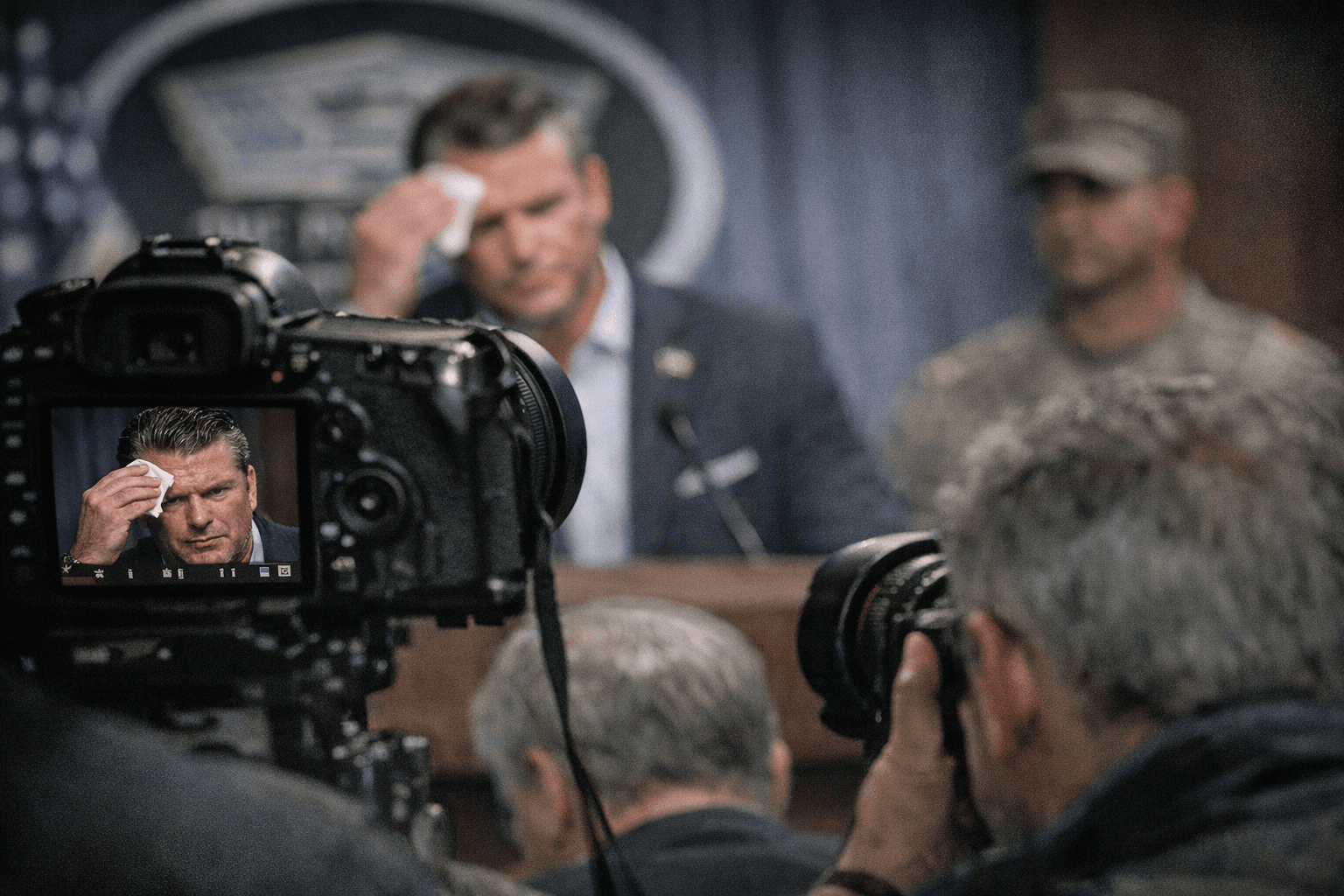
As one former photojournalist who covered the story put it, "In photojournalism, 'best' doesn't mean the most flattering images, but the images that convey the tone and emotions of the event." That same writer observed that a furrowed brow or solemn expression at a briefing on an active war is not an editorial failure. It is an accurate record. "I'm not sure what photographs were allegedly 'unflattering,'" the writer noted, "but the furrowed brow and solemn expressions that I've seen from the event feel far more appropriate for a briefing on the war in Iran than, say, a smiling portrait."
The dispute lands inside a broader pattern of friction between the Defense Department and the press corps. According to The Associated Press, the DoD's relationship with media organizations became notably more contentious under Hegseth, with many mainstream news organizations vacating their Pentagon desks rather than accept Trump administration rules restricting journalists' movements inside the building.
The March 2 restriction, reportedly extended across at least two briefings this month, raises a question that goes beyond any single set of photographs: when the government controls which images reach the public by replacing independent wire photography with its own officially released images, the record of what happened belongs to the institution being photographed, not to the photographers documenting it.
This article was produced by Prism’s automated news system from verified source data, official records, and press releases, then run through automated quality and moderation checks before publishing. The system is built and supervised by the people who set the standards it runs under. Read our full AI policy.
Did this article answer your question?