Photographer adapts 1920s Foth lens to Sony FX3 for cinematic character
A €3 flea-market Foth lens meets a $3,900 Sony FX3, and the result is a practical lesson in when vintage glass earns its keep. The payoff is character, but only after vignetting, missing controls, and adapter gymnastics are solved.
A bargain lens with a very modern problem
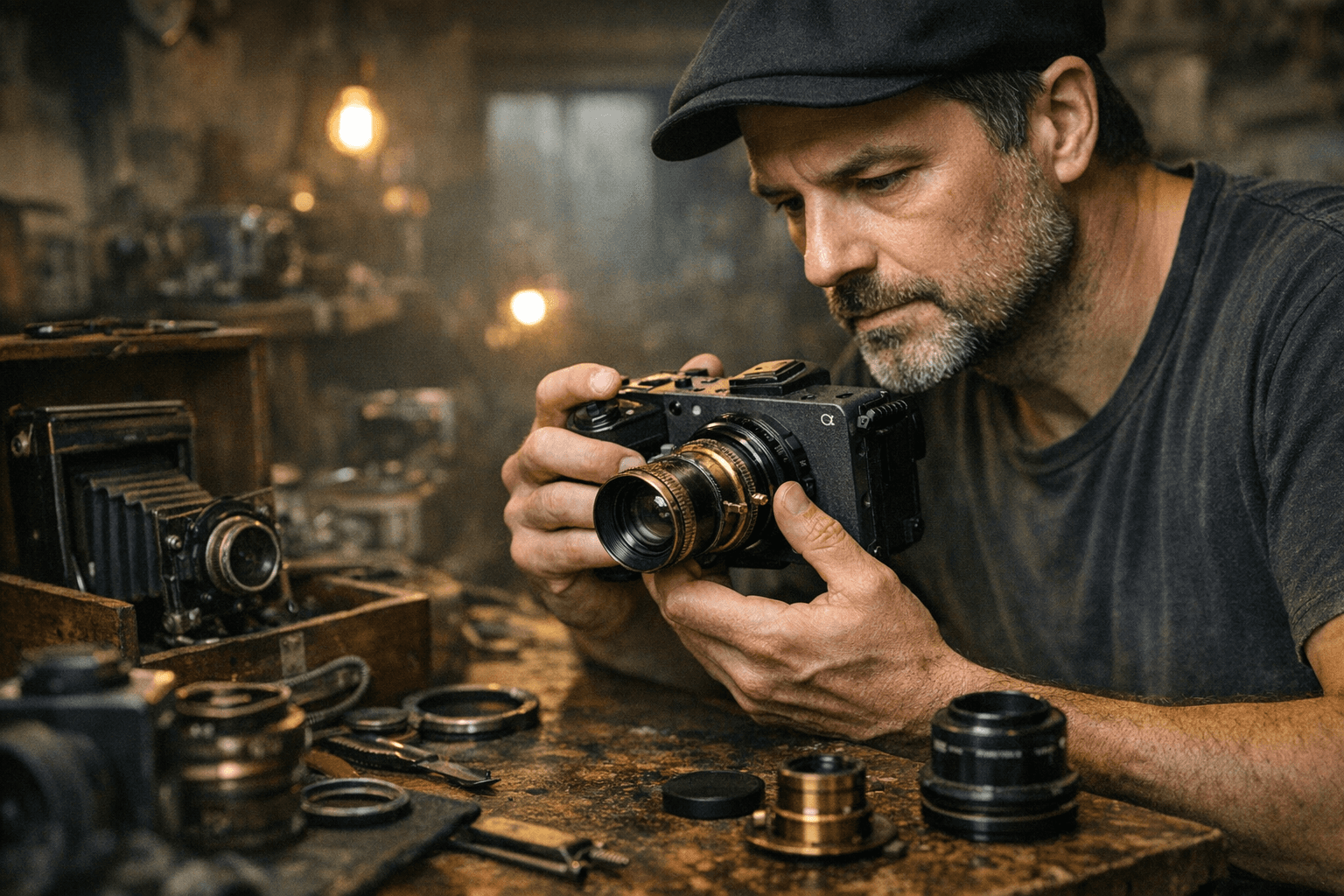
Mathieu Stern’s latest lens experiment starts with a number that feels almost absurd in 2026: €3. That was the flea-market price of a late-1920s Foth 50mm f/2.5, a tiny optic from another era, pressed into service on a Sony FX3 to see whether old glass can deliver the kind of organic image texture that modern lenses often polish away.
That contrast is the whole story. On one side is a near-century-old lens with no focusing mechanism and no adjustable aperture, never meant to live alone on a digital cinema body. On the other is Sony’s full-frame FX3, a compact Cinema Line camera with 4K up to 120p, dual base ISO, S-Cinetone, and a built-in cooling fan, launched at around $3,900. Put together, they create a test case that is as much about taste as it is about technique.
Why the Foth lens still matters
The Foth name carries more history than the bargain price suggests. C.F. Foth & Co. introduced the Derby line around 1930 to 1931 as a low-cost alternative to Leica and Contax cameras, and the original Derby was built around 127 roll film. Camera references describe it as a strut folding viewfinder camera, marketed as one of the smallest cameras in the world, with a focal-plane shutter and 16 exposures on a roll.
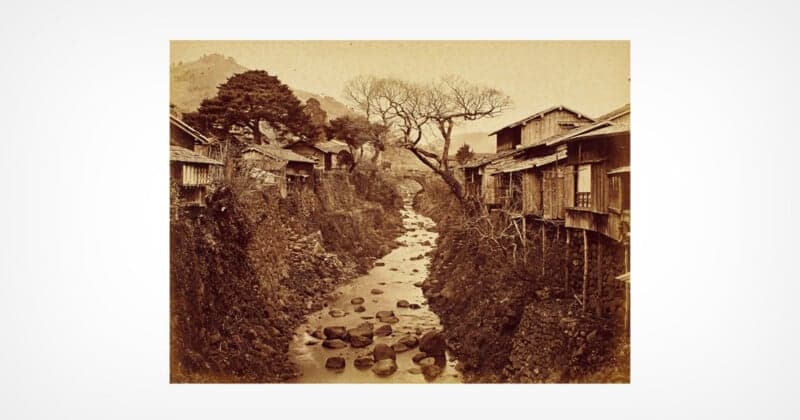
That makes the lens on Stern’s project especially interesting. Historical documentation shows Foth Anastigmat 50mm lenses in different versions, including f/2.5 and f/3.5 examples, and the optic Stern used came from that fast, uncoated era. Those older design choices are exactly what many shooters now chase: gentler edges, flare that blooms instead of disappears, and a rendering that feels less clinically corrected than modern glass.
What vintage character actually gives you
This is the part of the story that matters most for anyone tempted to adapt old lenses. Vintage glass does not just give you “an old look” in some vague aesthetic sense. It can change how highlights break apart, how contrast rolls off, how the frame edges behave, and how flare moves through a scene when the lens catches light at an angle.
That can be a gift if you want footage with a little texture and less digital perfection. Stern’s test is useful because it shows the appeal is not nostalgia for its own sake. The real draw is that old optics can add irregularity and softness in places where modern design tends to clean everything up.
The compromises arrive immediately
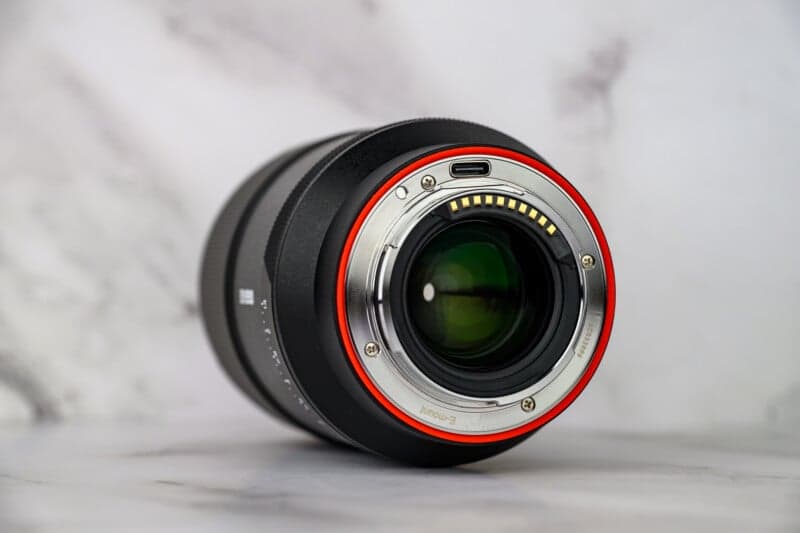
The romantic part ends fast once the lens is mounted. Because the Foth lens was never built to function as a standalone modern lens, Stern had to engineer a usable setup from adapters and work around the fact that the lens is physically tiny. His early attempts led to severe vignetting, a predictable consequence when the lens does not naturally cover the full frame the way a modern optic would.
That is the key tradeoff for readers considering the same kind of project. The image may gain character, but you give up convenience, predictability, and sometimes even coverage. A lens with no built-in focus and no aperture control can become a creative tool only after you accept that the setup will require problem-solving before it ever reaches the camera.
How Stern made the lens usable on the FX3
The turning point in Stern’s rig came when he moved to a macro adapter system with integrated ND filtration. That detail matters because it solved two problems at once: it helped him get the lens into a usable position on the FX3, and it gave him exposure control without sacrificing the frame coverage he needed.
Once that setup was in place, the lens could actually be judged on its image, not just its mechanical frustrations. Stern tested it in a modern 4K workflow on the FX3, asking whether a fragile, nearly 100-year-old design could still deliver in a digital cinema environment. That is the real decision guide hidden inside the experiment: the lens only becomes worthwhile when the mounting solution is stable enough to let the optical signature speak for itself.
What you gain, and what you pay
If you are drawn to adapting vintage glass, this project spells out the bargain in plain terms.
- You gain a distinctive rendering, especially in flare, bokeh, and the way the lens treats edges.
- You may get a softer, more textured image that feels less manufactured than many modern lenses.
- You also inherit vignetting risk, awkward coverage, and the need for adapters that may not be simple or cheap.
- You often lose quick handling, since older lenses can lack normal focusing and aperture controls.
That balance is why old glass has become such a persistent fascination in photo and video communities. It is not just about the age of the lens. It is about whether the quirks are beautiful enough to justify the friction.
Why Stern is the right person to test it
Stern’s project lands differently because it fits the persona he has built over time. He is a Paris-based French photographer and filmmaker whose YouTube channel focuses on weird lenses, photo experiments, and tutorials, so this is not a random stunt but a continuation of a very specific creative practice.
That matters because lens adaptation is often less about gear collecting than about a working curiosity for image-making. Stern approaches old optics the way many filmmakers and photographers do: as tools with personalities. In that frame, the Foth lens is not a curiosity cabinet object, but a usable source of mood.
The practical takeaway for adapting old lenses
The smartest reading of Stern’s FX3 experiment is not that every old lens is better than a modern one. It is that vintage glass can be worth the hassle when you want a look that feels alive, imperfect, and a little unruly. The more specialized the setup, the more the lens becomes a deliberate aesthetic choice rather than a general-purpose replacement.
If you are weighing a similar adaptation, the question is simple: do you want convenience, or do you want character? Stern’s Foth setup shows that character is absolutely available from a lens bought for €3 in a French flea market, but only after you solve the mechanics well enough to let the optics do their work. That is the enduring appeal of old glass on a modern Sony body: not perfection, but personality with a purpose.
This article was produced by Prism’s automated news system from verified source data, official records, and press releases, then run through automated quality and moderation checks before publishing. The system is built and supervised by the people who set the standards it runs under. Read our full AI policy.
Did this article answer your question?