Photographer Builds Tether Studio After Software Frustrations on Set
A Canon 5D Mark IV that would only tether in Lightroom Classic pushed John Barnard to build a $99 Mac app made for set life, not subscriptions.
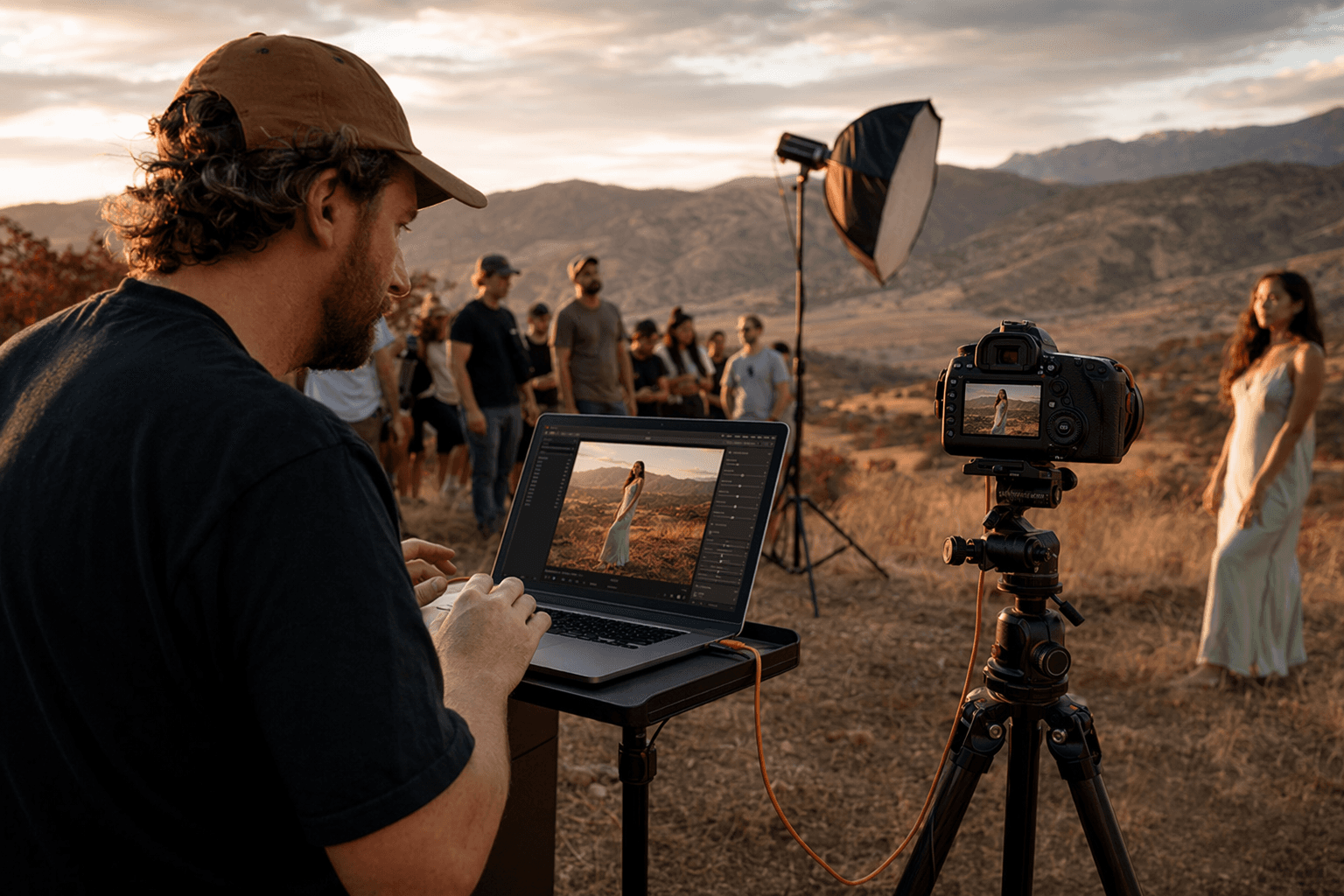
John Barnard’s breaking point came on a set, when he plugged in his Canon 5D Mark IV and discovered it would tether to nothing except Lightroom Classic. For a commercial photographer and retoucher who had spent 15 years buying access to tools he never truly owned, that failure landed as more than a glitch. It became the case for building his own tethering workflow from scratch.
The result is Tether Studio, a macOS app that Barnard is pitching as a one-time, $99 purchase rather than another subscription. The app runs on Apple Silicon and Intel Macs, works offline after activation, and keeps its AI culling engine local instead of sending files to the cloud. Barnard says that matters because photographers need speed, privacy, and control when a client, art director, and camera crew are all waiting on the same machine.
Tether Studio is built around a single idea: keep capture, review, and culling in one place. Barnard’s launch materials say it supports more than 2,900 cameras and includes Smart Cull AI, Art Director Mode, Client View, markup tools, focus stacking, dual backup, IPTC metadata, and shot lists. That puts it squarely in the real-world tethering lane, where photographers are not just pulling files off a card, they are reviewing focus, checking exposure, marking selects, and keeping a set moving.
Barnard’s own background helps explain the product’s shape. Under the name John Sargent Barnard, he describes himself as a photographer, retoucher, and art director, with work for Restoration Hardware, Pottery Barn, Framestore, Logitech, Oracle, and Apple. He has also worked on high-end campaigns for Nike, Apple, Restoration Hardware, and Pottery Barn, which gives the app a clear production pedigree. This is not a side project from someone guessing at studio pain points. It is a tool built by someone who has lived them.
The timing also lands in a tense corner of the photo-software market. Capture One says it still offers both perpetual and subscription licenses, but it raised perpetual-license pricing after March 3, 2025, moved monthly subscription price changes after April 3, 2025, and annual subscription changes after May 1, 2025. Its free Capture One Express product was deprecated starting January 30, 2024 and was no longer available after February 12, 2024, a change that fed broader frustration among Sony users and later drew class-action scrutiny. Barnard’s pitch is aimed directly at that mood.
Tether Studio signals a larger demand that keeps resurfacing in professional photography: software that feels like a tool, not a lease. In a field where tethering has to work the first time, every time, Barnard is betting that photographers will pay once for stability, local control, and a workflow that matches the way they actually shoot.
This article was produced by Prism’s automated news system from verified source data, official records, and press releases, then run through automated quality and moderation checks before publishing. The system is built and supervised by the people who set the standards it runs under. Read our full AI policy.
Did this article answer your question?