Photographer Mahtab Hussain launches 90-day road trip to document Muslim America
Mahtab Hussain is taking Muslims in America on a 90-day road trip, expanding a six-city portrait archive into a national visual self-portrait.
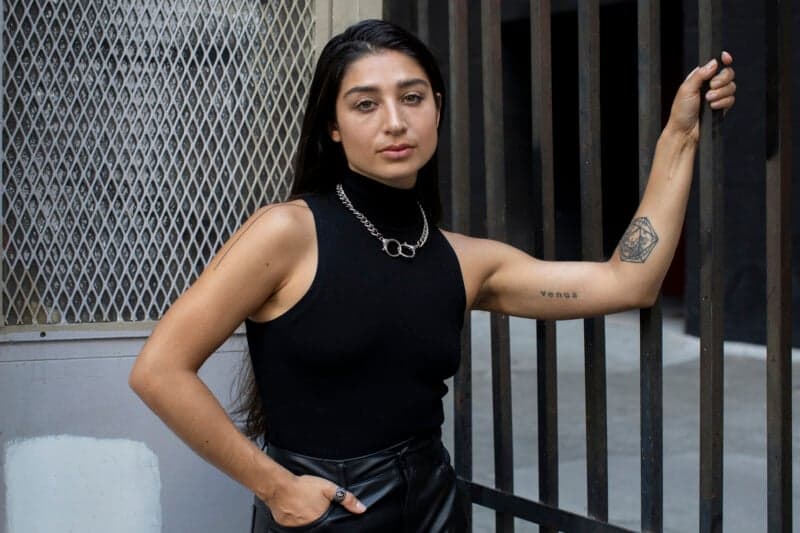
Mahtab Hussain is turning Muslims in America into a 90-day road trip, moving the project from a handful of cities into a wider portrait map of Muslim life across the United States. The artist-photographer began the series in 2021, around the 20th anniversary of 9/11, and the next stretch is designed to do more than add bodies to the frame: it is meant to build a national-scale image of a community that has too often been flattened by politics and media shorthand.
The project already has a clear photographic grammar. Hussain’s website says the work produced so far spans Toronto, New York, Los Angeles, Baltimore and Syracuse, NY, with each portrait paired with a recorded conversation. That pairing matters. It shifts the sitter from subject to collaborator, and it gives the portraits a second layer of meaning beyond expression, clothing, backdrop or gesture. Hussain’s events page says the series responds to the poor visibility of Muslims in U.S. art and media, and Aperture has described the work as reflecting the diversity of what it means to be an American Muslim today.
The new road trip, funded through Kickstarter, raises the stakes on both access and sequencing. A 90-day itinerary gives Hussain room to move between regions, neighborhoods and generations, and to make the edits that a national project needs if it is going to hold together as a book, exhibition or online body of work. It also puts community support at the center of production. That is a practical choice as much as a symbolic one: the audience is not only funding the pictures, it is helping determine whether the archive can grow into the larger project Hussain has set out to make.
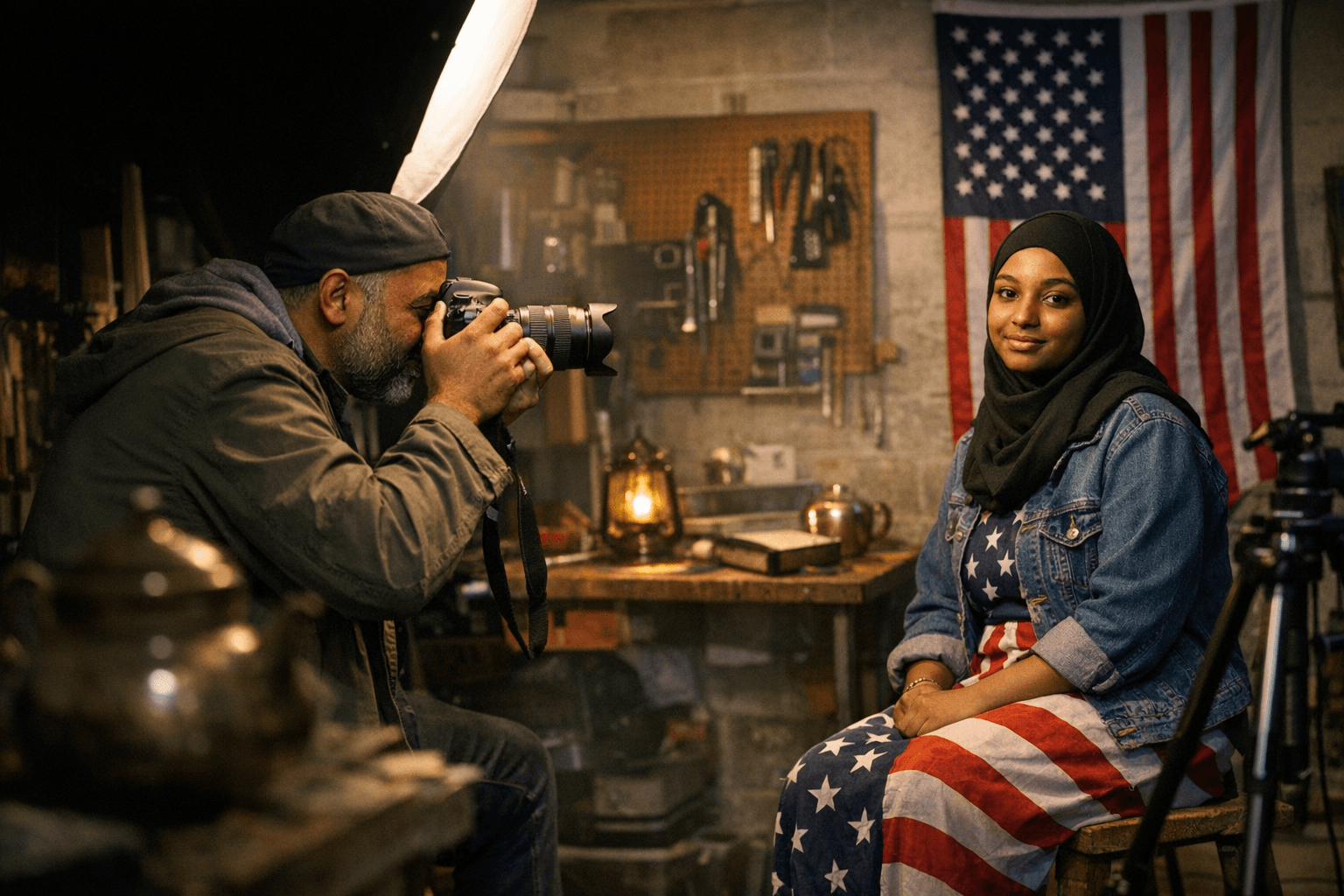
The scale of that ambition makes sense in light of the numbers. Pew Research Center’s 2023–24 Religious Landscape Study surveyed more than 35,000 Americans, and its 2025 summary found that no racial or ethnic group forms a majority among U.S. Muslims. Roughly 30% are White, 30% Asian, 20% Black, 11% Hispanic and 8% identify with another race or with more than one race. Pew also says U.S. Muslims tend to be younger and more highly educated than other Americans. For a photographer, those figures are a reminder that this is not one visual story waiting for one canonical image.
The discrimination context is part of the frame too. An ISPU poll in 2025 found 63% of Muslims reported religious discrimination in the prior year, and Pew previously found that about three-quarters of American Muslim adults said there is a lot of discrimination against Muslims in the U.S. Hussain’s project is answering that reality with sustained, human-scale portraiture. ArtRage has said the Syracuse work will be published as an artist book and a touring museum exhibition in 2026, which suggests the road trip is not a detour but the next stage of a larger visual argument.
This article was produced by Prism’s automated news system from verified source data, official records, and press releases, then run through automated quality and moderation checks before publishing. The system is built and supervised by the people who set the standards it runs under. Read our full AI policy.
Did this article answer your question?