Photographer Spends Four Years Documenting Kyrgyz Shepherds Facing Wolves
Luke Oppenheimer turned a one-month wolf assignment into four years in central Kyrgyzstan, where shepherds lose dozens of horses, yaks, and sheep each winter.
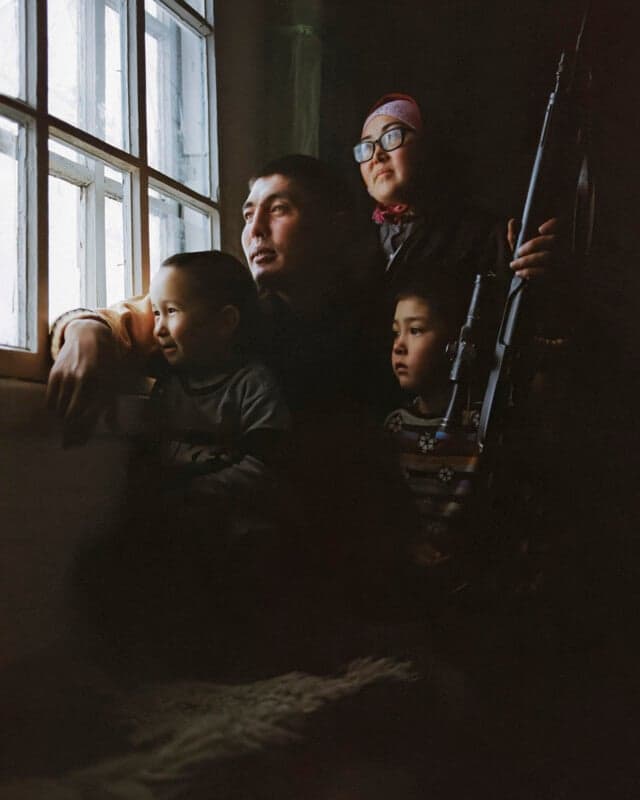
A one-month wolf assignment became a four-year immersion for Luke Oppenheimer, who traveled to the Tien Shan mountains of central Kyrgyzstan in the winter of 2021 and kept returning to a remote shepherding village long after the original deadline had passed. In that part of the country, wolves were not an abstract conservation issue. Each year they killed dozens of horses, roughly the same number of yaks, and anywhere from 50 to 100 sheep, while men in the village spent the harsh winter months hunting and guarding their herds.
That long stay changed the work. Oppenheimer’s Ottuk became less a wildlife story than a portrait of daily survival, with the landscape, the weather, and the predators folded into the rhythm of family life. The photographs moved past a clean wolves-versus-villagers frame and into something messier and more revealing: hospitality, loyalty, duty to family, and the strain of trying to preserve a livelihood that remained vulnerable to both nature and economics. Oppenheimer was eventually accepted into the community and even adopted by one of the families, the kind of trust that cannot be rushed and the kind of access a short reporting trip rarely earns.
That credibility matters because Oppenheimer came to the story with the right kind of background. He is a writer and documentary photographer from rural Oklahoma with experience in agroforestry and sustainable farming, and he earned a degree in Latin American History from the University of Missouri-Kansas City before spending years working across South America. For a project like this, that mix of rural familiarity and long-form patience showed. The pictures feel lived-in rather than extracted, which is exactly what makes Ottuk resonate beyond the mountain village itself.
The larger stakes are still bigger than one photographer and one community. Kyrgyzstan’s National Statistics Committee reported 6,280,326 sheep and goats in 2024, and by the end of 2025 the country also had 1,828,800 cattle, 565,971 horses, and 66,858 yaks, a livestock base that underpins entire rural economies. A 2013 open-access study identified wolf depredation as one of the most common human-wildlife conflicts worldwide and said scarce data from the Central Tian Shan suggested domestic animals made up about 15 percent of wolf diet there. A 2001 report said wolf numbers were believed to be rising after independence, while livestock losses were often underreported because herders had to travel to regional centers to file complaints. Even in 2025, when Kyrgyzstan approved updated hunting rules, the issue was still active. That is the real lesson of Ottuk: long-form documentary work does not just show a conflict, it changes the moral weight of how that conflict is seen.
This article was produced by Prism’s automated news system from verified source data, official records, and press releases, then run through automated quality and moderation checks before publishing. The system is built and supervised by the people who set the standards it runs under. Read our full AI policy.
Did this article answer your question?