Photographer spends months chasing rare lightning sprites in Australia
One missed sprite turned into a months-long campaign, and JJ’s payoff shows how much planning rare-sky photography really takes.
Why this sprite mattered
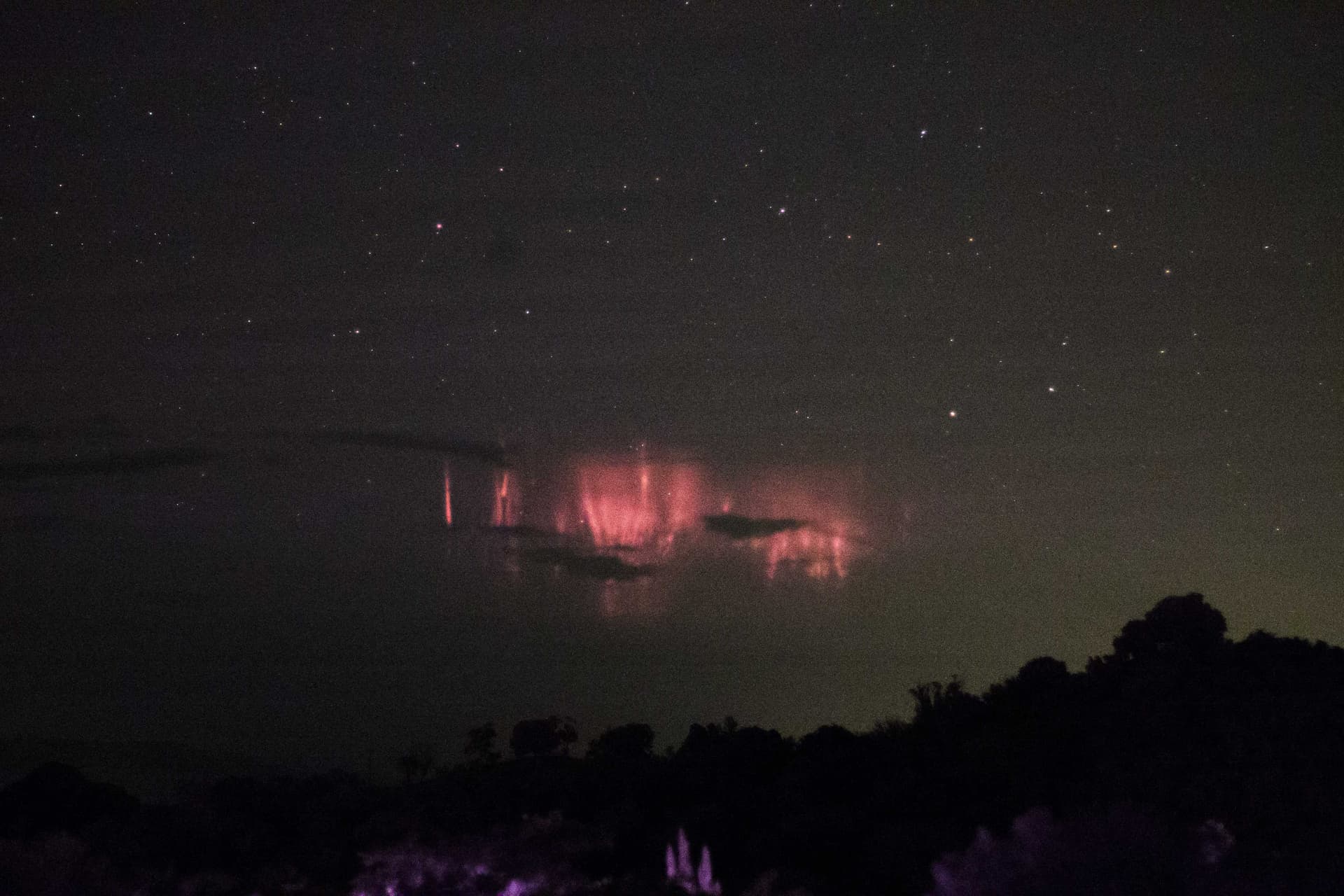
JJ’s photograph is not the kind of lightning image that falls into a photographer’s lap. It came after hundreds of hours over the last couple of years, a four-hour drive into remote northern Australia, and a long wait for the sky to cooperate. That is exactly why the frame lands so hard: it shows how rare-sky photography is won through patience, route planning, and a willingness to keep coming back after disappointment.
The subject itself is one of the hardest atmospheric events to capture. Lightning sprites are a type of transient luminous event, or TLE, a colorful, bright flash generated above thunderstorms rather than inside them. NASA describes these bursts as faster-than-lightning, and NOAA’s National Severe Storms Laboratory says these high-atmosphere phenomena are rarely observed visually and still not well understood. For photographers, that makes every successful frame less like luck and more like fieldcraft.
Why sprites are so hard to photograph
Sprites happen high in Earth’s mesosphere, roughly 50 miles up, where the action is over in fractions of a second and the scale is difficult to judge from the ground. Their height makes them scientifically fascinating and photographically brutal: you need the storm in the right place, the horizon open enough to see above it, and a camera setup ready to record a flash that may never repeat in the same spot. The most elusive version, the jellyfish sprite, is even more sought-after, which raises the bar still further for anyone trying to document them well.
The rarity is not just anecdotal. NASA says sprites were first accidentally documented on ground-based videotape on July 6, 1989, and space-shuttle observations from 1989 through 1991 added 17 more examples that confirmed the phenomenon. Even now, they remain poorly understood, which is part of what keeps them so compelling for photographers and scientists alike. NASA and NOAA also place sprites within a wider family of TLEs that includes blue jets and elves, underscoring how much of the upper-atmosphere lightning story is still being mapped in real time.
The route, the weather, and the viewing line
JJ’s chase was built around access as much as timing. In the featured shoot, he drove about four hours through a remote stretch of northern Australia to reach an ancient Devonian reef, chosen for a vantage point far enough from the storm to catch a sprite in a wide, unobstructed frame. That kind of site choice matters because sprites are easiest to work with when the storm is distant enough to leave room in the composition but active enough to keep producing electrical activity overhead.
That balance is where the odds come in. If the storm fires sprites in the wrong place, the frame is gone before you can adjust, and JJ had to deal with exactly that problem on the night he finally succeeded. Spinifex grass, mosquitoes, and plain frustration were part of the job, along with the constant uncertainty that comes from trying to photograph something so brief. Rare-sky work does not reward impatience, and this shoot makes that plain.
How JJ built his chances
The breakthrough was not a single heroic night. It was the result of a personal project that began after a painful miss, when JJ was already out shooting sprites with his friend Danny and Danny captured one while JJ missed the split-second event. That kind of near miss can either end the chase or sharpen it; in JJ’s case, it became motivation to keep going until he had his own frame.
Over time, he spent hundreds of hours tracking transient luminous events and refining his chances. That kind of repetition is the real lesson for photographers working in the same lane: sprite photography is not built on one dramatic outing, but on a stack of failed attempts, pattern recognition, and repeated trips to the same kind of weather. The payoff is a better read on storm behavior, a better sense of when to set up, and a better instinct for when to hold steady instead of chasing every flash.
What made the final frame stand out
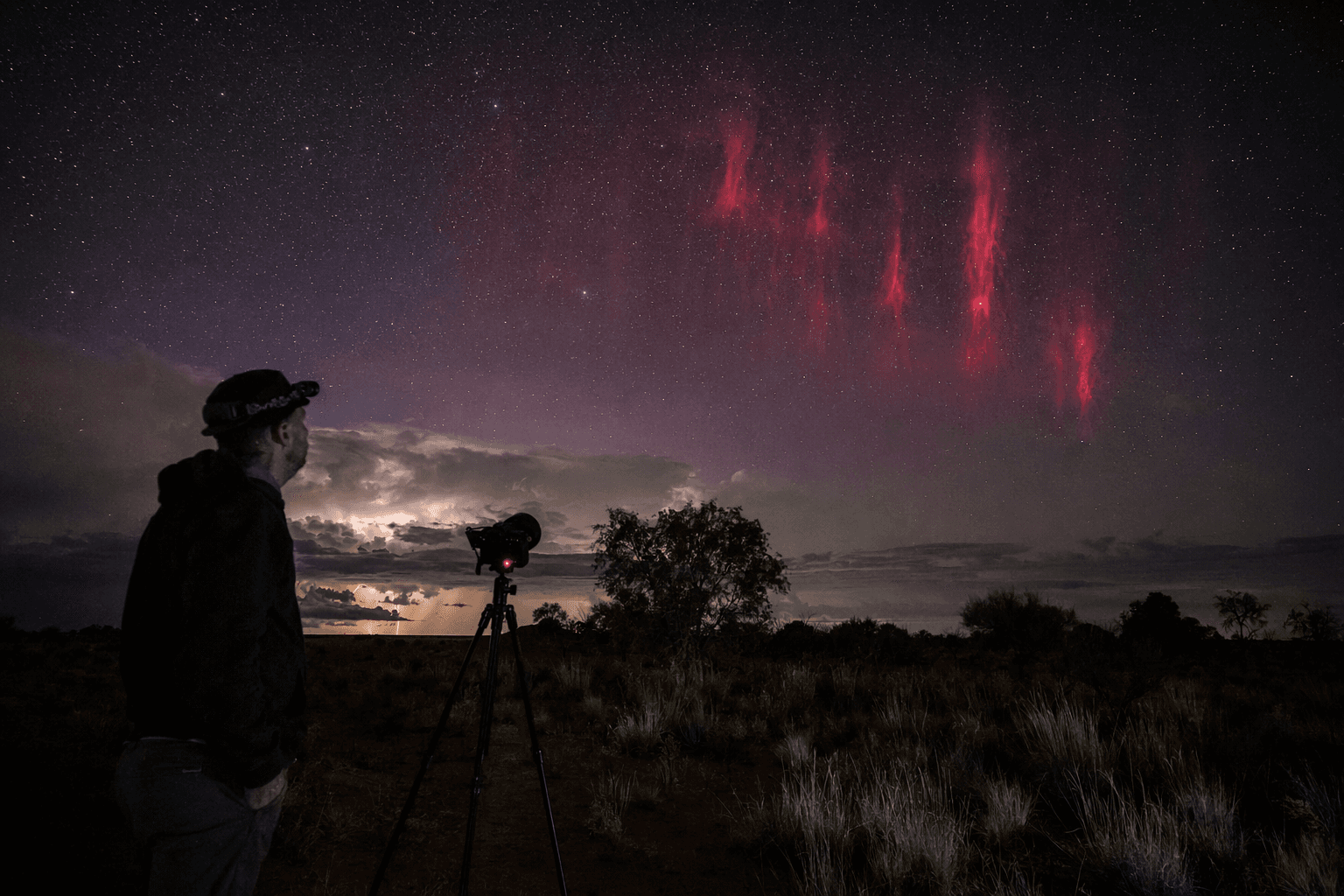
When JJ finally nailed it, the image did more than record a sprite. It also included fireflies glowing in the foreground, which gave the picture scale and a strong sense of place. That contrast, tiny insect light below and rare upper-atmosphere electricity above, is exactly the sort of visual structure that makes a technical capture feel memorable rather than merely documented.
He named the photograph Presence, and the title fits the discipline behind it. The image was not just about getting a better picture, but about being fully engaged with the moment while it was happening. In rare-event photography, that mindset matters because the environment makes the final call. You can prepare the frame, but you cannot negotiate with the storm.
Why scientists care when photographers get lucky enough to persist
There is a practical reason these images matter beyond the portfolio. NASA’s Spritacular citizen-science project, launched on October 26, 2022, asks volunteers to help answer questions about sprite shapes, triggering conditions, and how these events affect Earth’s upper atmosphere. The project exists because public observations still fill important gaps in the scientific record, especially for phenomena that are too rare for routine study.
That makes images like JJ’s valuable on two levels. They are visually striking, but they also contribute to a broader body of observations that scientists can use alongside professional data. In the same way that a careful storm chase can improve a photographer’s odds, repeated public documentation can improve the odds of understanding how these flashes behave, why they form the way they do, and what they reveal about thunderstorms above the clouds.
The fieldcraft takeaway for photographers
Sprite chasing rewards the same habits that define strong landscape and storm work, just with a much narrower margin for error.
- Pick a site with a wide, unobstructed view above distant storms.
- Expect long waits and several false starts before the sky gives you a usable burst.
- Watch for activity in the right part of the storm, not just any lightning.
- Stay ready for a flash that lasts only fractions of a second.
- Treat each miss as data, because the next successful setup will depend on what you learned from the last one.
JJ’s shot in northern Australia is compelling because it shows how much work sits behind a single rare capture. The sprite is the headline, but the real story is the discipline it took to earn it.
This article was produced by Prism’s automated news system from verified source data, official records, and press releases, then run through automated quality and moderation checks before publishing. The system is built and supervised by the people who set the standards it runs under. Read our full AI policy.
Did this article answer your question?