Photographer Spent 17 Years Documenting D.C. Cherry Blossoms to Master Ephemeral Light
Drew Geraci has photographed D.C.'s cherry blossoms every spring for 17 years; his process is a replicable blueprint for building a body of work that compounds in creative and narrative value.

Peak bloom at Washington, D.C.'s Tidal Basin used to arrive reliably at the end of April. Now it lands in mid-March. Drew Geraci knows this because he has been standing in the same spots along the waterfront every spring for 17 consecutive years, watching the Yoshino cherries respond to a climate that most visitors never think to measure. "Ten years ago I was filming peak blossoms at the end of April, now they come mid-March to the end of March," says Geraci, a Sony Artisan of Imagery, Navy veteran turned commercial director, and the photographer whose HDR time-lapse work landed him a collaboration with David Fincher on the House of Cards title sequence. "If that says anything about our climate it should totally start waking people up."
That observation only became possible through repetition. One season at the Tidal Basin produces a beautiful image. Seventeen seasons produce a data set, a visual argument, and an archive with cumulative narrative weight that no single outing can manufacture. Geraci's project is one of the most instructive examples in working photography of what sustained, disciplined commitment actually yields. The method behind it is replicable, and with spring still unfolding across most of the country, there has never been a better moment to start your own version of it.
Why Repetition Is the Real Skill
The instinct in photography is always to seek something new: a new location, a new subject, a new trip. Geraci's cherry blossom series is a sustained argument against that impulse. By returning to D.C. every spring, he has built a level of observational fluency with one subject that no amount of one-off shooting can replicate. He tracks light direction as it shifts across weeks, recognizes how different weather types reshape familiar compositions, and notices urban changes, new construction, altered crowd behavior, that accumulate almost invisibly from year to year.
"Seventeen years in, and honestly, it still feels like year one every time those trees bloom," Geraci says. That's the paradox at the heart of long-term personal projects: the subject stays nominally the same while everything about your relationship to it deepens. The bloom cycle resists predictability, compressing opportunity into a window that demands preparation, adaptability, and presence. You cannot coast on last year's plan.
Choosing a Subject Worth Returning To
The best subjects for multi-year projects share a specific set of qualities: they recur on a predictable calendar, they change unpredictably in their details, and they're close enough to return to without logistical friction. Cherry blossoms work because the window is short, the visual stakes are high, and the seasonal return is guaranteed. The Tidal Basin works because iconic anchor compositions are available while still leaving enormous room for discovery.
You don't need a famous national landmark to replicate this approach. A local park with a reliable wildflower bloom, a neighborhood festival that runs the same weekend every June, a particular stretch of trail that hits peak fall color in October, any of these meet the criteria. The subject needs to demand your presence at a specific moment, not just invite it. That urgency is what keeps the project honest year after year.
Lock Your Vantage Points Before You Explore
Among the most practical structural moves in Geraci's workflow is the maintenance of anchor compositions. He returns each year to the Jefferson Memorial, Tidal Basin reflections, and the Washington Monument framed through blossoms, not because these shots are easy or automatic, but because they function as a consistent baseline against which every other variable can be read. When light, weather, crowd density, and blossom coverage change, the fixed composition makes that change visible and legible across years.
Build your own anchor list before your first committed session at a new location. Identify three to five compositions you can return to on every visit at the same focal length, the same time of day, from the same physical position. Photograph these first on every outing. They become your visual control group. Everything else you shoot that day is your creative latitude for the year, the space where the project evolves without losing its thread.
Track Conditions the Way a Producer Tracks a Shoot
Preseason scouting and bloom-forecast tracking are central to Geraci's preparation. The peak window for D.C. cherry blossoms is measured in days, not weeks, and arriving a day late or shooting in the wrong light slot can undercut months of anticipation. Geraci treats this logistical work as craft, not logistics; knowing when and where to be is inseparable from the creative act of being there.
Apply the same principle to your subject. If you're tracking fall foliage, learn which species on your route turn first and which peak latest. If you're documenting a festival, know the specific hour when foot traffic, light angle, and energy converge. Keep a simple log from year to year: bloom date, weather conditions, time of first and last usable light. Over two or three seasons, that log becomes a genuine competitive advantage.
The Technical Frame: Consistent Kit, Evolving Eye
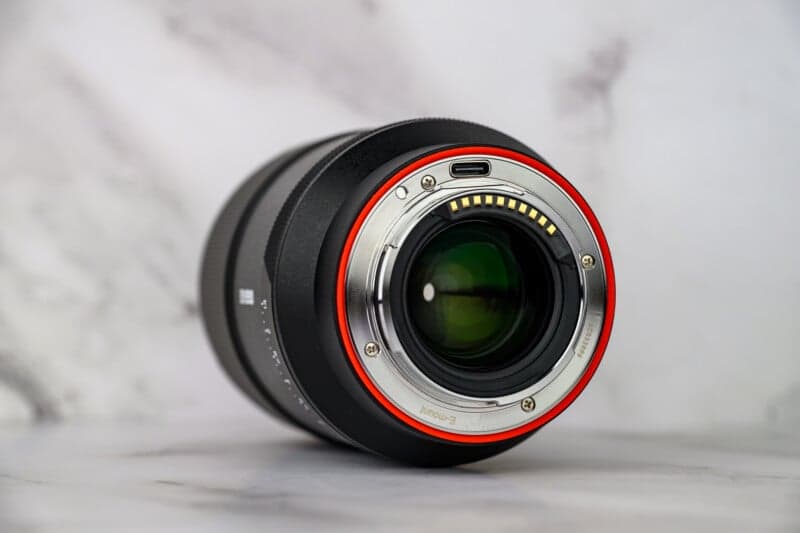
Geraci shoots the cherry blossoms on the Sony Alpha 1 II, paired with the Sony 28-70mm f/2 G Master, a combination that gives him 50MP full-frame stills, 8K video capture, and real-time AF tracking through falling petals and moving crowds. He also incorporates portable LED panels for creative light control, using color-tunable LEDs during blue hour to add contrast and warmth when natural light doesn't cooperate. On a Sony Alpha Universe shoot he documented the approach directly: backlight a branch with an LED and shoot toward the source; the petals render like stained glass.
Gear consistency matters in long-term projects because it removes a variable. If you change cameras every year, you're comparing different tools. Shoot the same lens at the same aperture from the same anchor points, and the differences you see in the archive are the story, not noise.
The "Return Every Year" Shot List and How to Build It
Geraci's project resists the idea of a single definitive image or season. "As for a favorite year, that's tough. It's usually the one where everything almost went wrong but came together at the last second. Those are the ones that stick with you, because you had to earn them," he says. That framing is a useful guide for building your own annual shot list. Divide it into two categories:
- Anchor shots: the fixed compositions you return to every visit for continuity.
- Discovery shots: one or two new perspectives, techniques, or conditions you haven't documented before.
The anchor category keeps the archive coherent. The discovery category keeps you from going through the motions. Geraci actively works to avoid relying too heavily on familiar views precisely because the risk of repetition increases as the project matures.
Your Assignment: One Location, Twelve Months
Here's the community challenge, and it starts now. Choose one location within reasonable distance: a park, a waterway, a street corner, a trail section. Pick a specific composition there and photograph it on the same date and at the same time of day, once a month for the next twelve months. Commit before fall color season. Commit before the next local festival, before the summer crowds arrive, before whatever your regional equivalent of cherry blossoms is.
The point isn't to produce one great image. The point is to build a visual relationship with a place across changing light, changing seasons, and changing conditions. Geraci's 17-year project demonstrates what that relationship produces at scale: an archive that becomes a record of environmental change, a measure of your own creative development, and a body of work with the kind of cumulative depth that single outings simply cannot manufacture. The goal Geraci describes is as simple and as demanding as it sounds: "If someone watches my work and feels like they experienced D.C. during peak bloom, not just seeing it from afar, that's when I know I got it right." The only way to get there is to keep going back.
This article was produced by Prism’s automated news system from verified source data, official records, and press releases, then run through automated quality and moderation checks before publishing. The system is built and supervised by the people who set the standards it runs under. Read our full AI policy.
Did this article answer your question?