Poetry Camera turns scenes into poems, rethinking what cameras do
A camera that prints poems instead of photos turns image-making into interpretation, not capture. It is a playful challenge to what cameras are for.
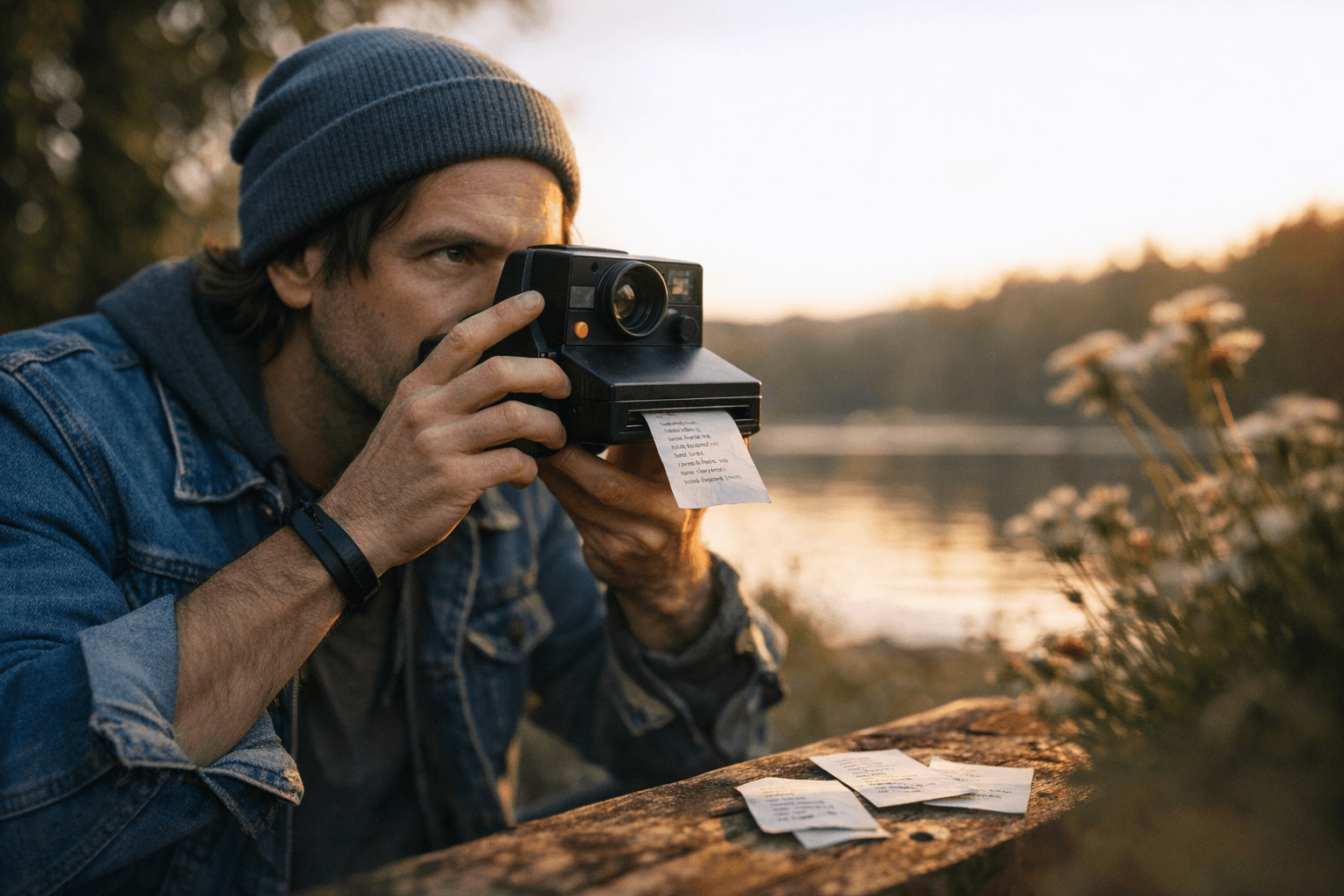
A camera that refuses to photograph
The Poetry Camera looks like it belongs in a photographer’s bag, but it swaps the usual payoff for something stranger: a poem. That single twist turns the device into more than a novelty, because it asks a question camera culture keeps circling now that AI tools are changing creative habits: is a camera only for recording what is there, or can it also interpret what a moment feels like?
For photography readers, that is the real hook. The Poetry Camera is not trying to outdo a mirrorless body on sharpness, speed, or autofocus confidence. It takes the familiar ritual of raising a camera, framing a scene, and pressing the shutter, then uses that familiar gesture to produce language instead of a photograph. The result is playful, slightly absurd, and exactly the kind of object that reveals how elastic the idea of a camera has become.
What the Poetry Camera actually changes
At the center of the device is a simple but radical inversion: instead of preserving a visible scene as an image, it translates the encounter into a poem. That shift changes the user’s relationship to the moment in front of the lens, because the output is no longer about literal documentation. It is about mood, memory, and artistic response.
That matters because cameras have long been associated with proof, fidelity, and technical control. The Poetry Camera pushes in the opposite direction, treating the camera less like a recording machine and more like a creative interpreter. In an era when many imaging tools are becoming smarter and more automated, this one slows things down and makes the user think about what the moment means rather than what it looks like.
The ritual stays familiar, but the meaning changes
One of the cleverest parts of the concept is that it still depends on the language of photography. There is a frame, a shutter, and a wait for the result. Those gestures are instantly legible to anyone who has ever used a camera, which is exactly why the poem output lands as such a surprise.
That surprise is doing real conceptual work. The device does not reject photography’s habits; it borrows them and reroutes them toward interpretation. In that way, it becomes a commentary on the act of making images itself, because it reminds you that every photograph already involves selection, emphasis, and a point of view, even when the final file looks neutral.
Why it feels like an art object, not just a gadget
The Poetry Camera is easy to imagine on a desk or in a studio as much as in a camera bag. It has the feel of an art object, a conversation starter, and a novelty built to trigger ideas. That is part of the appeal: it is the sort of thing someone might buy for inspiration, for gifting, or for the pleasure of sharing something unusual, even if it is never meant to become a mainstream capture tool.
That placement matters, because the device is not trying to solve a practical problem for working photographers. Instead, it reframes the emotional side of image-making. It asks you to notice how much of photography is already about memory, tone, and the story attached to a place, a face, or a passing scene.
Why photographers should care
The most interesting thing about the Poetry Camera is not that it replaces a real camera. It is that it expands the category without dismissing it. Camera culture has always included experimentation, and this device sits squarely in that tradition, where the point is not technical fidelity but a fresh way of seeing.
That makes it especially relevant in a moment when image-making is being challenged by AI-era creativity tools. If software can generate polished visuals on demand, then a physical camera that chooses poetry over pixels becomes a sharp counterpoint. It suggests that future cameras may be judged not only by resolution or speed, but by how they shape thought, emotion, and interpretation.
- It keeps the familiar mechanics of photography intact.
- It changes the output from image to language.
- It treats the camera as a prompt for reflection rather than proof.
- It turns a simple scene into a small act of creative translation.
Gimmick, art object, or glimpse of the future
That is the larger question hanging over the Poetry Camera: is it a gimmick, or is it showing where cameras can go next? The honest answer is that it can be both. A device that produces poems instead of photos is undeniably playful, but it is also a serious provocation in a field that often equates progress with better specs and more automation.
For photographers, that provocation is worth paying attention to. The camera world still has room for strange, conceptual tools that do not improve capture so much as complicate it. If the Poetry Camera feels memorable, it is because it exposes a truth many image-makers already know: sometimes the most interesting thing a camera can do is not record a scene exactly, but change the way you understand it.
This article was produced by Prism’s automated news system from verified source data, official records, and press releases, then run through automated quality and moderation checks before publishing. The system is built and supervised by the people who set the standards it runs under. Read our full AI policy.
Did this article answer your question?