Polish Photographer Leaves Pinhole Cameras in Chornobyl for Months
Kamil Budzynski leaves homemade pinhole cameras in Chornobyl for months, making solargraphs that turn time, weather, and ruin into the image.
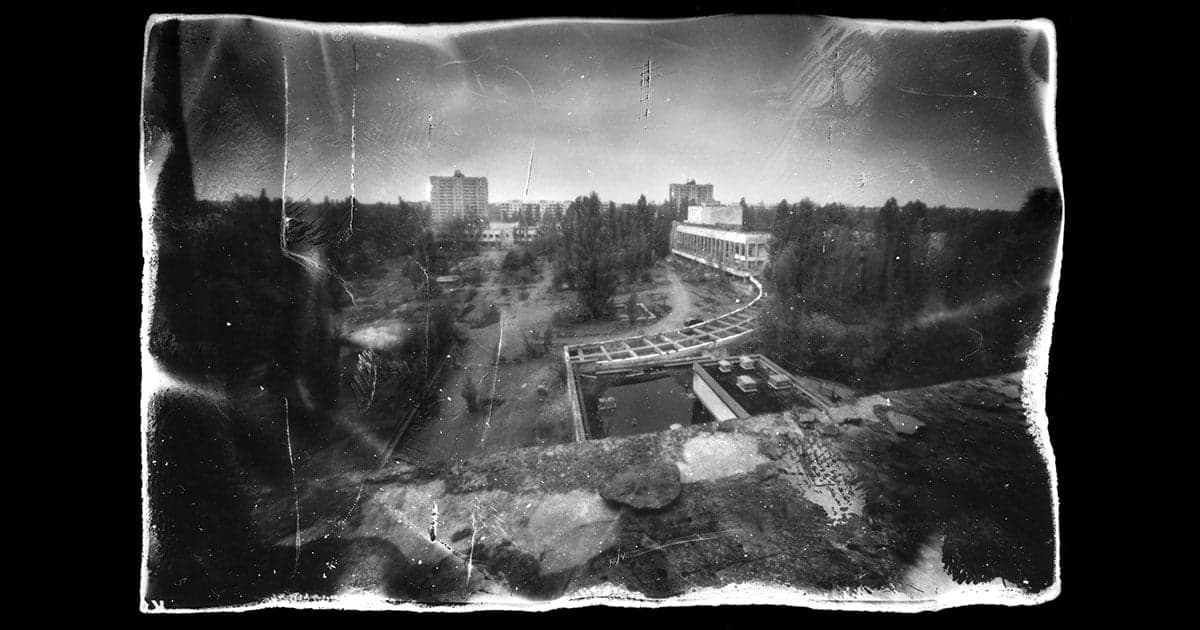
Kamil Budzynski has spent years making photographs in Chornobyl by almost refusing to be there. Since 2018, the Polish photographer has been placing homemade pinhole cameras through the Chornobyl Exclusion Zone and leaving them behind for months, sometimes years, so the place, the weather, and the passing sun can build the image without him standing over it.
The result is solargraphy: long exposures that trace the Sun’s path across the sky in pale arcs and ghostly bands. In abandoned buildings, trees, and other isolated spots, Budzynski’s cameras do not capture a moment so much as a duration. He has said he built dozens of cameras, drilled tiny pinholes by hand, loaded them with photosensitive paper, and returned later to retrieve the exposed sheets. He leaves the cameras behind after retrieval so he does not carry radioactive material out of the zone.
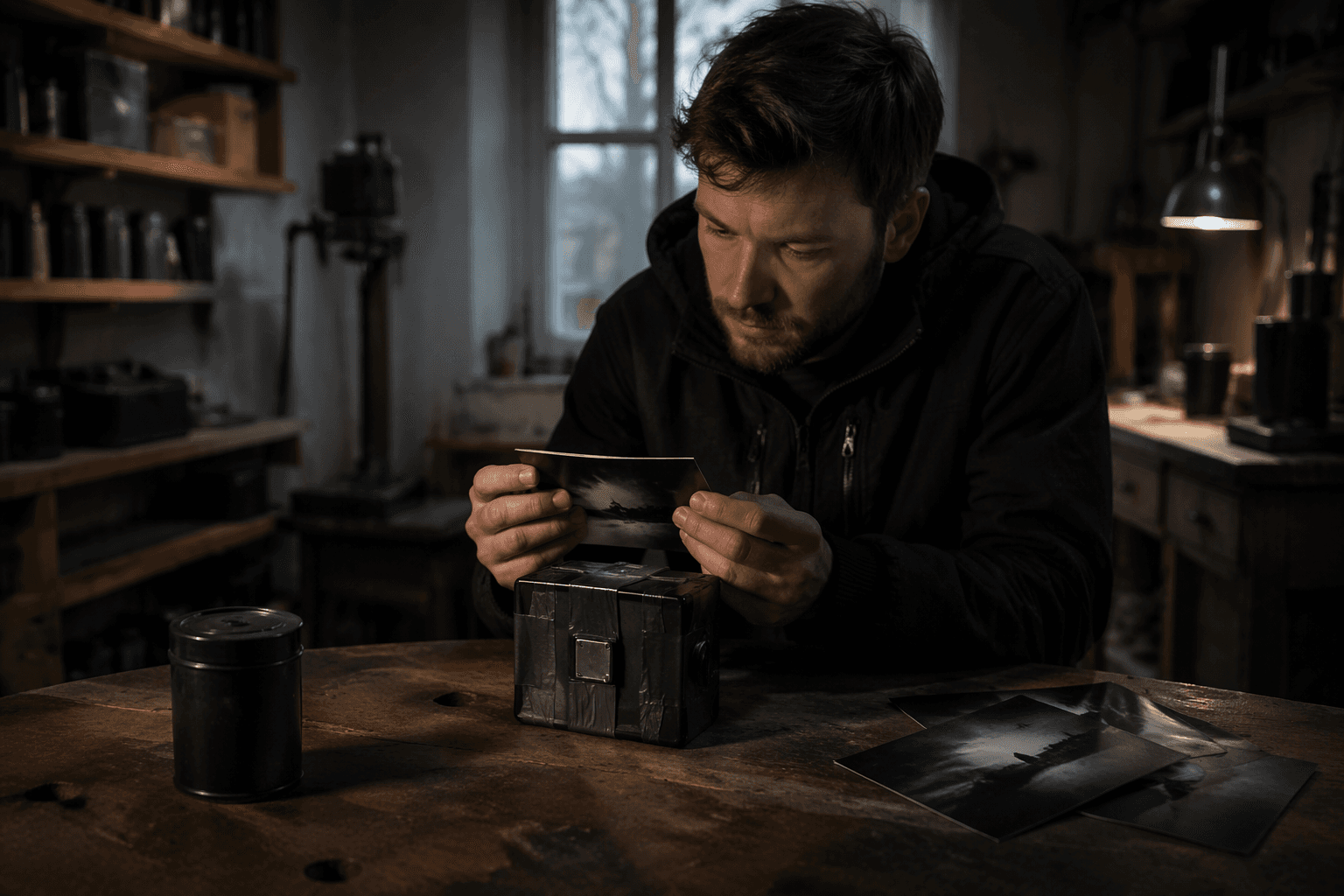
That method matters because it changes what the picture is about. Budzynski has said he could not do justice to Chornobyl by simply walking around with a digital camera, and the work backs him up. These are not fast, reactive images. They are shaped by moisture, freezing temperatures, months of weather abuse, and the slow accumulation of light. Budzynski has also said the look is not caused by radiation affecting the paper, but by the solargraphy process itself and the conditions the cameras endure.
The project lands with extra force in the 40th year after the Chornobyl disaster, which began on April 26, 1986, when Reactor No. 4 of the Chornobyl Nuclear Power Plant went out of control during a low-power test. The explosion and fire released large amounts of radiation, and Pripyat, then home to 49,360 people, was evacuated 36 hours later. The International Atomic Energy Agency says about 200,000 people were relocated in all, and at least 1,800 thyroid-cancer cases have been documented among people exposed as children.
Budzynski’s project has also absorbed the region’s newer history. He has said some cameras were destroyed during military searches after Russia’s 2022 invasion of Ukraine, while a few survived the Russian occupation of the plant and recorded that period unintentionally. The series, called Radioactive Sun - Chernobyl Solargraphy Project, has since grown into exhibitions in the United Kingdom, Poland, and Germany.
That is what makes the work resonate beyond its eerie surfaces. Chornobyl is no longer just a frozen disaster site; much of the 30-kilometre zone has become an arena of unguided rewilding, with wildlife returning and protected reserves established in Ukraine and Belarus. Budzynski’s cameras fit that reality. They do not just photograph Chornobyl. They let Chornobyl photograph time.
This article was produced by Prism’s automated news system from verified source data, official records, and press releases, then run through automated quality and moderation checks before publishing. The system is built and supervised by the people who set the standards it runs under. Read our full AI policy.
Did this article answer your question?