Rijksmuseum’s FAKE! exhibition exposes early photo manipulation, runs Feb to May 2026
Rijksmuseum’s Photo Gallery is showing FAKE! Early Photo Collages and Photomontages, tracing image trickery from 1860 to 1940 and linking it to today’s debates over AI and Photoshop.
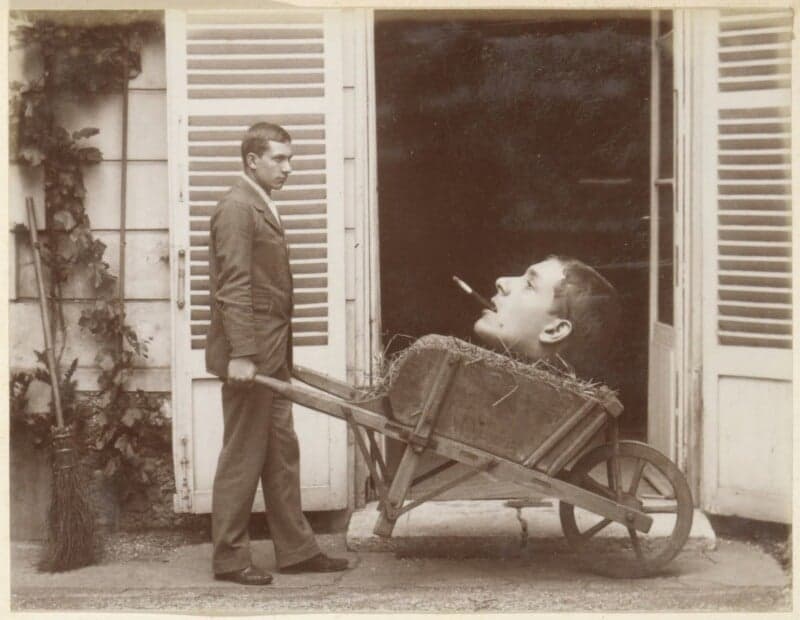
An Amsterdam exhibition is reminding photographers and image consumers that manipulation is built into the medium’s history. FAKE! Early Photo Collages and Photomontages opened at the Photo Gallery of the Rijksmuseum on 6 February and runs through 25 May 2026, curated by Hans Rooseboom, curator of photography at the Rijksmuseum.
The show draws on more than 50 historical images from the museum’s collection and spans work dated roughly from 1860 to 1940. Outside reports count 52 images, but the museum’s official phrasing is “more than 50.” The exhibition foregrounds techniques familiar to anyone who tinkers with composites today: masking, cut-and-paste collages, re-photographing montages, stock negatives such as ready-made clouds, and darkroom tricks including partial-plate exposures that let one sitter appear twice in a single frame.
Rooseboom positions the show as a corrective to contemporary panic and boosterism around new tools. “When we talk about A.I. today, as we’ve talked about Photoshop since 1990, some people are worried while others only see the limitless possibilities,” he told a national newspaper. “We want to show that this is nothing new. It’s always been a part of photography, so deal with it.” CNN coverage echoed his point: “We all talk about AI nowadays,” and “We’re used to Photoshop and other digital ways of altering images, but we wanted to show that it’s always been the case, since the very early days of photography.” Rooseboom also stresses the long-standing cultural context: “Photography has never been real, he added, especially in the nineteenth century when people were more accustomed to seeing drawings, engravings, and illustrations that did not reflect literal truth.”
The exhibition is structured around motives as well as methods. Rooseboom estimates that about three-quarters of the images on display were created for entertainment; the rest served advertising or political ends. Visitors will find fantastical postcards such as a 1908 W.H. Martin image that purports to show the largest ear of corn ever grown, playful gag scenes, and pointed political photomontage. John Heartfield’s 1934 cover for the Arbeiter-Illustrierte-Zeitung, which lampoons Joseph Goebbels by depicting him as Hitler’s barber, is included to show montage used explicitly as antifascist satire. Rooseboom explains Heartfield’s intent: “It’s Hitler, but Goebbels is turning him into (Karl) Marx in order to attract the workers’ electorate.”
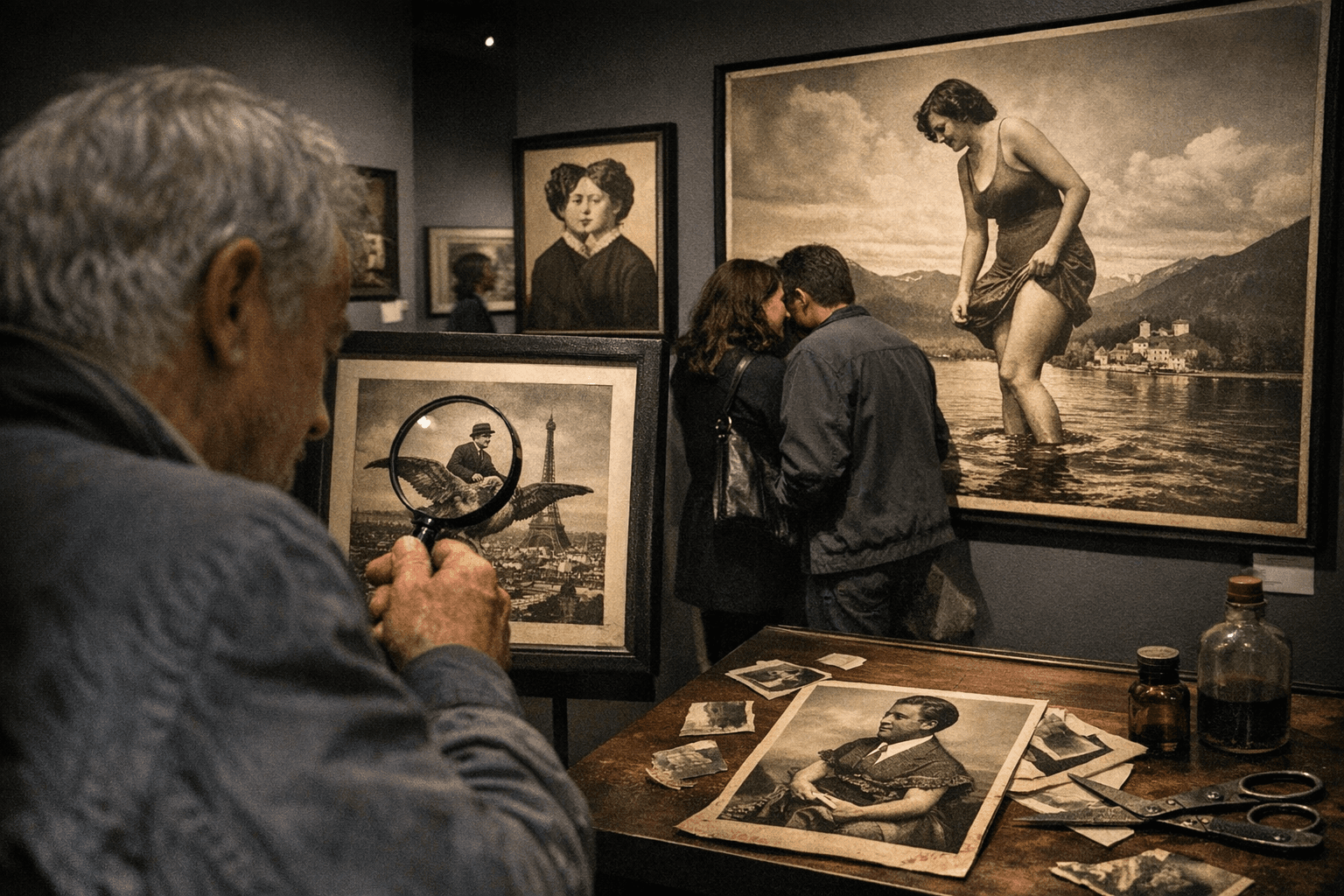
The show also traces technical precedents for modern practices. Oscar Gustave Rejlander’s Two Ways of Life, assembled from 32 separate negatives in 1857, predates the museum’s 1860 start date but is cited by commentators as a proof point that photographers experimented with composites from the medium’s earliest decade. By the 1870s, commercial stock cloud negatives were available to photographers, a clear ancestor of today’s stock-image workflows. The catalogue of scams and show trials appears as well: spirit-photography cases recur in the curatorial narrative, including the French Édouard Isidore Buguet, who confessed to fraud and received a prison term, and William H. Mumler, who told a Manhattan court “he never used any trick or device” and was acquitted.
For photographers and photo educators, FAKE! is a compact lesson in technique, motive, and media literacy. Inspect captions, study process notes, and compare darkroom methods to contemporary digital workflows to sharpen your ability to read an image. The Rijksmuseum’s presentation makes plain that the tools have changed but the impulses have not. The exhibition stays on view through 25 May 2026, giving practitioners and critics time to consider how history informs ethics, attribution, and visual storytelling today.
Know something we missed? Have a correction or additional information?
Submit a Tip

