Spring Equinox Geomagnetic Storm May Bring Aurora South for Photographers
A March 16 solar eruption and spring equinox timing combined to push auroras toward Illinois and Oregon this week, with NOAA's G2-to-G3 watch running through March 21.
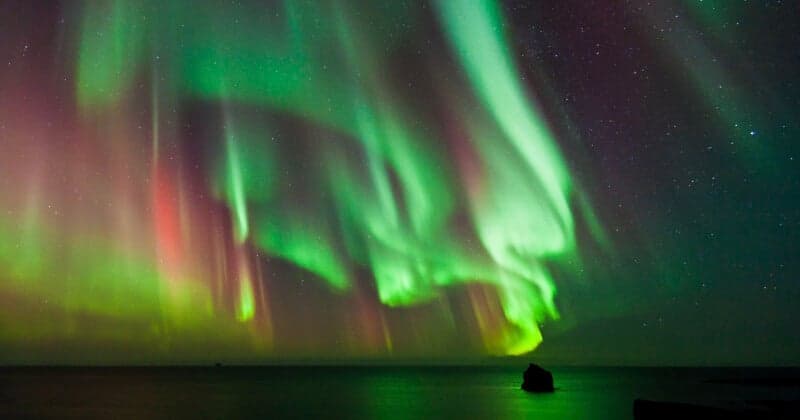
A coronal mass ejection that left the Sun on March 16 arrived at Earth during one of the most geomagnetically charged windows of the year, giving photographers in the northern United States a narrow shot at capturing the aurora borealis farther south than usual.
NOAA's Space Weather Prediction Center issued a moderate G2 geomagnetic storm watch running through March 21, with forecasters noting a chance conditions could briefly spike to G3 (strong) levels. On the five-point scale running from G1 (minor) to G5 (extreme), a G2 storm was enough to push the northern lights into parts of the northern United States. If G3 conditions materialized, visibility could extend deeper into mid-latitudes, potentially reaching Illinois and Oregon.
The timing was not coincidental. March 20, the spring equinox in the Northern Hemisphere, is statistically the most geomagnetically active period of the year. March holds the highest average number of geomagnetically disturbed days of any month, and the mechanism behind that pattern has a name: the Russell-McPherron effect, first described in 1973 by geophysicists Christophere Russell and Robert McPherron. The effect explains how Earth's orientation during the equinoxes allows its magnetic field to couple more efficiently with the solar wind. "During the equinoxes, the orientation of the Earth's poles is (almost) perpendicular to that of the Sun," Dr. Ciaran Beggan, a geophysicist at the British Geological Survey, told Newsweek.
The storms expected between March 20 and March 21 were driven not just by the initial CME but by a combination of solar eruptions and high-speed solar wind streams all arriving together. As NOAA's Space Weather Prediction Center explained in a post on X: "A coronal mass ejection (CME) is an eruption of solar material and magnetic fields. When they arrive at Earth, a geomagnetic storm can result."
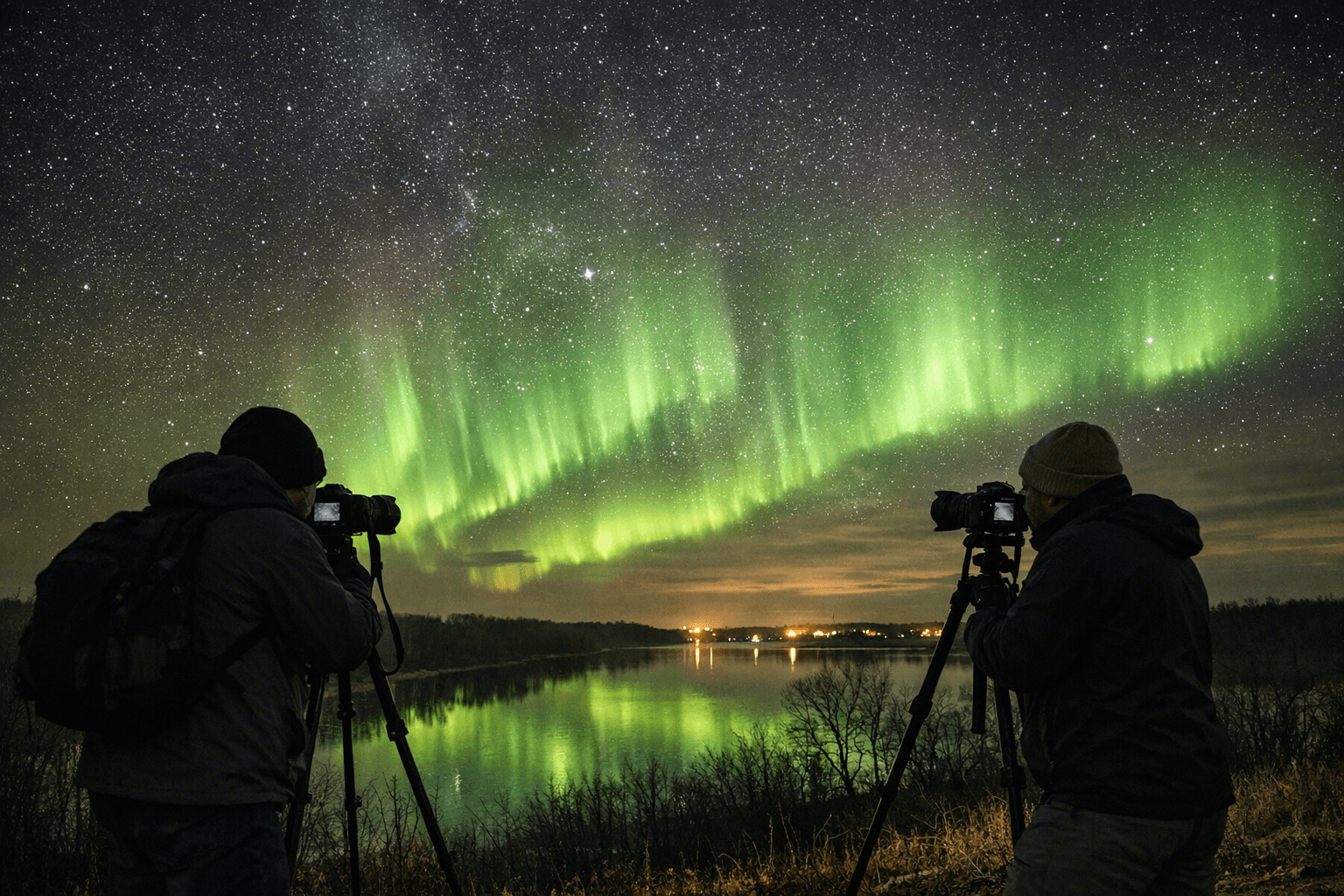
Whether that storm would deliver dramatic auroras or a quiet night came down to a single physical variable: the orientation of the interplanetary magnetic field. If the IMF pointed southward during the CME's arrival, it could connect with Earth's northward-pointing field, allowing energy to flood in and supercharge auroral displays. A northward-pointing IMF would effectively close that door, limiting how much energy transferred. As conditions develop rapidly during geomagnetic events, aurora-alert apps and NOAA's real-time monitoring pages were the most reliable tools for tracking the IMF direction in the hours that mattered most.
The uncertainty was real. "Auroras can be fickle creatures, so it is possible that despite the seemingly perfect conditions, we could end up with a lackluster show," according to Space. The same source advised: "conditions can change rapidly, so make sure you've got your cameras charged and your aurora alerts switched on."
For photographers who caught clear skies during this window, the combination of a solar eruption, equinox geometry, and a NOAA watch level that could reach G3 represented the kind of convergence that does not reliably repeat on a predictable schedule.
Know something we missed? Have a correction or additional information?
Submit a Tip

