Student Photographer Loses Eye After DHS Projectile at Los Angeles Protest
A USC freshman lost his right eye while photographing a No Kings protest in Los Angeles, turning protest coverage risk into a literal, permanent injury.
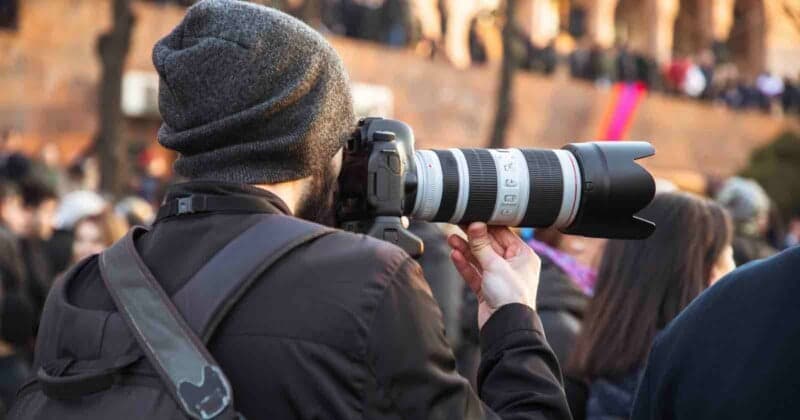
Tucker Collins lost his right eye after a projectile allegedly fired by a Department of Homeland Security agent struck him while he was photographing a No Kings protest in Los Angeles, a case that has jolted the photography community because it was not a distant warning but a permanent injury to an 18-year-old student with a camera in his hands.
The protest unfolded on March 28, 2026, near the Metropolitan Detention Center and the federal building area in downtown Los Angeles. Local reporting says the demonstration turned into clashes after a dispersal order, and the Los Angeles Police Department said it made 75 arrests, including 66 adults and eight juveniles. Collins, later identified as a freshman at the University of Southern California, was caught in that escalation and later underwent surgery in which his eyeball was removed.
His attorney, V. James DeSimone, said he was preparing a federal tort claim and later announced a $100 million claim against the Department of Homeland Security. Collins has said he was only taking photos and video, that he heard no warning before he was hit, and that he was not acting as an agitator. Federal authorities disputed that account and said officers issued multiple warnings before using force. That conflict matters far beyond one case, because it sits at the center of every photographer’s calculation at a protest: how close to work, how visible to stay, and when the assignment stops being worth the risk.
The incident lands in a city with a long and painful record. CalMatters has said at least half a dozen journalists have been struck by police projectiles while covering protests in Los Angeles. The memory of Ruben Salazar still hangs over that history: the Los Angeles Times reporter was killed in 1970 when a sheriff’s deputy fired a tear-gas projectile during the Chicano Moratorium protest in East Los Angeles.
The broader pattern is not just local. The U.S. Press Freedom Tracker records physical attacks on journalists as part of its incident database, and an American Civil Liberties Union-cited report found at least 2,190 injuries from rubber bullets and other kinetic-impact projectiles, along with more than 119,000 injuries from tear gas and chemical irritants during protests worldwide since 2015. For student, freelance, and hobbyist photographers, the message is blunt: protective gear, situational awareness, insurance, and institutional backup are no longer abstract concerns. They are part of the kit now, alongside batteries, memory cards, and a fast lens.
This article was produced by Prism’s automated news system from verified source data, official records, and press releases, then run through automated quality and moderation checks before publishing. The system is built and supervised by the people who set the standards it runs under. Read our full AI policy.
Did this article answer your question?