Angelo Rizzuto’s hidden New York street archive resurfaces after death
Angelo Rizzuto may be the strongest other Vivian Maier candidate yet, with 60,000 New York frames that turn a private habit into a major street archive.
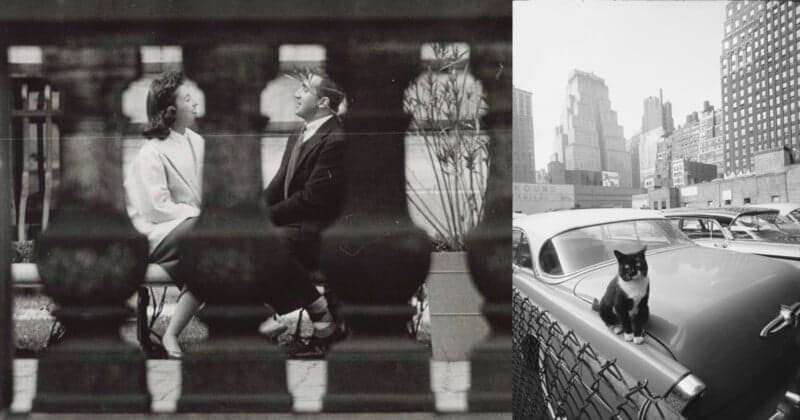
Angelo Rizzuto may be the strongest other Vivian Maier candidate yet. The reason is not mystery for mystery’s sake. It is the size of the archive, the discipline behind it, and the way the pictures turn ordinary Manhattan sidewalks, bridges, and subway-adjacent street life into a long, exacting visual record.
Why this archive matters now
Rizzuto was born in 1906 and died in 1967, but the body of work tied to his self-chosen name, Anthony Angel, keeps looking more relevant the more it is studied. The Library of Congress dates the photographs from 1949 through 1967 and describes the collection as about 60,000 black-and-white images of New York City, chiefly Manhattan. That is not a casual stash of rolls in a drawer. It is a sustained survey of a city in motion, made over nearly two decades by a photographer who seems to have understood that repetition is part of the point.
For street photographers, that is the first lesson worth stealing: a serious body of work often comes from returning to the same blocks again and again. Rizzuto did not need the rare moment every time he went out. He needed persistence, attention, and the willingness to let a city reveal itself through accumulation.
What the Anthony Angel Collection actually contains
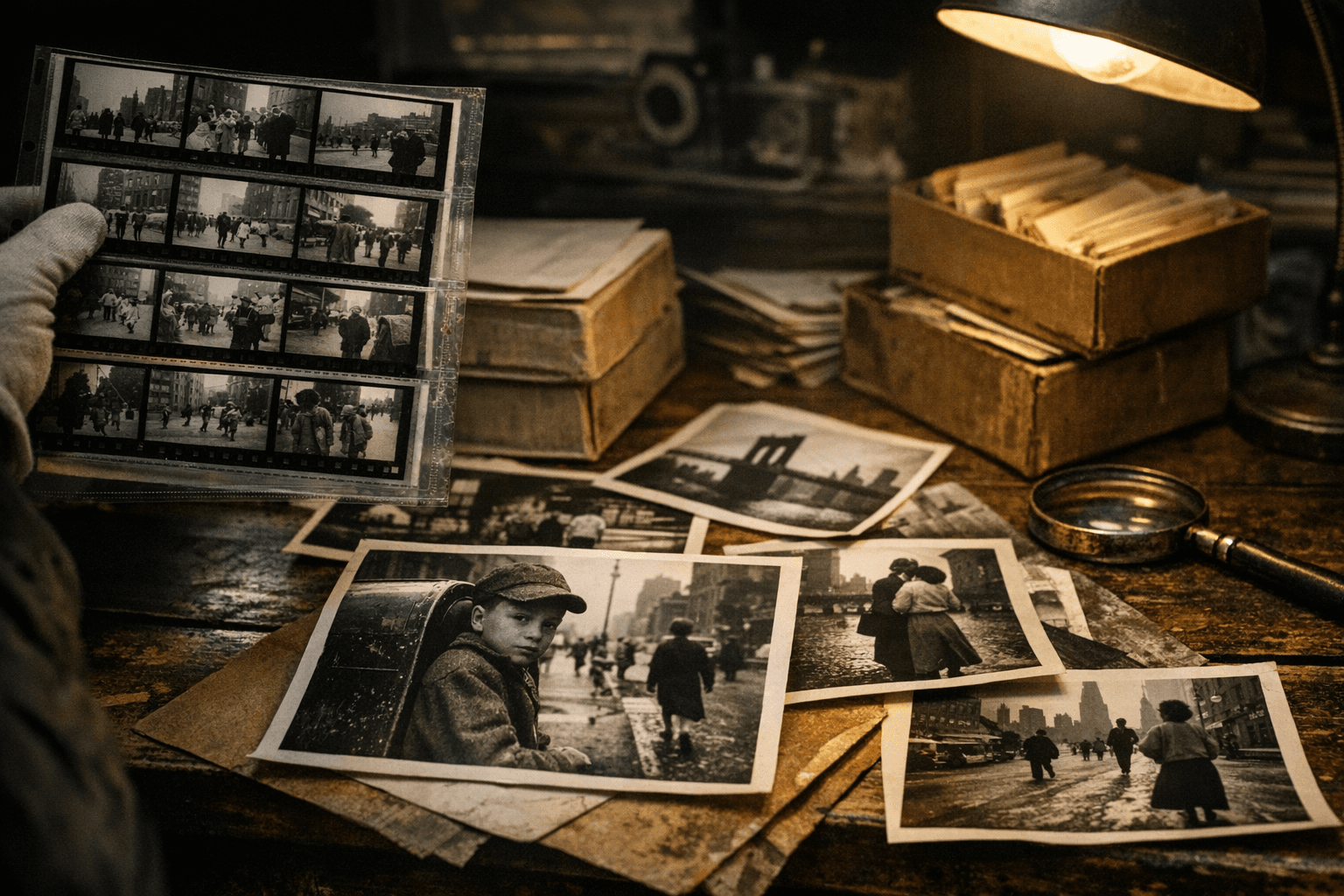
The archive is far more structured than a loose posthumous discovery story suggests. The Library of Congress catalog record lists 1,394 photographic prints and 3,295 contact sheets, and the collection is arranged chronologically. It is split into two parts, including LOT 15144 and contact sheets with related negatives, which tells you this was a working photographer’s archive, not just a finished portfolio.
That structure matters. When a collection is ordered by year and month, you can see the habit of seeing itself. You can follow what held his attention, how often he shot, and how he moved through the city. For anyone who makes street work, that is a practical reminder that editing starts long before the final print. The archive’s internal logic becomes part of its meaning.
Rizzuto also appears to have intended something more formal than a private scrapbook. He planned an unpublished book or survey called *Little Old New York*, a title that sounds affectionate but also archival, almost civic in scope. The point was not just to photograph Manhattan. It was to document it as a historical subject, 300 years after it became an English colony.
The city he kept returning to
The Library of Congress describes the pictures as candid and aerial views of Manhattan and Broadway, and the landmarks list reads like a compact atlas of mid-century New York: Times Square, Central Park, Grand Central Terminal, the Empire State Building, Washington Square, Bowling Green, The Battery, bridges, parks, residential neighborhoods, hotels, shops, automobiles, skyscrapers, pedestrians, and the Statue of Liberty.
That breadth is the second lesson. Rizzuto was not trapped in one visual note. He made room for commercial streets and quiet blocks, landmark spectacle and everyday passage. His archive is strongest when you read it as a broad visual survey of Manhattan, not as a hunt for isolated masterpieces.
For hobbyist street photographers, this is the useful correction. A good project does not have to be narrow to be coherent. You can build a body of work around one borough, one commute, one corridor, or one daily route, as long as you stay alert to how public space changes from block to block and hour to hour. Rizzuto’s work suggests that consistency of place can create more depth than chasing novelty.
What the comparison to Vivian Maier really tells us
The comparison to Vivian Maier is not just a neat museum-world echo. It highlights a recurring pattern in photography history: major archives can exist in plain sight for decades before they are fully understood. Smithsonian reports that Maier made more than 150,000 photographs across New York and Chicago, and in 2024 it noted that she was getting her first museum exhibition in New York City. That is the same basic cultural shockwave Rizzuto now triggers: an artist once treated as obscure becomes legible as a major documentarian after the fact.
That shift changes how you look at the pictures. Once an archive is rediscovered, the emotional tone deepens. You stop seeing only street scenes and start seeing absence, anonymity, and hindsight. The work feels intimate because the maker is gone, and tragic because the city he recorded kept evolving without him. The photographs become less about personal fame and more about the long afterlife of seeing.
What street photographers can learn from Rizzuto’s timing and framing
Rizzuto’s archive, including a Times Square street scene from May or June 1952, suggests a photographer who understood timing as a way of organizing chaos. The frame often appears to catch people in transit, paused at corners, or absorbed in the flow of the sidewalk. That is the classic street challenge: not just finding a subject, but catching the moment when a place and a person lock together.
A few practical takeaways stand out:
- Return to the same locations at different hours. Rizzuto’s work spans years, not a single outing, and that repetition is what gives the collection its force.
- Photograph both the landmark and the in-between. Times Square, Grand Central Terminal, and the Empire State Building matter, but so do the sidewalks, crossings, shopfronts, and residential stretches around them.
- Think in sequences, not only single frames. The chronological organization of the archive shows how a body of work gains meaning when images converse with one another.
- Let public life stay public. Rizzuto’s strongest value comes from candid views of people moving through the city, not from staged encounters.
- Build a survey if you want your work to age well. *Little Old New York* was conceived as a city book, and that ambition gives the archive direction even now.
Why the archive resurfacing changes the story
The collection was donated to the Library of Congress in 1967, the same year Rizzuto died, but it only became available for research in 2021. That delay is a big part of why the archive feels newly alive now. It was preserved long before it was widely seen, which means the work had to survive two separate tests: storage and attention.
PetaPixel’s framing of the archive as a rediscovery is only part of the story. The deeper point is that the work was never accidental. It was methodical, city-sized, and self-aware, built under the name Anthony Angel with the quiet confidence of someone making a record for the future. That is exactly why it belongs in the same conversation as Vivian Maier, and why it lands so hard with photographers who care about the honest mechanics of seeing.
This article was produced by Prism’s automated news system from verified source data, official records, and press releases, then run through automated quality and moderation checks before publishing. The system is built and supervised by the people who set the standards it runs under. Read our full AI policy.
Did this article answer your question?