Adobe Faces Photographer Backlash as Creative Trust Erodes
Adobe did not lose photographers overnight. It lost them through subscriptions, pricing pressure, AI mistrust, and a string of policy fights that turned habit into resentment.
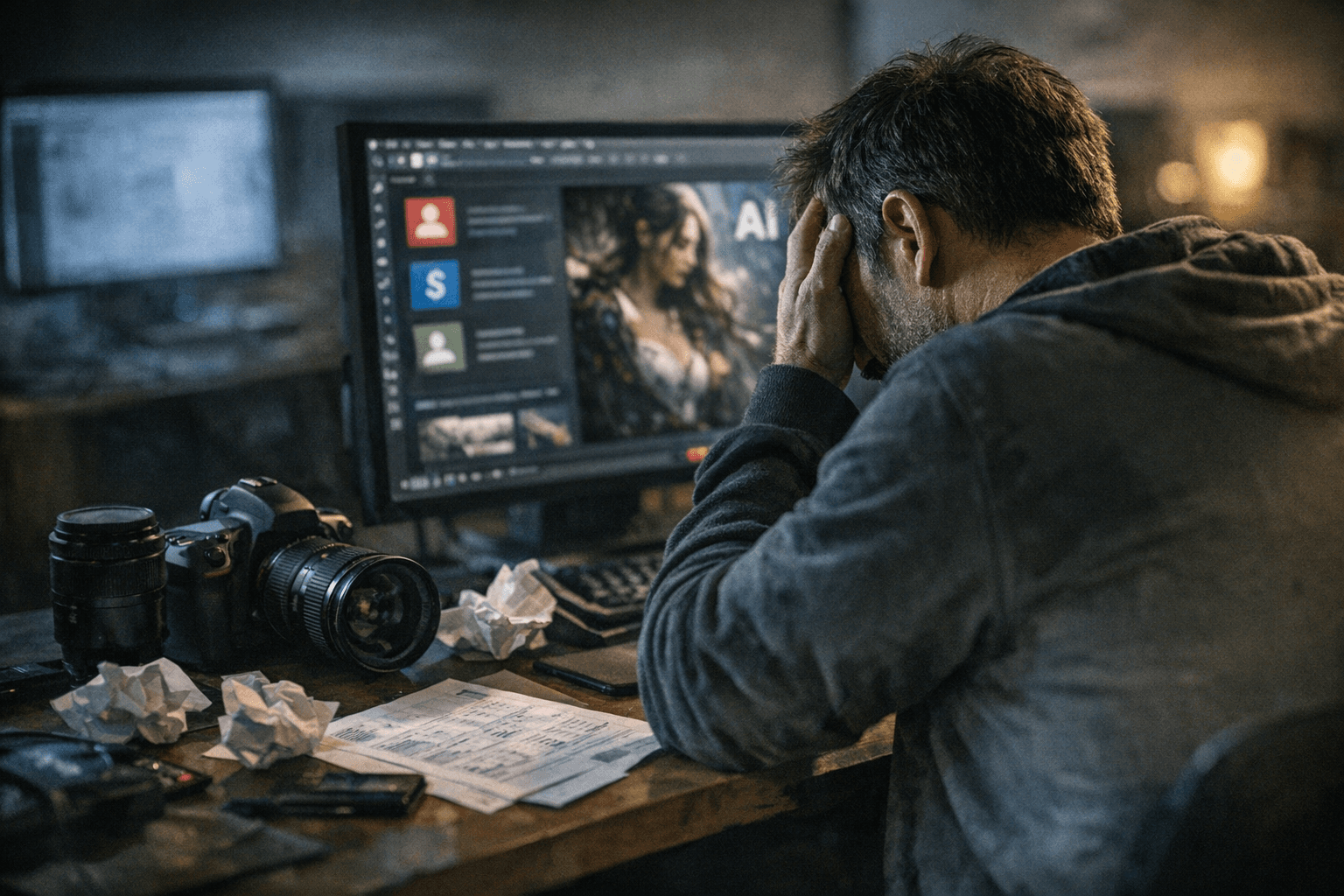
The breaking point was not one bad update
Adobe’s problem with photographers is bigger than a price hike or a single policy change. The company spent years turning a once-loved toolbox into a subscription gatekeeper, and the goodwill that helped make Creative Cloud feel inevitable has finally thinned out. That matters because Lightroom and Photoshop still anchor a huge share of photo workflows, which is exactly why the backlash cuts so deep: people are not abandoning throwaway software, they are questioning the platform they built their craft around.
The shift started in 2013, when Adobe moved from perpetual licenses to Creative Cloud subscriptions. In response to photographer backlash, it introduced the $9.99 per month Photography Plan for Photoshop and Lightroom, a concession that told users Adobe understood the panic it had caused. For a while, that worked. Photographers grumbled, paid, and stayed because the tools were indispensable. The current mood is different. Adobe no longer feels like the company that listened and adjusted. It feels like the company that learned users would tolerate almost anything as long as the files opened and the catalogs stayed intact.
Why the trust finally cracked
The erosion did not come from pricing alone. Adobe’s priorities have increasingly looked B2B-first, and its relationship with individual creators has felt more transactional than collaborative. That shift matters in photography because trust is not abstract here. It affects whether someone keeps their archive in Lightroom, whether they teach Photoshop to students, and whether they recommend Adobe to the next generation of shooters.
Then came the AI fights, which poured fuel on an already hot mess. In 2024, Adobe had to respond to backlash over its terms-of-use language after creators worried their work could be used to train AI systems. Adobe said that was a misunderstanding, but by then the damage was done. Once photographers start wondering whether a company is being transparent about how it handles their images, every product promise gets harder to trust. That same anxiety now shadows Adobe’s AI push, even when the company insists its Firefly models were trained on licensed Adobe Stock content and public-domain material where copyright has expired.
Adobe has tried to stabilize the conversation with transparency tools. It has emphasized Content Credentials through the Content Authenticity Initiative, presenting them as a way to show whether content was made or edited with AI. It has also said it would let users choose third-party generative AI models inside its ecosystem, a significant move because it signals Adobe understands that creators do not want to be locked into a single AI pipeline. But the fact that Adobe has to reassure people this aggressively tells you how far the trust gap has widened.
The legal and pricing hits made the resentment concrete
For photographers, resentment becomes actionable when it shows up on a bill or in a courtroom. On June 17, 2024, the Federal Trade Commission announced a lawsuit accusing Adobe and two executives of hiding early termination fees and making cancellations difficult. That kind of case lands especially hard with subscription users because it turns a pricing argument into a fairness argument. It is one thing to charge more. It is another to make leaving feel deliberately painful.
Adobe then added more friction. On December 15, 2024, the company said it would update Photography plan pricing on January 15, 2025. Reporting on that change said some monthly-paying U.S. photography subscribers could see increases of as much as $5, and the lowest-cost plan that included Lightroom and Photoshop would no longer be offered to new subscribers after January 15, 2025. That is the sort of detail that sticks with photographers because it directly changes the cost of staying inside the ecosystem. A small monthly increase is manageable; a pattern of nudges, restrictions, and plan reshuffling starts to feel like being herded.
In March 2026, Adobe said it had finalized a $150 million settlement with the U.S. Department of Justice, including $75 million in civil penalties and $75 million in free services for qualifying customers. Even when a company frames a settlement as a resolution, users remember what led to it. For a creative audience already skeptical about subscription ethics, legal headlines reinforce the sense that Adobe is not just expensive. It is increasingly hard to trust.
What Adobe is doing to calm the market
Adobe is not standing still, and that is part of why this story is so important. The company has tried to make Firefly look safer than the wider AI field by stressing that its models were trained on Adobe Stock and public-domain content with expired copyright. It has also leaned hard on Content Credentials, which are meant to make the editing chain more legible to viewers and clients. And by opening the door to third-party generative AI models inside its products, Adobe is acknowledging that photographers and designers want flexibility, not a closed wall.
That is smart product strategy, but it does not automatically restore loyalty. A lot of creatives have reached the point where they no longer ask whether Adobe is the best tool. They ask whether it is still the least risky default. That is a much weaker position for a dominant company, especially one that built its empire on being the obvious choice for serious work.
What this means for hobbyists and working photographers
For hobbyists, the practical question is not whether Adobe is finished. It is whether the balance has shifted enough to make alternatives worth the pain of moving. The answer is increasingly yes, even if migration still requires real effort. The more photographers feel trapped by subscriptions, unsettled by AI policy disputes, and irritated by pricing changes, the more they start evaluating other ecosystems with actual seriousness instead of polite curiosity.
That matters because software inertia used to protect Adobe. If enough people had already defended the company, the next complaint was just noise. Now the tone is different. The emotional center has moved from loyalty to fatigue, and fatigue is dangerous for a platform that depends on habit.
The real takeaway is not that photographers have suddenly fallen out of love with Adobe. It is that the company has burned through the cushion that once softened every bad decision. When a firm loses the benefit of the doubt, even modest price moves and policy ambiguities start feeling like insults. At that point, the alternatives do not need to be perfect. They just need to look like a way out.
This article was produced by Prism’s automated news system from verified source data, official records, and press releases, then run through automated quality and moderation checks before publishing. The system is built and supervised by the people who set the standards it runs under. Read our full AI policy.
Did this article answer your question?