Theo Bosboom uses a periscope macro lens to reveal flowers from insect view
A periscope macro lens lets Theo Bosboom turn flower beds into insect-scale landscapes, starting with camera height, not bigger blooms.
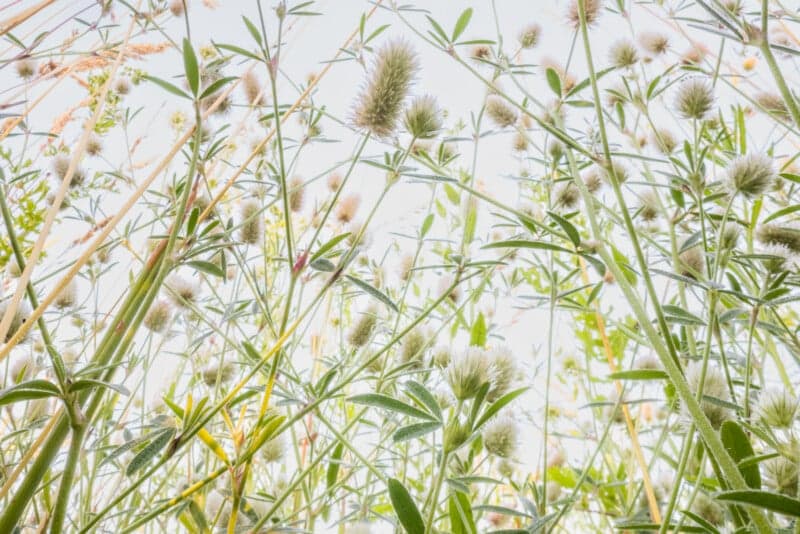
Theo Bosboom makes a simple but radical move: he drops the camera to where an ant or ladybug might travel, and the flower field stops reading like a close-up subject. It becomes a place, complete with depth, routes, and foreground obstacles, which is exactly the shift that makes Flowerscapes feel so immersive.
Start with the viewpoint, not the flower
Bosboom has been thinking about this angle for years. His Flowerscapes project grew from a long curiosity about what a tiny insect would see moving through a flower field, and his own description frames the book as a tribute to wildflowers. That idea matters because it changes the assignment before the shutter is even pressed: you are not chasing a perfect bloom, you are building a believable world at insect height.
That mindset fits Bosboom’s path. He left a legal career in 2013 to work full-time as a photographer, and he has spent years inside nature photography as both a practitioner and a judge, serving on juries for Wildlife Photographer of the Year, European Wildlife Photographer of the Year, Asferico, the Natural Landscape Photography Awards, and Groene Camera. In other words, he is not using a quirky technique for novelty. He is using it to expand how nature can be seen.
The lens is the assignment
The key tool in Flowerscapes is the Laowa 24mm T14 2x PeriProbe, a long and narrow wide-angle macro lens built for impossible angles. Its 90-degree periscope tip lets the front of the lens sit low among stems and blossoms, while 360-degree rotation gives you freedom to turn the perspective without moving the whole setup. Laowa lists an 85-degree angle of view, a 2 cm working distance, and 2x magnification, which together explain why the lens works so well for this project.
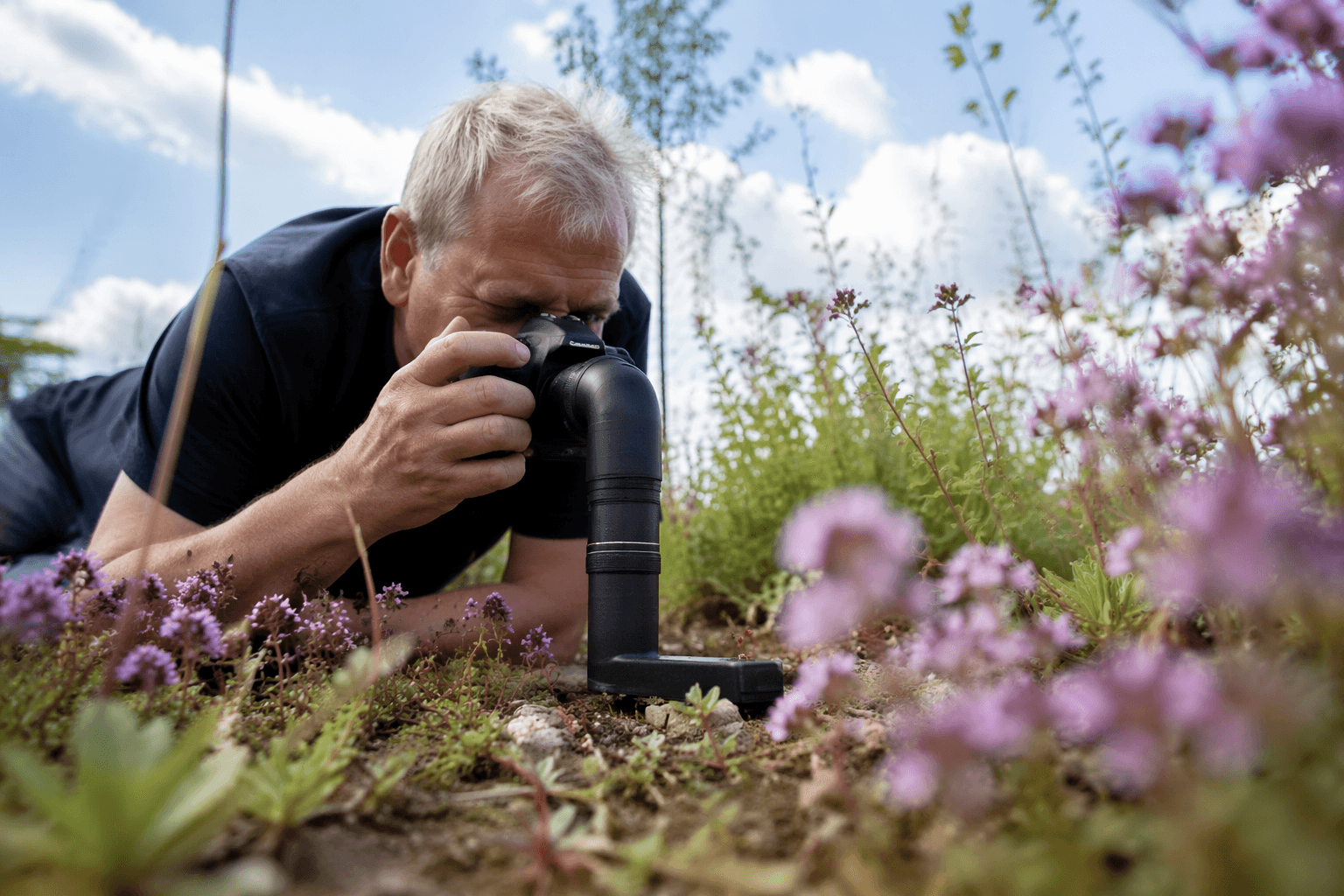
Those specifications are not just technical bragging rights. They are the reason Bosboom can place the camera inside the flower field instead of above it, then still hold on to a wide perspective that feels expansive rather than cramped. That combination is the heart of the look: the camera gets close enough to feel intimate, but the frame stays broad enough to suggest landscape.
For your own shooting, that means the lens choice should match the story you want the viewer to enter. A conventional macro lens may show detail, but a probe-style lens lets you build a scene. That is the difference between photographing a flower and photographing the world a flower occupies.
Compose like you are building a landscape
Bosboom’s hardest challenge was not finding flowers. It was organizing visual chaos so the frame still felt natural and immersive. The guide here is practical: leave enough breathing room between blossoms, pick a subject that can anchor the frame, and use stems and leaves as repeated lines that lead the eye instead of scattering it.
That is where bug-eye photography becomes more than a novelty. At ground level, every stem becomes a vertical, every leaf becomes a path, and every cluster of petals starts competing with the background. Bosboom’s images work because he treats those elements like landscape structure. He is not trying to flatten the scene into decoration. He is trying to make the viewer believe they could move through it.
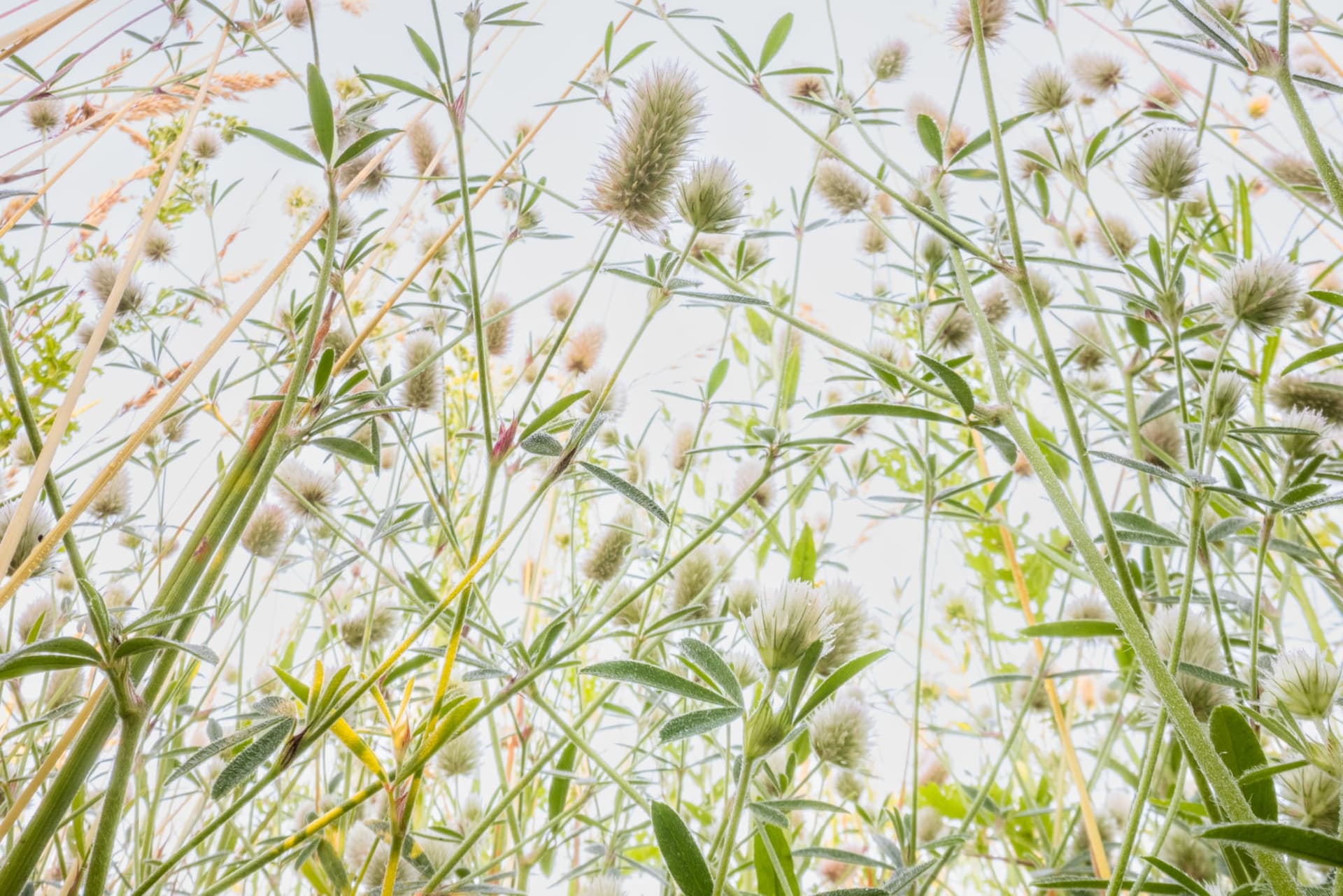
One of his favorite images came from a flower field on the outskirts of Harderwijk, in the Netherlands, near a highway and busy roads. That location is the perfect reminder that this approach is portable. A roadside verge, a field edge, or a patch of clover can all become convincing habitat if you lower the camera enough and let the frame organize itself around scale.
Bosboom also worked in verges, forests, dunes, and parks across the Netherlands, and occasionally over the border in Germany and Belgium. That range matters because it shows the method is less about pristine wilderness than about reading structure in ordinary places. The landscape can be modest, even unpromising, and still become immersive when it is viewed from the right height.
Use light to clean up the frame
Lighting is where many close-up flower images either settle down or fall apart. Bosboom preferred shade or cloudy conditions because the soft, even illumination helped him keep the scene unified. He also often worked early in the morning, when the light was gentle and the atmosphere calmer.
That preference makes sense once you are shooting from near the ground. At insect height, bright hard light can exaggerate clutter, deepen distracting shadows, and make blossoms feel disconnected from their surroundings. Softer light does the opposite. It reduces friction between foreground and background, which is exactly what you need when the frame is already full of stems, petals, and overlapping shapes.
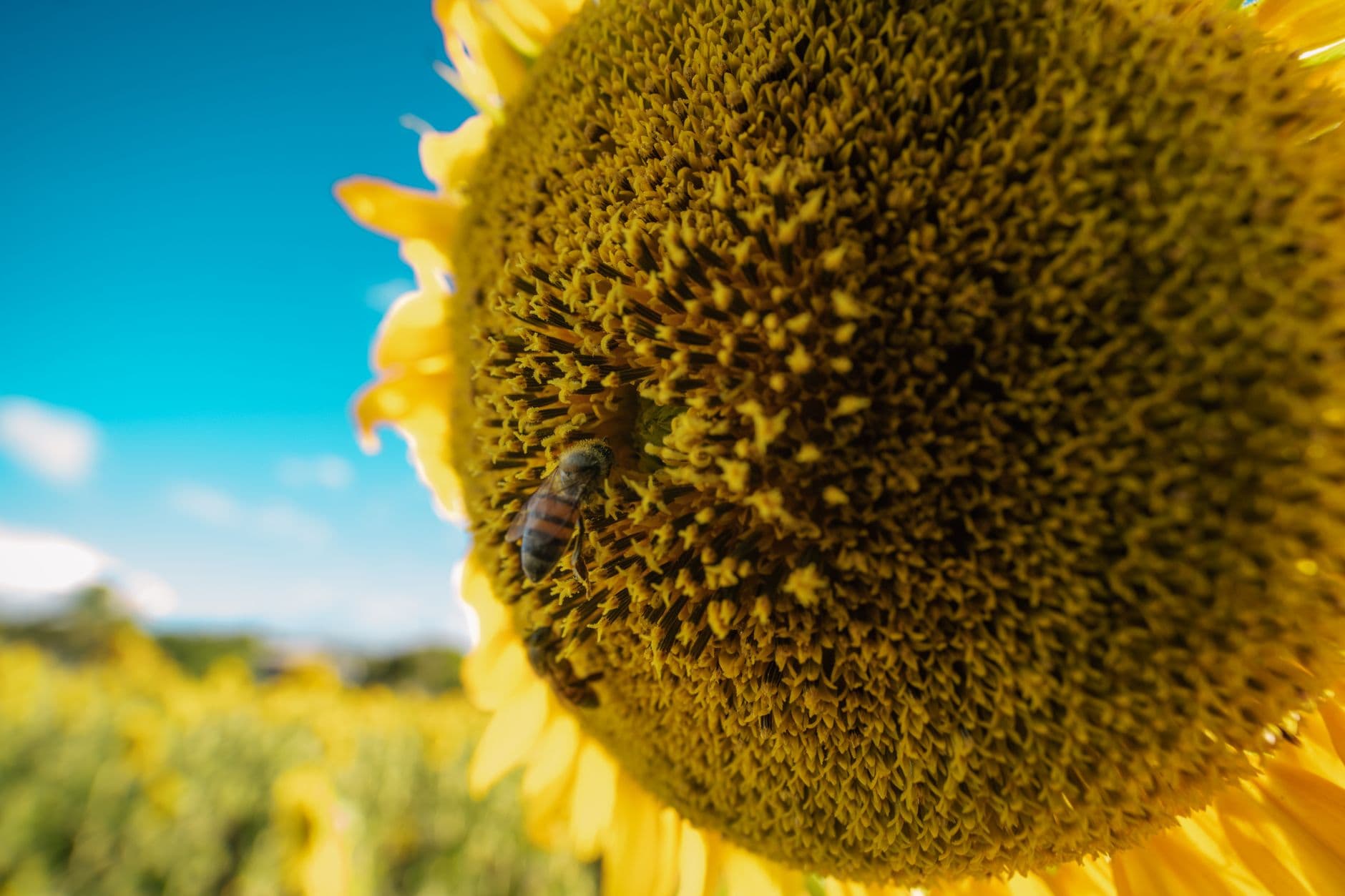
If you want the image to feel immersive rather than busy, the job is not to eliminate complexity. It is to control it. Bosboom’s choices show how much can be done with a narrow set of repeatable decisions: low camera placement, a wide macro lens, careful spacing, a strong anchor, and light that does not fight the scene.
A book project with real recognition
Flowerscapes was announced on April 24, 2025, with pre-sales starting in early May and ending on June 1, and the book was slated for release around June 15, 2025. Bosboom’s site also notes that Dutch cultural press responded warmly, with NRC’s weekend supplement calling it a “fraai fotoboek” and the photographs “feeërieke foto’s.”
That reaction fits the project’s larger appeal. Flowerscapes is not just an optical trick, and it is not just a technical flex from a specialized lens. It is a clear argument that perspective changes meaning. The project also won Bosboom the Fred Hazelhoff Portfolio Award, or portfolio winner recognition, for Flowerscapes at Nature Photographer of the Year 2025, which underlines that the work stands as serious photography, not a gimmick.
What Bosboom offers is a repeatable field lesson: get lower, simplify the frame, and think like the creature that would actually live inside the scene. From that height, a roadside clover patch stops being background. It becomes a landscape with scale, structure, and a point of view all its own.
This article was produced by Prism’s automated news system from verified source data, official records, and press releases, then run through automated quality and moderation checks before publishing. The system is built and supervised by the people who set the standards it runs under. Read our full AI policy.
Know something we missed? Have a correction or additional information?
Submit a Tip