Viltrox 16mm F1.8 L-Mount Sample Gallery Shows Strong Real-World Performance
Viltrox's first L-mount lens, the 16mm f/1.8, survived full-day rain and delivered strong neon-lit and landscape results at $580 in Abby Ferguson's early gallery.
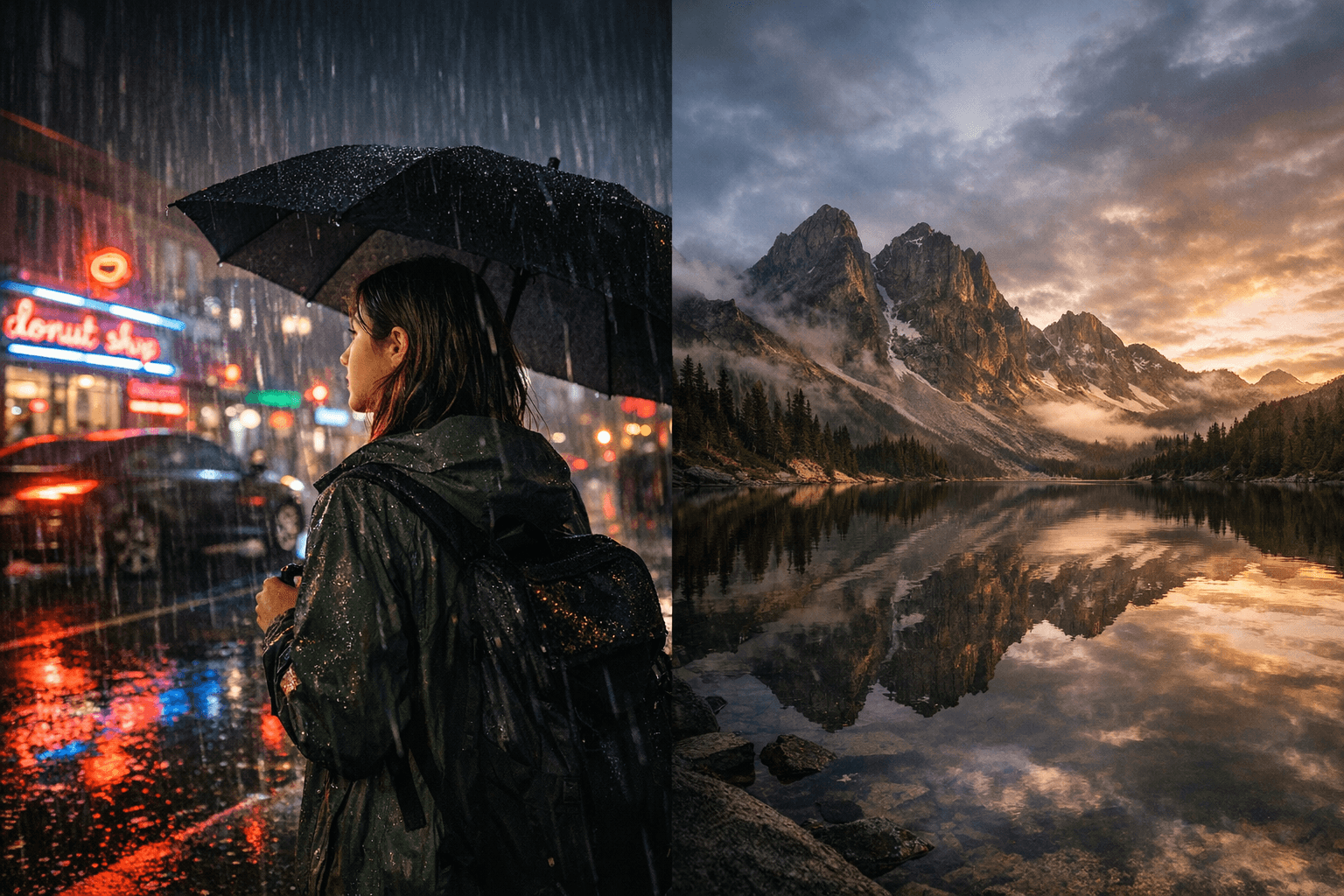
When DPReview photographer Abby Ferguson spent a rain-soaked day deliberately skipping any effort to protect the Viltrox 16mm F1.8 L, the lens kept working without complaint. That weather-sealing data point, buried in a field dispatch from March 27, turned out to be one of the more persuasive details in a gallery that already had plenty to say about Viltrox's ambitions in the L-Mount Alliance.
The 16mm F1.8 L is Viltrox's first lens since joining the alliance in September 2025, ported from existing E-mount and Z-mount designs to suit Panasonic and Leica bodies. The optical formula stays the same: 15 elements across 12 groups, including four ED and three aspherical elements, all wrapped in a 550g all-metal body with a flat 77mm front filter thread. That filter thread detail matters more than spec sheets suggest. At 16mm, landscape and astrophotography shooters lean heavily on circular polarizers and screw-in ND filters, and a standard 77mm thread rather than a protruding dome element means their existing filter stacks drop straight on without adapters or special holders.
The gallery's neon street frames are the strongest argument for the f/1.8 maximum aperture. Shot hand-held in dense urban low-light conditions, those images showed strong center sharpness and well-controlled flare in heavily backlit scenes, suggesting Viltrox's coatings are punching at a level consistent with the optical formula. Corner performance at f/1.8 looked usable for the focal length and price class, though the gallery drew from urban nighttime environments rather than open skies, so astrophotographers wondering about wide-open corner coma on point light sources will need to wait for DPReview's full technical review, where MTF charts and vignetting curves are still in the pipeline.
The daylight and forest landscape frames covered in-camera distortion correction and stopped-down corner sharpness, both of which held up well enough for architectural and interior work. Barrel distortion at 16mm is a known quantity, and with L-mount bodies applying correction profiles automatically, the practical result in interiors and horizon shots looked straight. Anyone doing real estate walk-throughs or interior environmental work would find the 0.27m minimum focus distance useful for foreground-to-background compositions, with the understanding that maximum magnification sits at around 0.1x rather than pseudo-macro territory.
The STM autofocus motor performed reliably through Ferguson's general shooting and street sessions. Viltrox tuned the AF specifically for L-mount behavior after the E and Z variants, and in everyday conditions it held its own. At 16mm, depth of field is generous enough that the edge cases where third-party AF struggles against native glass rarely surface in the field.
At $580, the lens sits well under the Panasonic Lumix S 18mm F1.8's near-$1,000 price point, offers a slightly wider perspective, and undercuts the Sigma 14mm F1.4 Art on both cost and weight while accepting standard filters. The buy case is strong for travel, landscape, and low-light street shooters who need something wide, fast, and light enough to not rethink the decision every time they check their pack weight. Astrophotographers chasing precise corner star rendering should hold until the full technical data arrives.
Know something we missed? Have a correction or additional information?
Submit a Tip

