Ashley Griffith shares five drills to sharpen pickleball match play
Griffith’s five drills are a retreat warm-up plan in disguise: they clean up dinks, resets, hands, drives, and point play before your first open game.

If you are packing for a pickleball retreat, Ashley Griffith’s drill list is the kind of prep that saves your first morning on court. Griffith, a 26-year-old right-hander from Wesley Chapel, Florida, is active in women’s doubles, mixed doubles and singles on Pickleball.com, and the PPA Tour frames her world as one with 25-plus stops and pro-level standards, not casual hit-and-giggle practice. She is still in the 2026 mix, with recent match listings in Portland and Atlanta, so these are drills from a player who knows what holds up when the pace gets real.
The 100-ball dink rally
This is the retreat antidote for players who need half a court length of warm-up before their soft game shows up. Griffith’s first drill asks you to rally 100 consecutive dinks with a partner, either straight ahead or crosscourt, without an error. The point is not to sneak in an attack, but to train a neutral ball that stays low, does not pop up, and cannot be attacked easily, which is exactly the kind of control that keeps a first-round open-play game from spiraling.
For retreat play, that matters because dinks are often the first thing to wobble when people jump straight from the parking lot into games. A group that can count clean dinks before it ever starts scoring points arrives less frantic and far less likely to spend the whole weekend trying to “find” its touch. Griffith’s logic is simple: if you cannot repeat a quality dink, you are not really ready for the kitchen line.
The slinky drill
The slinky drill is the one that cleans up the mess between the baseline and the kitchen, which is where a lot of retreat points go to die. One player starts at the kitchen line, the other at the baseline, and the baseline player works forward with drops and resets before the roles reverse. That back-and-forth movement forces you to reset difficult balls, hit controlled drops and stay patient while moving through transition instead of rushing to the line and donating a pop-up.
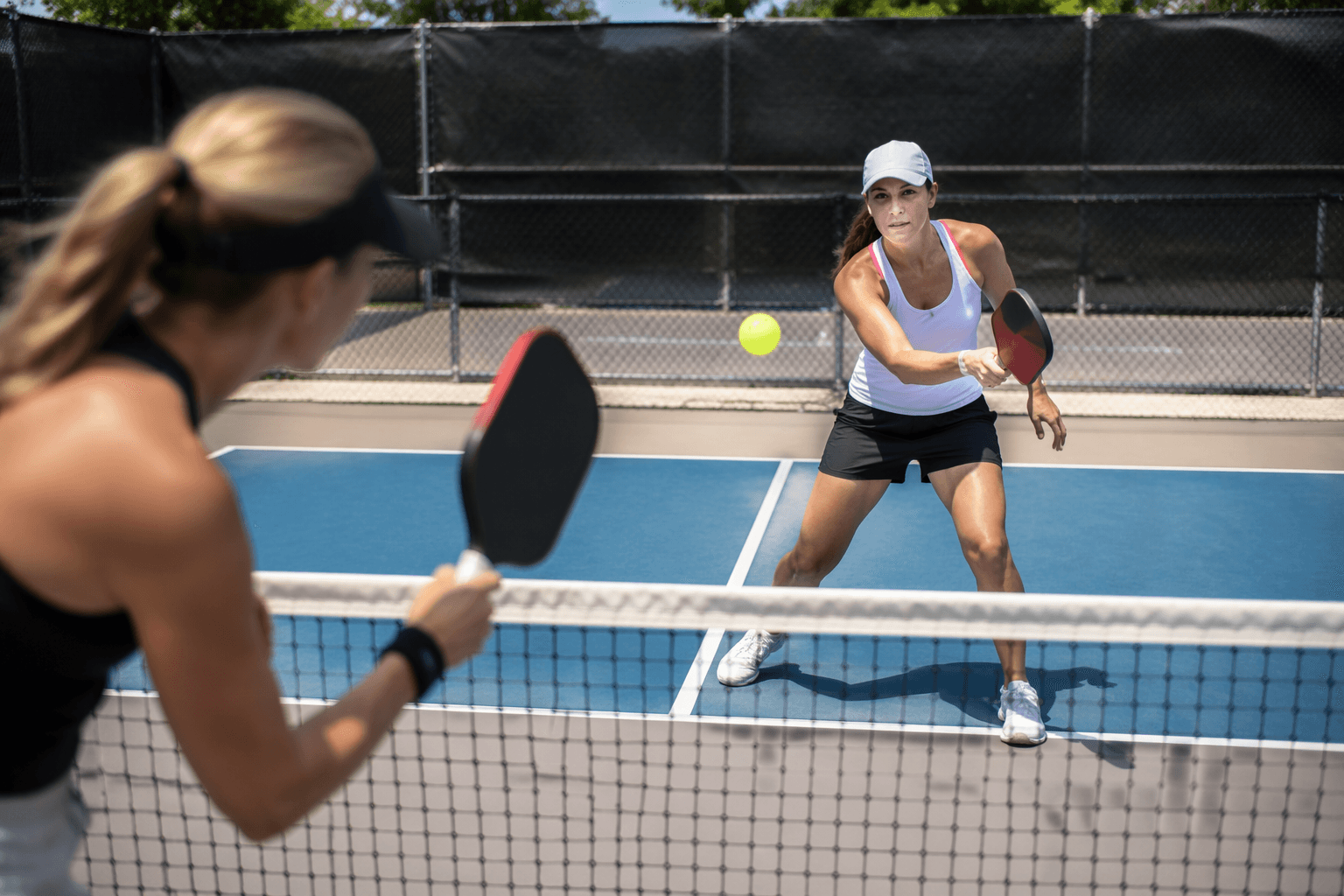
If your retreat pain point is a weak transition game, this is the drill you want before you ever play a real game. It teaches the body to keep moving while the hands stay calm, which is the exact problem that shows up when someone gets peppered in the middle of the court and starts making bailout swings. Griffith’s version is especially useful for mixed-level groups because the movement pattern is simple, but the shot quality bar stays high.
Dead dink hands
This is where soft play turns into the kind of point that makes players either look sharp or look late. In Griffith’s dead dink hands drill, two players exchange neutral dinks until one side intentionally sends up a slightly higher dead dink, the other attacks, and the rally turns into a fast hands battle at the kitchen line. The drill is built to train the exact moment when a patient rally becomes a speed-up, which is where a lot of recreational players get caught reaching or swatting.
For retreat programming, this drill solves the problem of good dinks that never quite become good points. Plenty of players can keep a rally alive in practice, then freeze when somebody speeds one up in a real game. Griffith’s channel reinforces that hand-speed and kitchen play are a core part of her coaching identity, and her recent videos lean hard into dinking, hand speed and kitchen work, which fits the same match-first training philosophy.
Controlled drives that actually pressure someone
The fourth piece is the one many retreat players need most, because too many drives are just loud misses. Griffith’s drill set is meant to improve drives as part of a bigger match-play package, and the clean way to train them is the same way Pickleball.com breaks down the forehand drive: balanced stance, knees bent, paddle up, a compact backswing, contact slightly in front of the body at about waist height, and purposeful targets. The best drives are aimed at feet, the middle, or open space, not just hit hard for the sake of it.
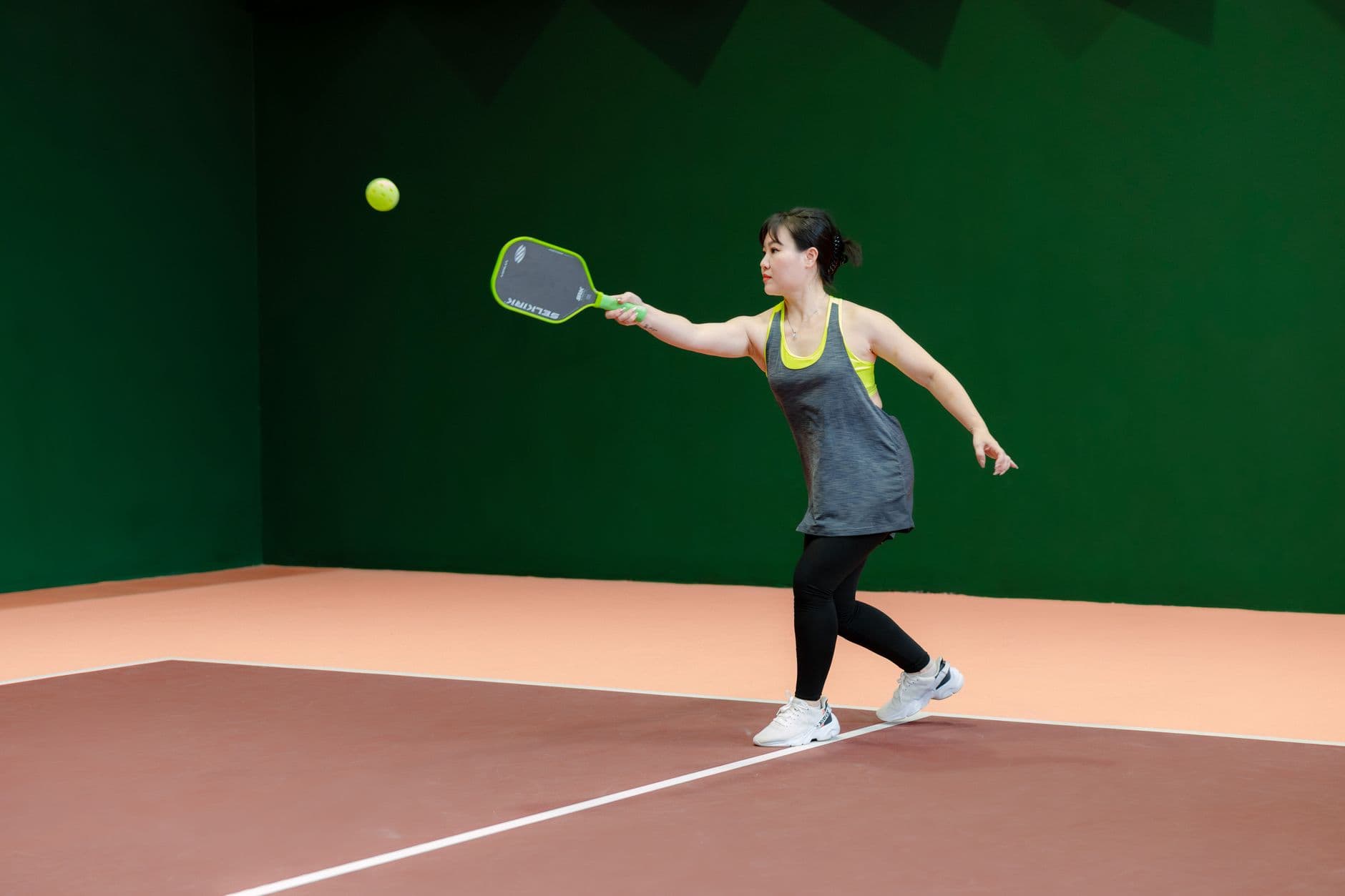
If you want a retreat-friendly version, use a wall drive drill from 8 to 12 feet away or a partner feed and work on steady rhythm before you chase speed. Pickleball.com’s drive guide also builds toward target driving and a feet-first pressure drill, where you aim at the opponent’s feet or hip and force a block or reset. That is the kind of repetition that helps a player stop spraying third shots in clinics and start setting up actual pressure in games.
Skinny-court games that feel like real points
The last step is the one that makes all the drilling travel. Pickleball.com’s training coverage keeps returning to skinny singles and skinny-court point play because it compresses the game into a space that still includes serves, thirds, mid-court work and kitchen exchanges. John Cincola’s practice plan moves from dinks and hands into skinny-court games for exactly that reason: it connects controlled repetition to live decision-making before you jump into full-court chaos.
For a retreat, that is the bridge between a clinic and open play. Skinny-court games let mixed-level groups get more touches, more rallies and more honest reps than a full court scramble where the stronger pair dominates every point. It is the right final layer because it tests whether the dinks, transitions, hands and drives you worked on actually survive when the score matters.
That is why Griffith’s five-drill approach works so well before a retreat weekend. It gets you through the awkward first stretch, steadies the transition game, sharpens the hands, gives the drive some purpose, and then puts the whole thing back into live points so you show up ready to play, not ready to relearn the basics.
This article was produced by Prism’s automated news system from verified source data, official records, and press releases, then run through automated quality and moderation checks before publishing. The system is built and supervised by the people who set the standards it runs under. Read our full AI policy.
Did this article answer your question?