Independent guide spotlights the best pickleball paddles for 2026
The newest paddle guide is less about hype and more about fit, with comfort, balance, and demo-first testing now driving what players pack for retreats.
The market has moved past the one-paddle-fits-everyone myth
The useful thing about this paddle guide is that it reads like a market snapshot, not a shopping checklist. It shows how far the gear conversation has shifted from chasing the hottest face texture or the loudest marketing claim to something more practical: how a paddle feels in your hand, how it plays across different speeds, and whether it matches the way you actually swing.
That matters in a bigger way now because pickleball is no longer a niche gear game. The Sports and Fitness Industry Association estimated that about 24.3 million Americans played in 2025, up 22.8% from 2024, and USA Pickleball’s annual growth report says the court map kept expanding too, with Pickleheads adding more than 2,300 new locations in 2025 for a nationwide total of 18,258 locations and 82,613 known courts. When the player base is that broad and the court footprint is that large, it makes sense that paddle coverage has gotten more specific, more tested, and much harder to bluff.
What the testing actually prioritized
The best part of the guide is that it did not treat paddle choice like a theory exercise. The testing consulted pickleball pros and then put paddles through indoor and outdoor play with beginners, advanced players, and a handful of pros, which is exactly the right mix if you want to understand how a paddle behaves outside a clean lab or a polished product page.
That process surfaced a simple but strong buying rule: start with feel, then decide whether you want more power, more control, or a better blend of both. Megan Charity, a former pro and co-owner of Rally Pickleball in Charlotte, puts comfort and balance first. Todd Jungling of PickleballMAX makes the same point from a different angle, saying the right paddle is the one that matches your style rather than some universal best.
Why that advice lands with retreat players
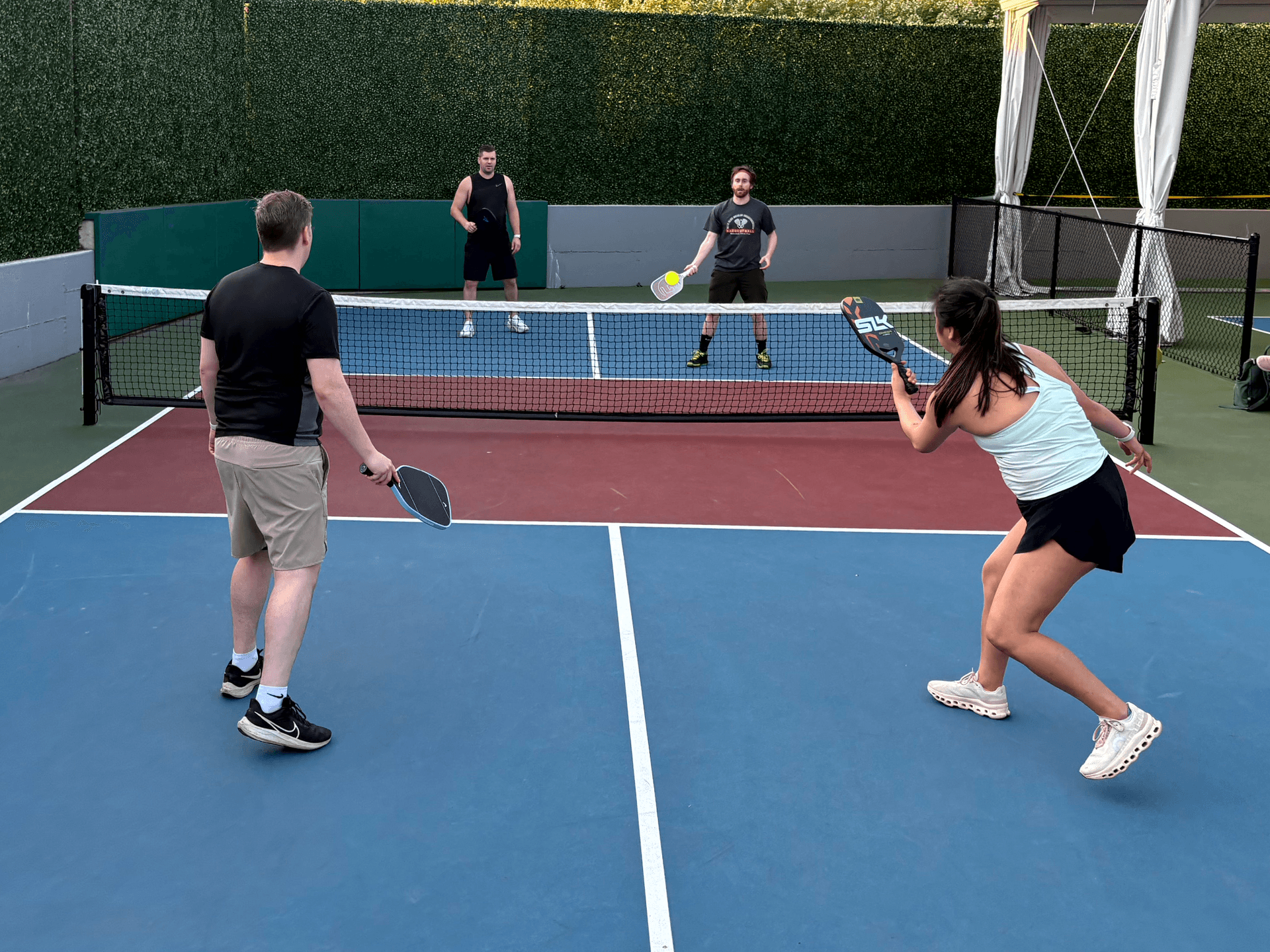
That perspective matters especially for travel and retreat play, where a paddle often has to do more than one job. You may be drilling in the morning, playing mixed-level matches later, and then switching between indoor and outdoor courts depending on the property or the weather. In that kind of setting, the most valuable paddle is usually the one that feels stable on day one, not the one that only looks impressive in a spec sheet.
Rally in Charlotte is a good example of the same shift in the experience economy. It opened in 2024 after its founders raised a reported $15 million seed round, and it was built as a hybrid pickleball-and-hospitality concept with indoor and outdoor courts, food, drinks, and plenty of room to lounge. That is the same world this paddle guide speaks to: players who are no longer just buying equipment, but building a whole trip around the game.
The standout specs that matter most
The guide’s top overall pick, the Selkirk OMEGA Hybrid Air Max, is a good case study in where the market has landed. The appeal is not just that it is a strong all-around option. It is that it combines a large, forgiving sweet spot with balanced performance, a carbon fiber face, foam-injected edges, and strong spin potential. For players who want one paddle to cover a lot of court situations, that balance is the whole point.
Selkirk’s own description helps explain why it stood out. The OMEGA Hybrid Air uses a 12k UltraWeave Carbon Fiber Face, edgeless open-throat construction, ProSpin+ texture, and high-density foam walls. Selkirk says the Max shape is built to offer the largest surface area and sweet spot in its shape family, which lines up neatly with why this model works as an all-court recommendation rather than a specialist weapon. The one catch is also useful: the open-throat cutout can take some adjustment, so this is not the sort of paddle you buy if you want instant familiarity with no learning curve.
What the other picks tell you about buying trends
The rest of the guide is just as revealing because it shows how wide the market has become. The Pickle Genius is the budget choice, which tells you value is still a real battleground. The Diadem Rush is aimed at intermediate players, the Paddletek Bantam TKO-C 12.7 is the pro-level pick, and the Head Gravity Tour, Onix Hype X, Franklin T700 carbon fiber paddle, Gamma Rainmaker, Link Slice of Heaven, and Selkirk x Dude Perfect bundle round out a field that spans casual buyers, improving players, and serious competitors.
That spread says two important things. First, there is real overlap between beginner and pro buying habits now, because both groups care about sweet spot, balance, and consistency more than noisy branding. Second, value is becoming more nuanced, since the “best” paddle is not always the most expensive one, and the budget option can still be worth attention if it gives a newer player enough control to stay in rallies and enjoy the game.
What to pack, demo, and shop for this season
If you are heading to a retreat, the smartest takeaway from the guide is to treat your paddle like a trip-specific tool, not a trophy purchase. Bring the model that feels dependable on the first few drives and blocks, especially if you expect a mix of court surfaces, indoor air, outdoor heat, or a lot of play against different skill levels. The guide’s real advice is to demo before you buy whenever possible, because grip, balance, and face feel reveal more in ten minutes of play than a page of product copy ever will.
That is where the guide becomes more than a recommendation list. It captures a sport that is growing fast, a court network that keeps spreading, and a buying public that has gotten wiser about what actually shows up in the bag. The best paddle for 2026 is not the flashiest one on the wall, it is the one that feels right when the retreat starts, the games get mixed, and the court asks for something you can trust right away.
This article was produced by Prism’s automated news system from verified source data, official records, and press releases, then run through automated quality and moderation checks before publishing. The system is built and supervised by the people who set the standards it runs under. Read our full AI policy.
Did this article answer your question?