Pickleball fourth shots become scoring chances with full-body power
The fourth shot is where the point starts tilting. Full-body power turns a common reset into a pressure ball that can win the next exchange.

The fourth shot is where points quietly change hands
The fourth shot has always sat in the shadow of the third, but that is exactly why it is so valuable. In a sport that now has 19.8 million U.S. players and keeps drawing in more people every season, the earliest exchanges are where recreational points get decided fastest, and the fourth ball is often the first real chance to swing the rally in your favor. That is the core shift The Dink is pushing: stop treating the fourth shot like a survival ball and start seeing it as a pressure shot that can force errors, pin opponents back, and change the tone of the point immediately.
Ben Johns has already helped make that idea mainstream by pointing out that the fourth shot is one of the easiest parts of the game to improve and one that can make matches feel easier. Richard Livornese, an APP pro, takes that one step further in the fourth-shot conversation by framing pressure as the goal. If your third shot is the doorway into the kitchen battle, your fourth is the first chance to slam that door back in the other team’s face.
Why the third-shot battle sets up the fourth
USA Pickleball has long framed the third shot as one of the most important and toughest shots in the game because it helps the serving team move from the baseline to the Kitchen line and take control of the rally. A successful third-shot drop lands softly in the kitchen, forces opponents to hit up, and buys the serving team time to advance. That is the blueprint most players know by heart.
The overlooked part is what happens next. The receiving team is no longer just returning a ball, it is reacting to the transition plan. That is where the fourth shot becomes a counterpunch rather than a placeholder. If the third shot is soft and safe, the fourth shot is the first place you can ask a harder question: can the team at the net handle pace, depth, dip, or spin while they are still trying to settle in?
That matters in a huge number of recreational rallies. Many players survive the third shot and then default to a passive fourth, even when the ball sits up in a way that invites action. The better move is not always reckless aggression. It is using the fourth ball to make the opposing team defend again, often before they have fully established the rhythm they want.
Full-body power changes the shape of the rally
The Dink’s guide makes a simple but important correction to how many players swing: power does not come from the arm alone. A stronger fourth shot uses the legs, hips, and core to create a longer, more athletic motion. That kinetic chain gives you speed, control, and spin, and it does it without turning the swing into a wild lash.
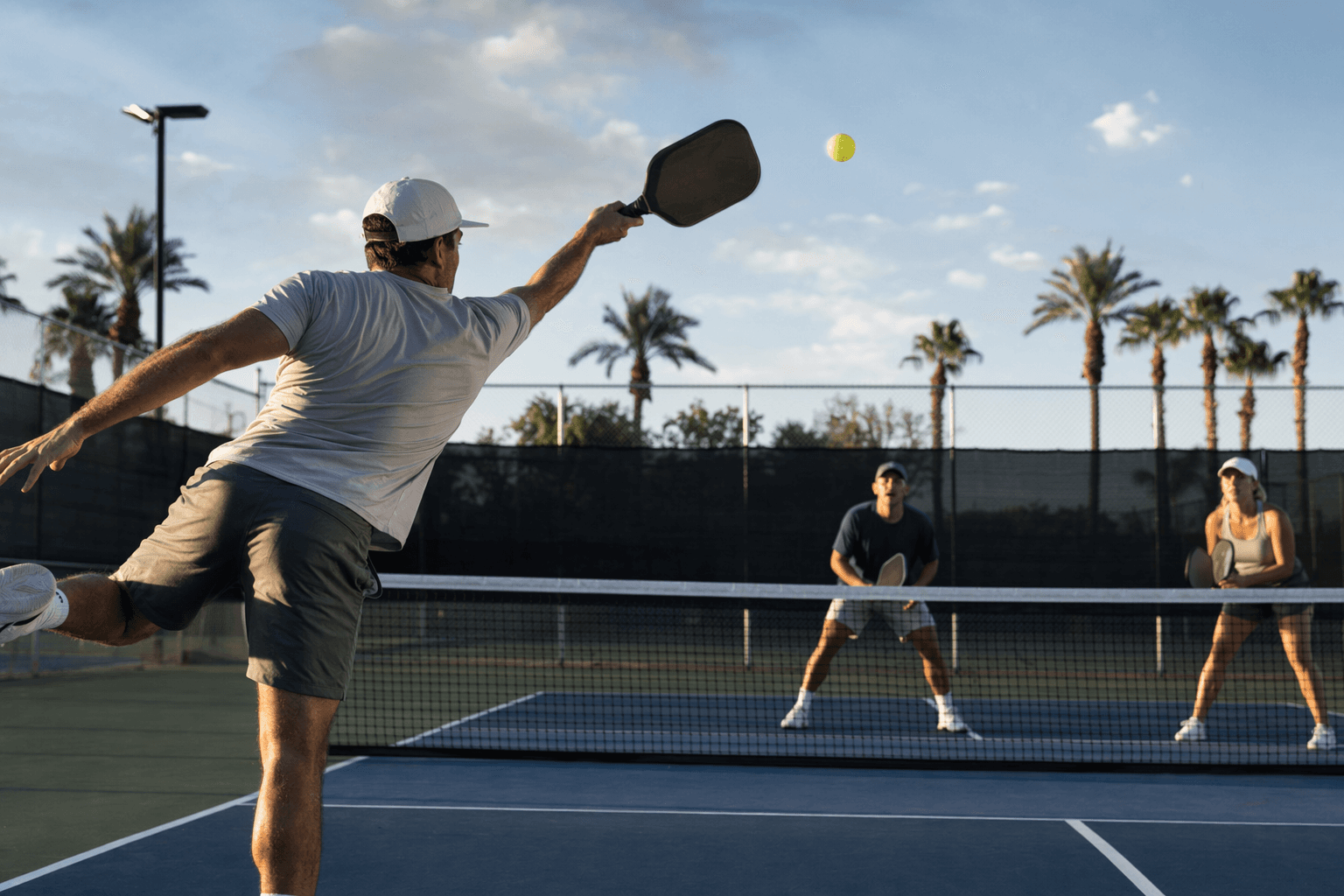
This is the counterintuitive part. A bigger swing sounds less safe, but when it is built from the body instead of the wrist and forearm, it usually makes the ball harder to attack. The extra acceleration helps produce depth and dip, which means your opponent sees a ball that is both harder to time and harder to hit up cleanly. That is how a fourth shot stops being a reset and becomes a point-builder.
The technique also fits the rest of pickleball instruction around the kinetic chain. Coaches consistently stress that legs, hips, and core produce more power, more speed, and better control than an arm-only motion ever will. In practical terms, that means loading the body, rotating through contact, and letting the paddle accelerate through the ball instead of steering it. The goal is not a big swing for its own sake. The goal is a ball that lands deep, dips late, and keeps the other side on defense.
What it looks like in common retreat-level situations
The fourth-shot decision gets most valuable in three very common rally patterns. First is the returning team under pressure. When the third shot comes back with quality, a lot of players answer by simply getting the ball back. That is exactly when a fuller-body fourth shot can flip the exchange, because a deep, spinning reply can freeze the transition and force a weaker fifth ball.
Second is transition-zone indecision. You see this when players have moved forward, but not fully settled in at the kitchen. They are between baseline habits and net pressure habits, and that is the moment where a fourth shot can punish hesitation. A ball driven with pace and controlled body rotation can keep that team pinned in the middle and deny it the chance to reset cleanly.
Third is the rushed speed-up. Several coaching guides now describe the fourth shot as a real game-changer because it can create chaos, speedups, and rushed fifth balls. That is exactly the point: you are not simply trying to end the rally. You are trying to create a ball that makes the next shot uncomfortable enough that the other side hands you a better attack later.
How to turn a fourth shot into a scoring chance
There is a clear tactical pattern behind the best fourth shots. Livornese’s point about pressure is really about forcing a lower transition percentage from your opponent, and that starts with giving them a ball they cannot cleanly absorb. When you hit with full-body power, you make the rally heavier, deeper, and more demanding.
A better fourth shot usually includes these elements:
- A loaded lower body before contact
- Rotation through the swing instead of a flat arm poke
- Paddle acceleration through the ball
- Enough length in the motion to create spin and dip
- Aiming for depth that keeps opponents back or off balance
That approach does not mean swinging at every ball. It means recognizing when the fourth shot is sitting in the strike zone and choosing pressure over caution. If the ball is floating, attack it with structure. If it is low and unworkable, reset wisely. The key is that the decision is intentional, not automatic.
Why this message is catching on now
This emphasis on the fourth shot is part of a larger change in how the game is being taught. Pickleball is no longer just about getting the ball over the net and surviving the kitchen battle. SFIA says the sport has been the fastest-growing in America for four straight years, and participation reached 19.8 million in 2024, up 45.8% from 2023. USA Pickleball’s annual growth report also shows membership climbing to 104,828 in 2025.
That growth matters because more players means more rallies, more coaching, and more demand for edges that show up immediately in real matches. At a time when the sport is expanding so quickly, the biggest gains are often not hidden in obscure strategy. They are sitting in front of players on the first four balls of the point.
The fourth shot is one of them. Treat it like a chance to apply body-powered pressure, and it stops being a neutral exchange. It becomes the moment where passive defense turns into scoring intent, and where a rally that looked ordinary suddenly belongs to you.
This article was produced by Prism’s automated news system from verified source data, official records, and press releases, then run through automated quality and moderation checks before publishing. The system is built and supervised by the people who set the standards it runs under. Read our full AI policy.
Did this article answer your question?