Pickleball volley fix, keep paddle forward and swing compact
The cleanest volley fix is smaller than it looks: keep the paddle forward, swing compact, and you stop donating the kitchen line.
The volley mistake that gives points away
The most common volley error in rec play is also the easiest to miss in the mirror: you are swinging like the ball is on the ground. Ashley Griffith, a PPA Tour pro and coach, breaks that habit down into one simple truth, the volley is a quick net shot, not a full arm-driven stroke. The second your paddle starts traveling like a groundstroke, you turn a controllable hands battle into a late, reactive scramble.
That mistake shows up fast in social doubles. You drift, you load up, you chase contact, and the ball is already past you before your swing finishes. The fix is not to hit harder, it is to stop giving up time and space at the kitchen line.
Keep the paddle forward before the ball arrives
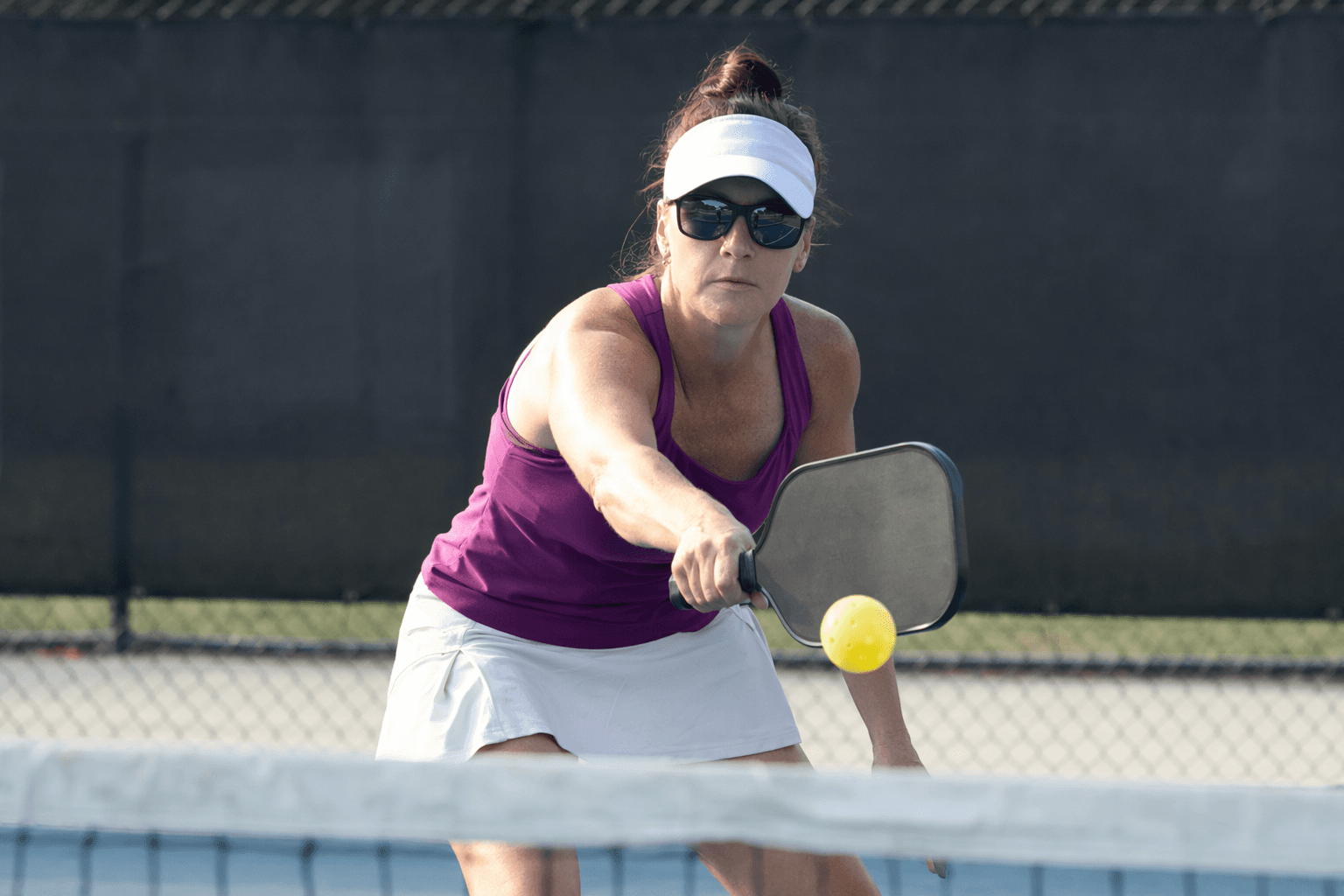
The first movement check is blunt: if your paddle is behind your body, you are already late. At that point, you are reacting instead of controlling the point, and your contact point is no longer in the sweet spot in front of you. Griffith’s key cue is to keep the paddle out front, around chest height or slightly higher, so your hands are ready the moment the ball comes into your zone.
That forward position does more than improve contact. It keeps you balanced, weight forward on the balls of your feet, and ready for the next ball instead of stuck finishing the last one. USA Pickleball’s volley fundamentals echo the same idea, with a proper punch volley starting paddle up and in front of the body, ready for quick reactions. If your paddle is hanging low by your hip or trailing behind your shoulder, the rally is already asking more of you than it should.
Why compact beats big at the kitchen line
The second fix is just as important: shorten the swing. A volley does not need a big backswing, a shoulder turn, or a long follow-through to be effective. At the net, your advantage is already built in, so the goal is control and precision, not raw power.
That is why a compact punching motion works so well. It lets you meet the ball quickly, redirect pace, and stay stable through the exchange instead of overcommitting to a swing that pulls you out of position. USA Pickleball’s guidance on punch volleys makes the same point, recommending a short, compact punching motion rather than a full swing. In practical terms, you are trying to finish the point or take away the opponent’s angle, not blast through the ball and hope for the best.
For retreat clinics and doubles sessions, this changes the feel of every hands battle. You stop reaching for a dramatic winner and start winning the small exchange that decides who owns the kitchen.
The kitchen line is where this mistake hurts most
This correction matters because so many volleys happen right where the pressure is highest, the Non-Volley Zone line. USA Pickleball calls that line the most strategic spot on the court, and the geometry explains why. The line sits 7 feet from the net, and it is part of the non-volley zone under the official rulebook, so a volley while touching that area is a fault.
That makes body control as important as paddle control. When you are at the line, every wasted inch and every delayed reaction narrows your margin. Dropping the paddle below the net also costs you precious milliseconds at the kitchen line, which is why the best players keep the elbows in front and the hands in a compact ready position.
The point is not just technical neatness. A strong volley posture lets you keep pressure on opponents, control the pace, and win quick points from the most valuable real estate on the court. When your paddle stays forward and your swing stays short, you are not just cleaner, you are harder to rush.
Ashley Griffith’s timing makes the lesson feel current
Griffith’s own profile gives the advice extra edge. She is listed as a U.S. tour pro, she turned pro in 2024, and she resides in Wesley Chapel, Florida. That matters because the lesson is not coming from a theory-only coach, it is coming from someone living inside the pro-game tempo while competing in the current tour cycle.
Her timing also places this advice against a real competitive backdrop. She was competing in the 2026 Veolia Atlanta Pickleball Championships that ended May 3, 2026, and the PPA Tour’s 2026 Toys “R” Us PPA Finals are set for May 4 through 10 in San Clemente, California. That is the same tour environment where crisp hands, compact mechanics, and forward paddle position are rewarded immediately, not later.
The reset to use before your next clinic or getaway
If you want the fastest read on your own volley, check three things the next time a fast exchange starts:
- Is your paddle up and in front of your body before the ball arrives?
- Are your elbows staying in front so your reaction time stays short?
- Is your motion compact enough that you can redirect instead of swing through?
If any of those answers is no, you have found the leak. The fix is simple enough to repeat under pressure, which is exactly why it changes your net play so quickly. Keep the paddle forward, keep the swing compact, and the kitchen stops feeling like a scramble and starts feeling like your point to control.
This article was produced by Prism’s automated news system from verified source data, official records, and press releases, then run through automated quality and moderation checks before publishing. The system is built and supervised by the people who set the standards it runs under. Read our full AI policy.
Did this article answer your question?