Pickleheads updates paddle guide after testing 200-plus paddles
Pickleheads' refreshed guide turns a crowded paddle market into a retreat-ready cheat sheet, matching tested models to long rec days, round robins, wind, and tired arms.

The right paddle shows up on day one, but it earns its keep on day three. Pickleheads updated its flagship buying guide on May 29, 2026 after testing more than 200 paddles and giving each one about 10 hours on court, and that kind of hands-on filter matters most when you are packing for a multi-day retreat.
Why this guide matters on a retreat
Pickleball’s boom has made gear decisions harder, not easier. SFIA estimates U.S. participation jumped from about 4.2 million players in 2020 to more than 24.3 million in 2025, while USA Pickleball’s 2025 Annual Growth Report says membership reached 104,828 and sanctioned 144 tournaments that year. The same report says Pickleheads added more than 2,300 locations in 2025, bringing the national total to 18,258 places to play, and Pickleheads says its database now lists 82,613 known courts nationwide.
That growth has pushed equipment from a casual purchase to a real decision, especially for retreat players who may be logging long rec sessions, jumping into mixed-skill round robins, or playing outdoors in changing conditions. USA Pickleball says it has been the trusted leader in equipment testing since 2010, and its approved-equipment database remains the reference point for sanctioned play. In 2026, the stakes got even clearer when USA Pickleball and Pickleball Instruments launched paddle field testing at Golden Ticket events, beginning with the January 21 to 25 tournament in Glendale, Arizona. Players at those events needed Challenger or Champion membership, and officials planned to test paddles on site when time and circumstances allowed.
That tighter environment follows USA Pickleball’s move to sunset certain paddles for sanctioned play starting July 1, 2025, along with the earlier JOOLA and Chorus decertification disputes that reminded everyone how fast legality can shift. For anyone booking a getaway with tournament-adjacent play or coaching-heavy sessions, a paddle is no longer just about feel. It is also about whether it holds up to scrutiny, repeated use, and the pace of a full retreat schedule.
How the 2026 guide is built
Pickleheads does not treat the paddle market like a one-size-fits-all list. The guide organizes options by play style and spending level, then explains what each model actually does in real play instead of leaning on specs alone. That approach is the reason it works for retreat players: the best paddle for a long weekend of social games is not always the same one you would choose for a hard-edged league night.
The guide’s overall framing is practical. It is looking for value, durability, forgiveness, spin, power, and feel, then matching those traits to the kind of court time people actually face on a getaway. That makes it especially useful for players who do not want to carry two or three paddles, but still want something that will hold up through consecutive days of play.
For long rec sessions and consecutive days: Honolulu J2CR Crystal Blue
If your retreat is built around long rec blocks, the Honolulu J2CR Crystal Blue is the guide’s strongest all-around answer. Pickleheads says the paddle’s new Crystal Blue grit lasts longer than many competing surfaces and keeps producing spin without dropping off quickly, which is exactly the kind of detail that matters when the same paddle has to survive a full weekend instead of one league night.
The guide frames that durability as the reason it is the best value under $200 for players who care about performance and longevity together. On a retreat, that combination means you are less likely to feel the paddle fade by the final day, especially if your schedule includes back-to-back open plays, clinics, and partner mix-ins.
For mixed-skill round robins: Bread & Butter Loco
Round robins on retreat weekends usually mix soft hands, aggressive bangers, and players who are still adjusting to each other’s pace. Bread & Butter Loco is positioned for that middle ground as a strong all-court option, which makes it a smart fit when the group is constantly changing and every rally demands a different answer.
That all-court profile is useful because it keeps you from overcommitting to pure power or pure touch. In mixed-skill play, the paddle has to forgive enough mistakes to keep games fun, but still respond cleanly when the pace jumps. The Loco’s value in the guide is not that it dominates one narrow lane. It is that it stays usable across a messy, social, travel-heavy mix of games.
For windy outdoor courts and pace-control balance: Holbrook Fuze
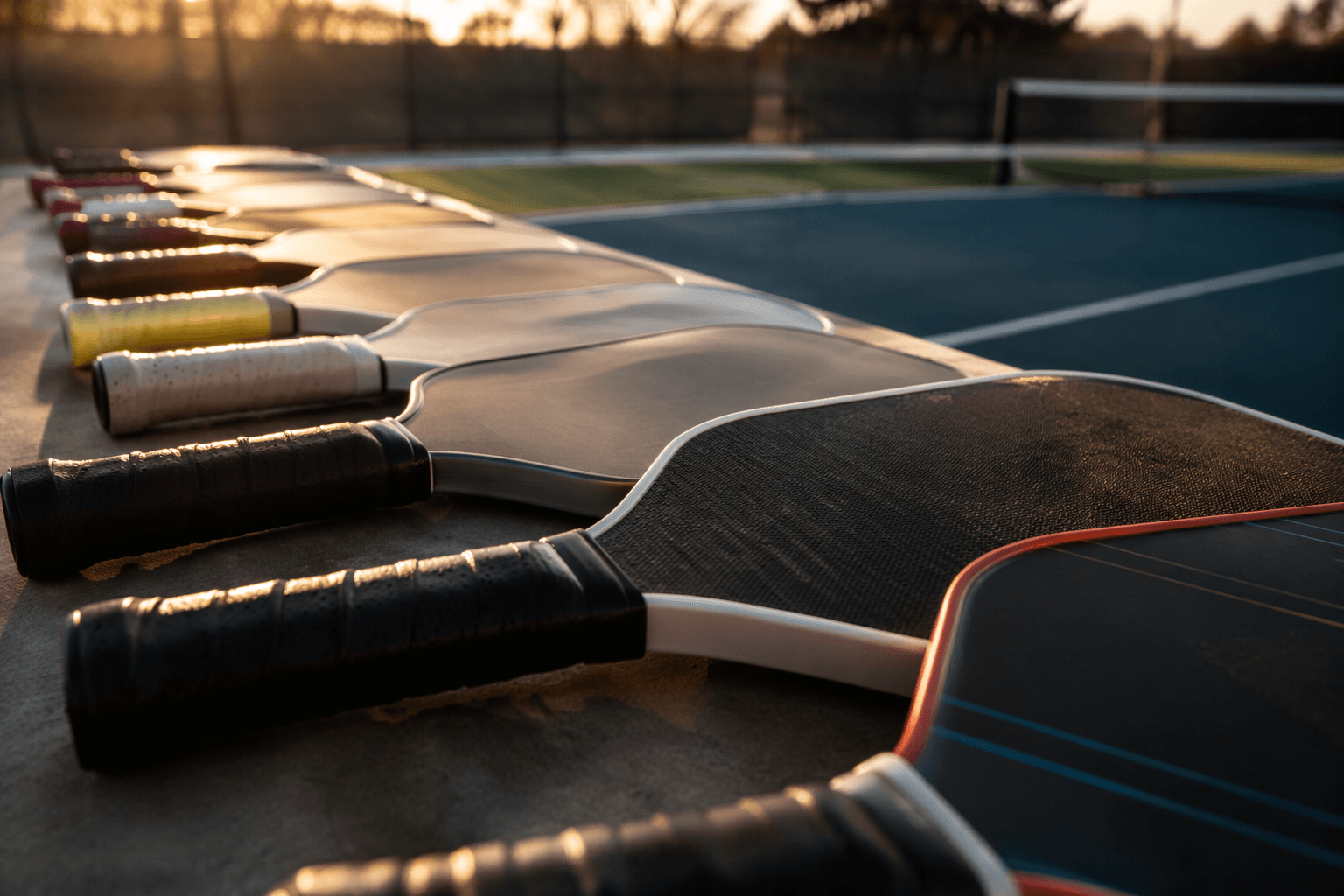
Wind changes everything on outdoor courts, especially when a retreat schedule sends you from one exposed venue to another. The Holbrook Fuze is the guide’s power-oriented answer for players who still want control, which makes it well suited to conditions where big swings can get reckless and soft hands can get blown off target.
That balance matters on vacation courts that do not play the same way every day. If your retreat includes exposed courts, afternoon gusts, or quick transitions from warmups to competitive games, the Fuze gives you a paddle that can add pace without turning every shot into a gamble.
For arm fatigue and budget-conscious comfort: Vatic Pro V-SOL Pro
A retreat can punish the body faster than a normal week of play, especially when the sessions stack up and you are still trying to show up for every game. The Vatic Pro V-SOL Pro is the guide’s budget pick for players who want a foam-core feel without paying premium prices, and that makes it a sensible choice for anyone trying to reduce strain without overspending.
The appeal here is comfort with restraint. A foam-core feel can soften the experience enough to keep your arm fresher across consecutive days, while the lower price point makes it easier to justify as a travel paddle that may get more abuse than your everyday game stick. For a lot of retreat players, that is the sweet spot: playable, comfortable, and not precious.
For advanced spin and premium response: CRBN TruFoam Barrage and JOOLA Pro V
The guide gets more selective once the game gets more demanding. CRBN TruFoam Barrage is reserved for advanced players who want more spin, dwell, and versatility, which suits the retreat player who already knows how to use a paddle that rewards precision and layered shot-making.
At the premium end, the JOOLA Pro V is framed as a high-end, all-court power paddle built for players who want the kind of response associated with the sport’s top signatures. It is the choice for someone who wants the most refined response in the lineup and is willing to pay for it, especially if the retreat includes competitive games where touch and pace both need to show up at full strength.
Why this push toward better gear fits the retreat market
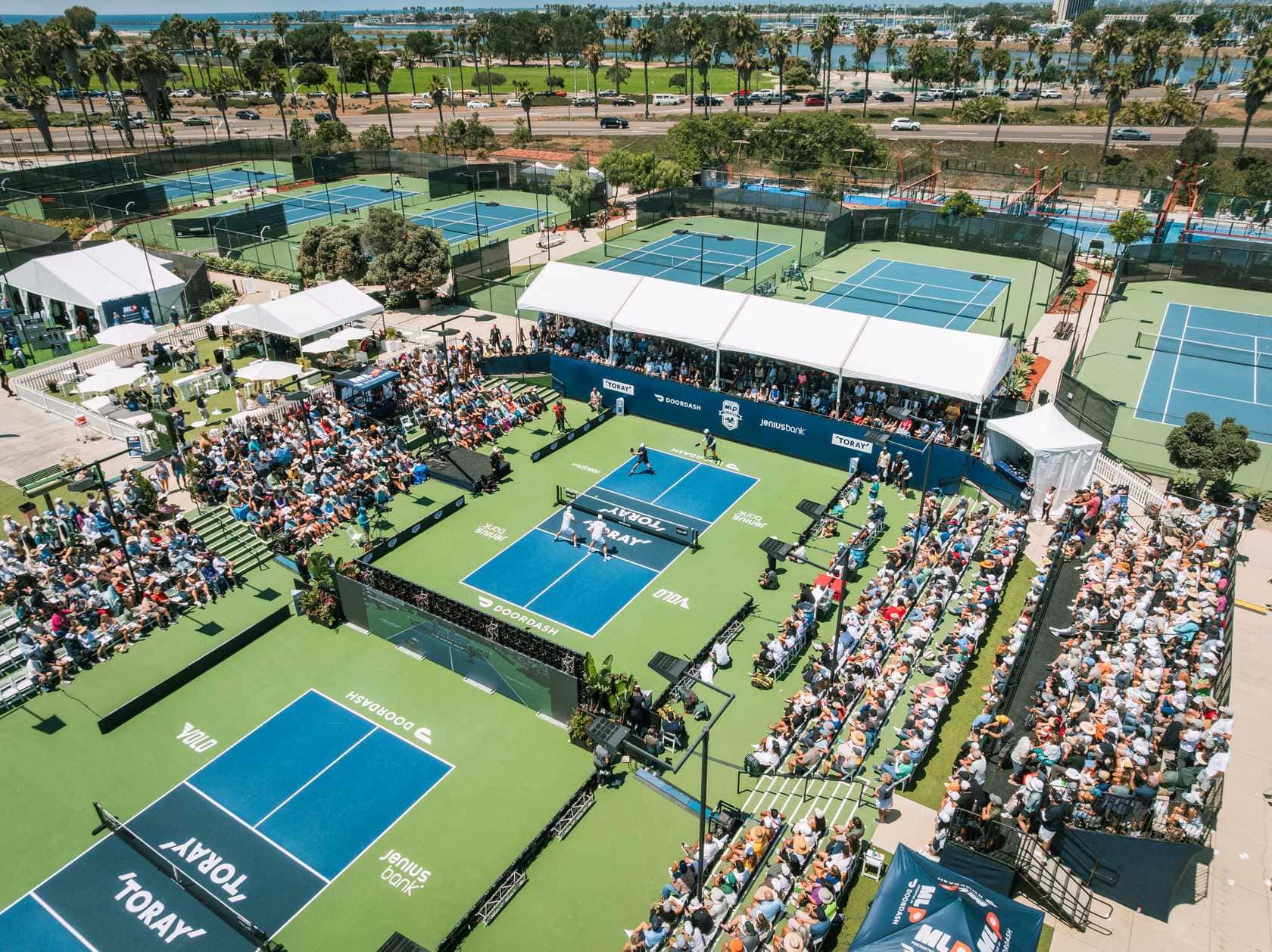
The travel side of pickleball is growing alongside the competitive side. Black Desert Resort in Ivins, Utah announced on October 20, 2025 that it planned to open 21 pickleball courts in spring 2026, including a championship court with seating for up to 1,000 spectators. That kind of development shows how quickly retreats, coaching holidays, and destination play are becoming a real part of the sport’s ecosystem.
Put together, the message is clear: the best paddle is not the flashiest one, it is the one that survives the rhythm of a getaway. When the weekend shifts from open play to round robin to windy outdoor sessions, the paddle that still feels right on the last court of the trip is the one that was worth packing from the start.
This article was produced by Prism’s automated news system from verified source data, official records, and press releases, then run through automated quality and moderation checks before publishing. The system is built and supervised by the people who set the standards it runs under. Read our full AI policy.
Did this article answer your question?