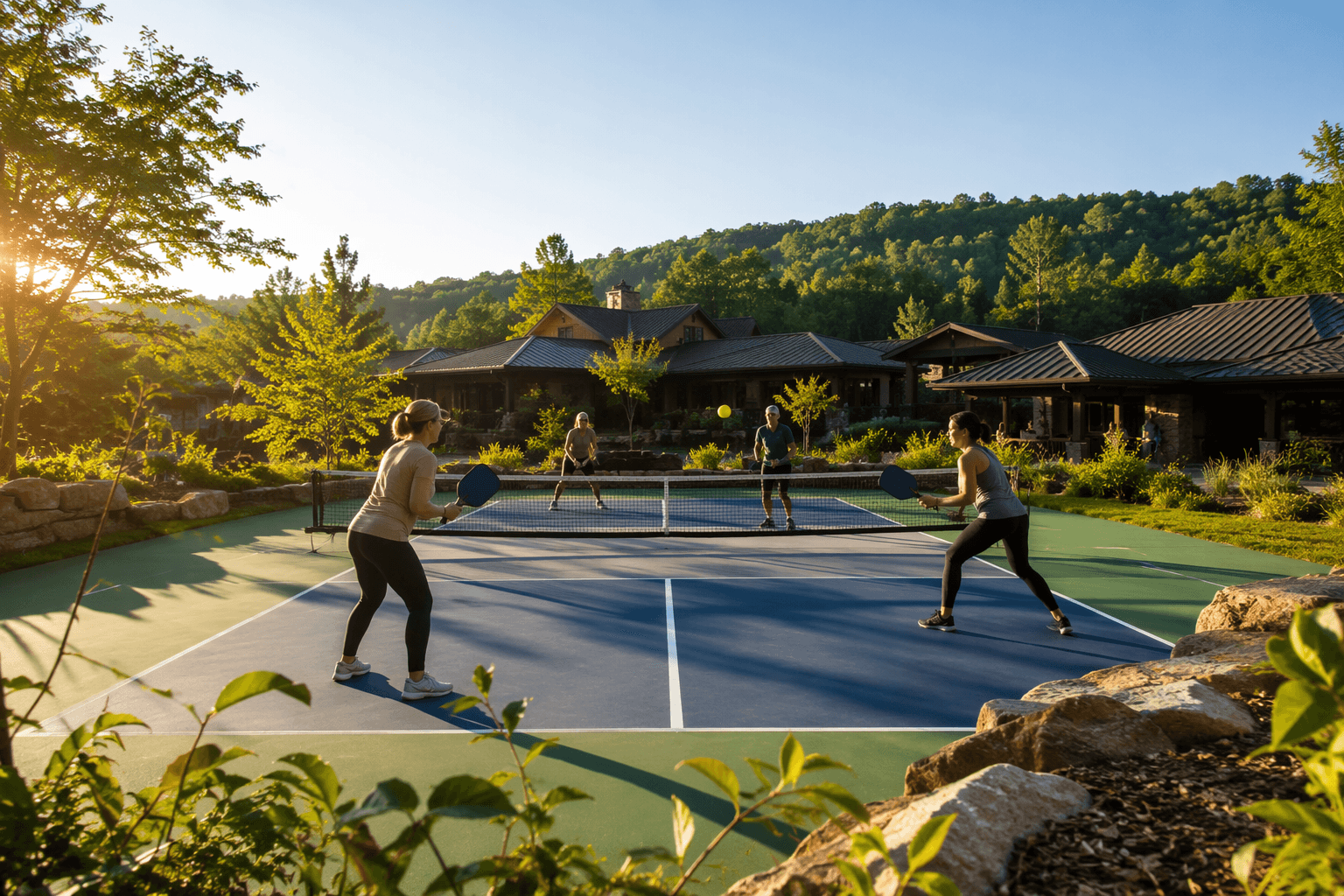
USA Pickleball explains the basics for new players and retreat planners
USA Pickleball's beginner guide helps retreat guests learn the court, the kitchen and 11-point scoring before they pack a paddle.
Before you book a clinic or arrive at a stay-and-play retreat, USA Pickleball’s beginner guide gives you the fastest route from curious newcomer to comfortable player. It frames pickleball as a paddle sport that blends tennis, table tennis and badminton, and it answers the questions that matter most on day one: how the game works, what to bring and how to fit in on court.
Why the official primer matters before a trip
For retreat planners, the value is simple: fewer first-day surprises. A new player who already knows the basic language of pickleball, from the kitchen to scoring and court positioning, can spend more time playing and less time decoding the lines. That is especially useful in a retreat setting, where a mixed group may arrive with different athletic backgrounds but needs the same shared baseline.
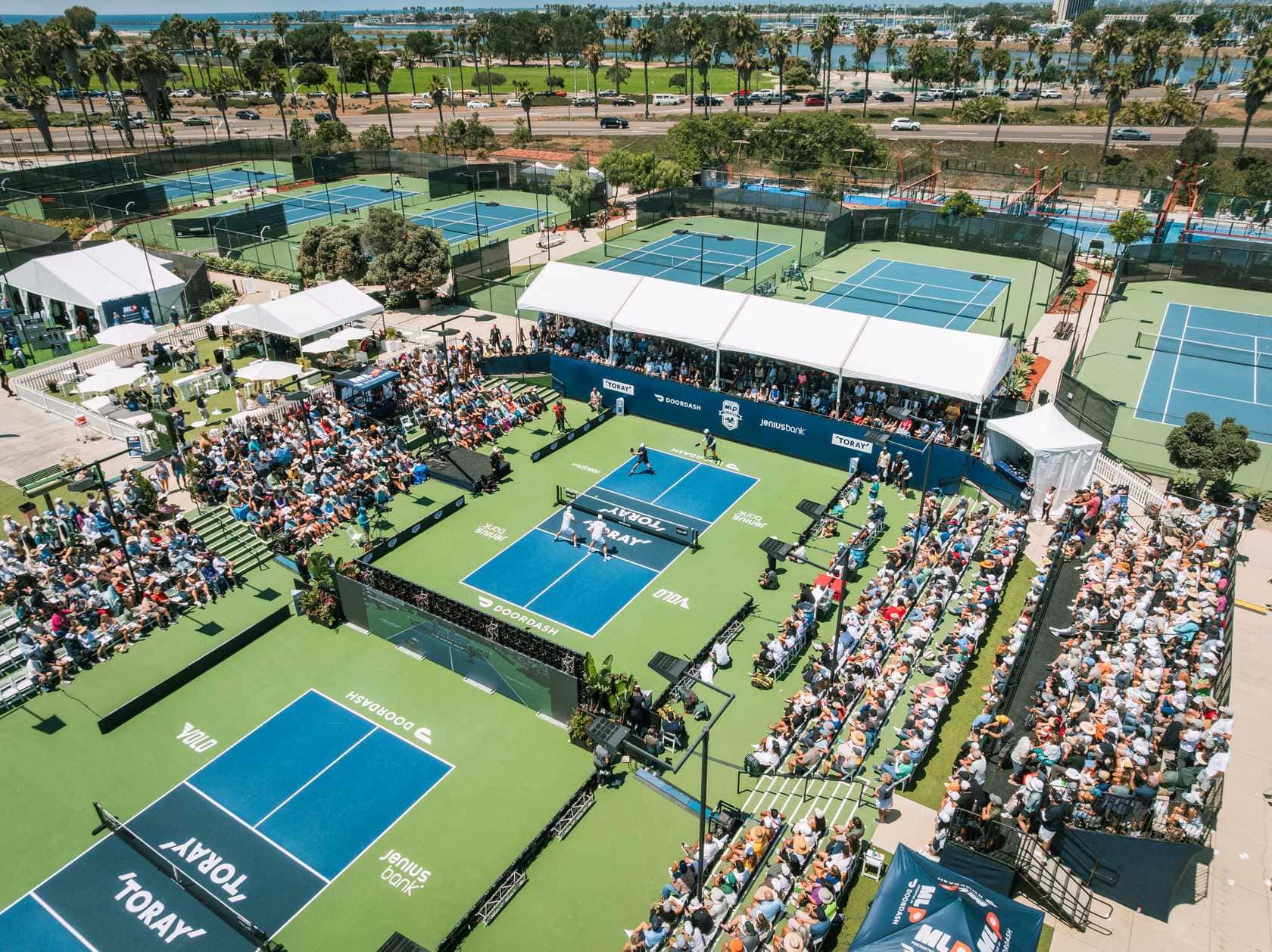
The scale of the sport makes that preparation even more useful. The Sports & Fitness Industry Association put U.S. participation at approximately 24.3 million Americans in 2025, and USA Pickleball’s annual growth reporting, along with 2024 coverage of that growth, points to continuing expansion. When a sport reaches that kind of reach, beginner-friendly onboarding stops being optional and starts becoming part of the travel experience itself.
Learn the court before you step onto it
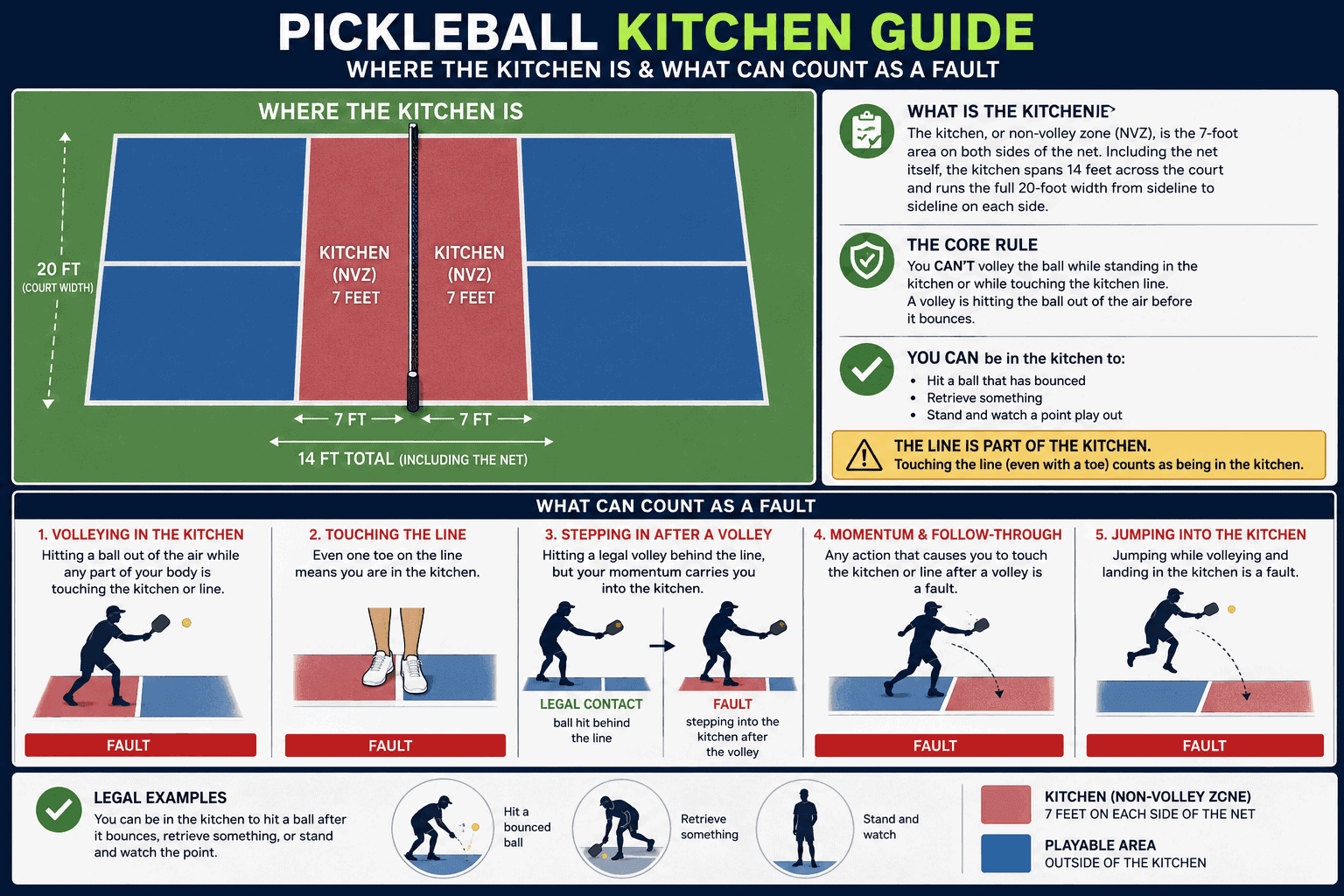
The most important court fact to memorize is the regulation size: 20 feet by 44 feet. The non-volley zone, better known as the kitchen, extends 7 feet from the net on each side, and the court lines are 2 inches wide. Those measurements matter at a retreat because they shape every drill, every lesson and every casual game after dinner.
Pickleball is played on the same size court whether you are in singles or doubles, and doubles is the most common format. That makes retreat programming easier to understand, because one court layout can support a clinic, a round of open play or a beginners’ session without changing the playing area. Once you know the 20-by-44 footprint and the 7-foot kitchen, the court stops looking crowded and starts looking organized.
How scoring actually works
The clearest way to think about traditional pickleball scoring is this: the serving side scores. In the basic rules summary, the serve is started from behind the baseline, sent diagonally to the receiver’s court, and the first side to 11 points with a lead of at least two wins the game. That last detail is the one many beginners miss, and it is the one that keeps close games going just long enough to feel dramatic.
For retreat players, the scoring system is worth learning before the first round-robin. A newcomer who knows that points belong to the serving team, and that a game ends at 11 by 2, can join group play without slowing the rotation down. It also gives instructors a clean vocabulary for teaching side-out scoring, serving order and basic positioning without needing to stop every few points.
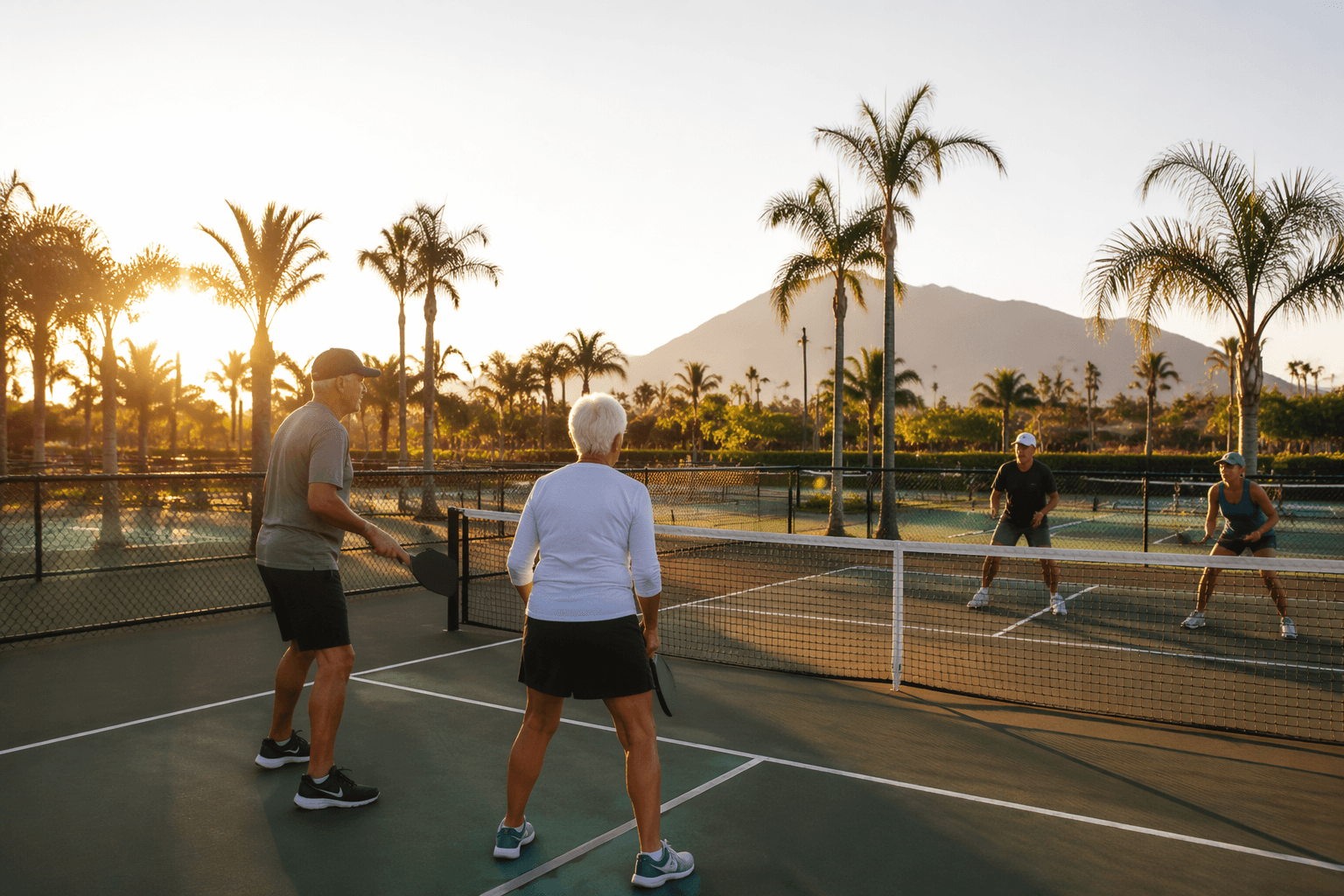
What to pack for a first pickleball getaway
At minimum, bring a paddle and a perforated plastic ball. USA Pickleball’s equipment standards manual exists to keep gear consistent and fair, which is why retreat programs and clinics often point beginners toward equipment that fits official specifications instead of whatever happens to be in a garage bag.
- Bring a paddle you can control comfortably, not just the flashiest one on the rack.
- Make sure your ball is the right pickleball, not a random training ball from another sport.
- If your retreat uses organized instruction, keep your gear aligned with USA Pickleball standards so you can follow drills without confusion.
A simple packing mindset works best:
That gear checklist matters because the sport’s appeal rests partly on how quickly people can get started. You do not need a long equipment curve to join a retreat session, but you do need the right basic tools if you want the experience to feel smooth from the opening warmup.
Etiquette, confidence and the beginner mindset
The etiquette piece starts with knowing the vocabulary. “Kitchen,” “serve rules,” “scoring” and “court positioning” are the terms that come up most often in beginner instruction, and once they are familiar, group play becomes much less intimidating. That common language is especially useful at retreats, where players may move from a clinic to open play to a social round with little downtime in between.
It also helps to remember why pickleball spread so quickly in the first place. The sport was invented on Bainbridge Island, Washington, in the summer of 1965 and is commonly credited to Joel Pritchard, Bill Bell and Barney McCallum. Kitsap Sun and the Bainbridge History Museum both place the game’s origin on Bainbridge Island, and that backyard-style beginning still shows up in the way retreats use the sport today: social, accessible and easy to start.
That is the real promise of the official primer. When your retreat opens on a 20-by-44 court, the kitchen sits 7 feet from the net, and the first game goes to 11 by 2, the lines stop feeling like a puzzle and start feeling like an invitation.
This article was produced by Prism’s automated news system from verified source data, official records, and press releases, then run through automated quality and moderation checks before publishing. The system is built and supervised by the people who set the standards it runs under. Read our full AI policy.
Did this article answer your question?