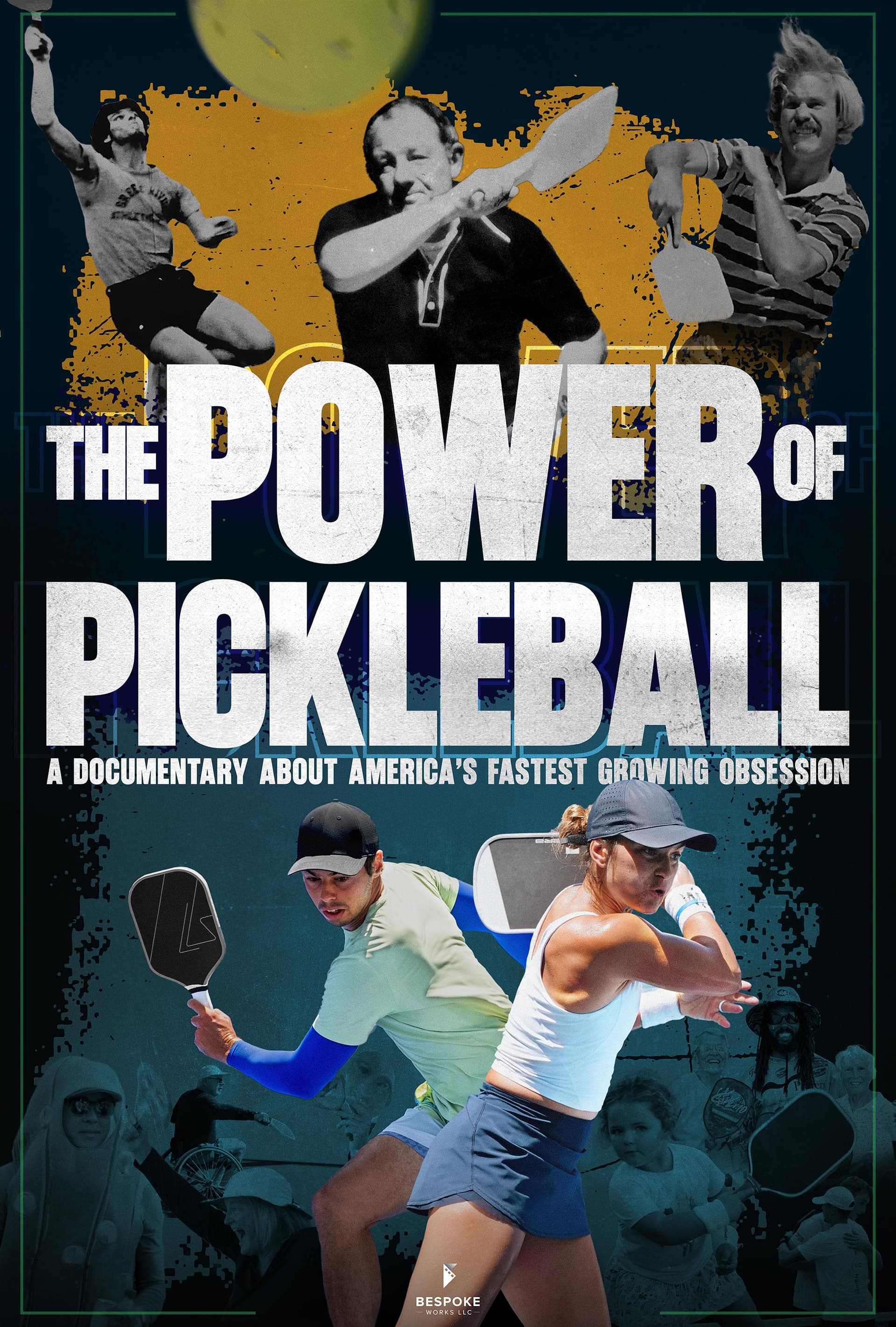
The Power of Pickleball traces the sport’s rise from backyard game
A 60-year pickleball origin story meets 18,258 places to play and 82,613 courts. The film shows why the sport’s boom finally has the infrastructure to match.
A backyard game that grew up
Pickleball’s jump from improvised family game to national obsession makes more sense when you see it as a 60-year build, not a sudden fad. The Power of Pickleball takes that long view seriously, and the numbers around the sport today make the film’s thesis feel less like nostalgia and more like a record of a genuine inflection point.
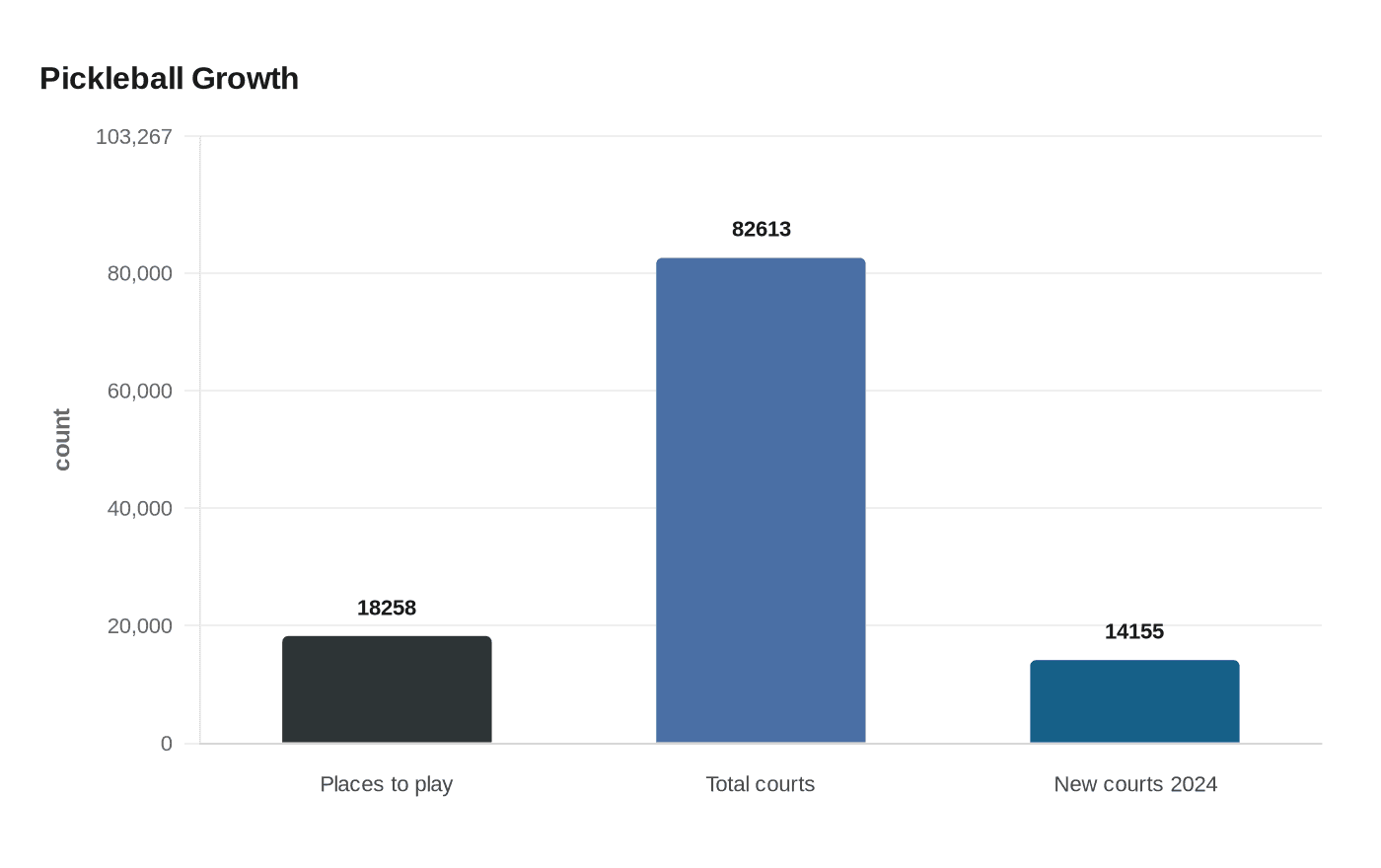
That matters now because the sport is no longer small enough to explain with a single trend line. USA Pickleball’s latest growth report puts the total at 18,258 places to play nationwide, after the Pickleheads database added more than 2,300 new locations in 2025. Total known courts reached 82,613, including 14,155 new courts added in 2024. Against that backdrop, a documentary about pickleball’s origins is not a side project. It is a way of explaining how the game earned enough infrastructure, visibility, and cultural permission to become everywhere at once.
From Bainbridge Island to a formal sport
The history is still wonderfully scrappy. USA Pickleball says the game began in the summer of 1965 on Bainbridge Island, Washington, when Joel Pritchard, Bill Bell, and Barney McCallum improvised a new game with ping-pong paddles, a wiffle ball, and a lowered badminton net. The first permanent pickleball court followed in 1967 at Joel and Joan Pritchard’s home in Seattle, which is the kind of origin detail that reminds you this started as a family solution, not a business plan.
The sport kept getting organized from there. Pickle-Ball Inc. was formed in 1972, and the first known pickleball tournament took place in 1976 at South Center Athletic Club in Tukwila, Washington. USA Pickleball also notes that media coverage in 1975 and 1976 helped push the game further into public view. Put those milestones together and you can see the arc clearly: a backyard invention became a court sport, then a tournament sport, then something with enough structure to support leagues, equipment standards, and a real national footprint.
Why the film’s long shoot matters
Alexander Jeffery spent two years filming The Power of Pickleball before its release last summer, and that long production window gives the movie a more reflective shape than a standard sports feature. This is not a highlight reel assembled around the latest hot streak. It is built like a 60-year timeline, with enough patience to let the sport’s odd, incremental rise become the story.

Jeffery’s perspective works because he came to pickleball without assuming it was destined to win. That outsider-insider balance lets the film do something useful: it treats the sport’s success as something earned through experimentation, repetition, and community buy-in. The documentary keeps circling back to the same point, that pickleball spread not just through winners and hardware, but through clubs, parks, and neighborhoods where people found it easy to pick up and hard to stop playing.
The real growth driver is court density
If the documentary has a strong thesis, the current market data backs it up. The biggest reason pickleball now feels unavoidable is simple: there are more places to play, and they are easier to find. USA Pickleball’s 2025 Annual Growth Report says the sport keeps adding locations fast, and that matters more than abstract popularity because court access turns curiosity into habit.
For a community built around retreats, that is the key shift. A sport becomes travel-worthy when you can rely on a network of courts, clubs, and event spaces instead of improvising every session. The explosion to 82,613 known courts, plus the addition of over 2,300 new places to play in a single year, gives pickleball a kind of geographic backbone it did not have when it was still mostly a local game. That is the real inflection point the film is circling: the sport is no longer waiting to be discovered, it is being built into the map.
Why so many different players see themselves in it
The other side of the boom is participation, and here the scale is hard to ignore. The Sports & Fitness Industry Association says about 19.8 million Americans played pickleball in 2024, up 45.8% from 2023 and 311% over three years. Those are the kinds of numbers that explain why the game now reaches so many different age groups, skill levels, and social circles.
That broad appeal is part of why The Power of Pickleball lands beyond the usual sports crowd. The film is described as tracing not just who won or where the game spread, but how it fits into family life, recreation, and community. That is exactly where pickleball has built its strongest identity. It is social by design, fast enough to feel competitive, and approachable enough that new players do not need a deep technical background to join in. The sport’s culture grew because it gives people a reason to show up together, not just compete against each other.
Why the history still needs protecting
There is also a preservationist edge to the story that gives the film more weight than a standard celebration piece. USA Pickleball has served as the sport’s national governing body since 1984, and its history page makes clear that the organization sees preservation as part of its job, not just promotion. That matters because sports with fast growth often lose the details of how they started.
Jennifer Lucore, who co-authored History of Pickleball: More Than 50 Years of Fun! with her mother, is part of that preservation effort too. Jeffery’s connection to her, along with her knowledge of Barney McCallum, one of the sport’s three founders, gives the documentary a direct line to the original generation. McCallum died in 2019 at age 93, which makes the film feel less like a nostalgia trip and more like a handoff. The early story is still close enough to touch, but only if someone keeps telling it while the people, places, and memory are still available.
Where the film sits now
The Power of Pickleball is currently available on Documentary+, and by March 16, 2026 it was also reported as available to rent or buy on Apple and Amazon. It was also offered through inflight entertainment on American Airlines and United, which is fitting for a movie about a sport that now travels well.
That distribution pattern says as much about pickleball’s future as its past. A backyard game that once needed no more than paddles, a wiffle ball, and a lowered net is now part of a much bigger ecosystem of courts, clubs, events, and travel. The film traces that rise from the beginning, but the numbers around it make the ending feel unresolved in the best way. Pickleball did not just grow up. It built the places where it can keep growing.
This article was produced by Prism’s automated news system from verified source data, official records, and press releases, then run through automated quality and moderation checks before publishing. The system is built and supervised by the people who set the standards it runs under. Read our full AI policy.
Did this article answer your question?