ITTF guide maps London 2026 centenary World Championships schedule
London 2026 is more than a World Championships draw sheet. The ITTF’s media guide lays out the centenary format, the two-venue split, and the names that make this a true homecoming.
The guide is the real key to London 2026
The ITTF’s new media guide does what the best tournament paperwork should do: it turns a complicated event into something you can actually follow. London 2026 is not a standard Worlds, and the guide makes that clear by framing the championships as both an elite competition and a centenary homecoming, 100 years after the first World Championships and the founding of the federation.
That historical angle is not just decoration. The ITTF says it now spans 227 member associations, which is a massive leap from the sport’s 1926 footprint, and London gets to host the flagship event again after seven previous World Championships in England. That is the kind of context that changes how you watch a draw, how you read a schedule, and why the same old “major event in a big city” label undersells what is happening here.
How the schedule is built
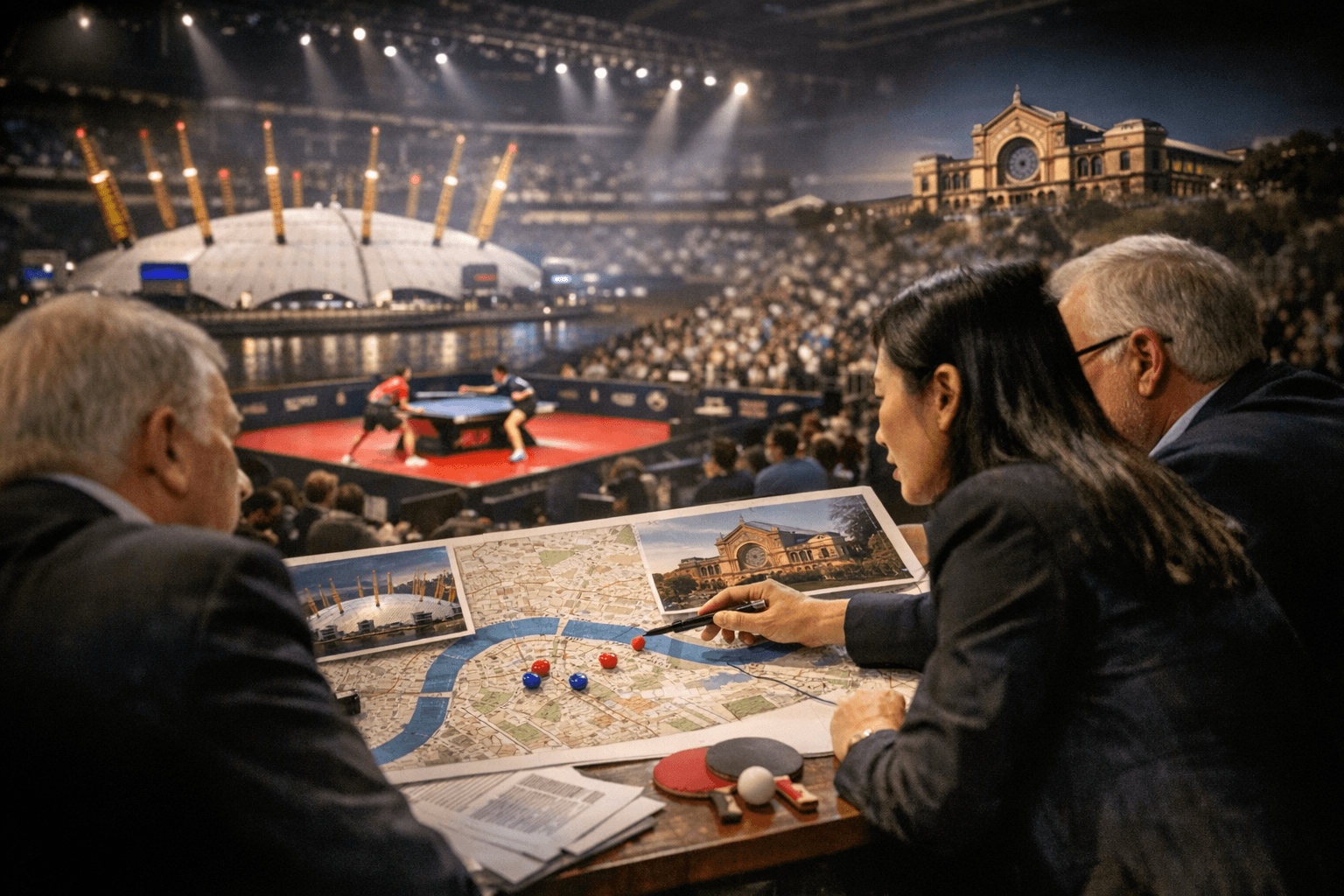
The first thing to understand is the two-stage structure, because that is what makes this edition worth planning around instead of casually checking results later. Stage 1B runs at Copper Box Arena from 28 April to 1 May, where 56 teams in each competition battle for the remaining 24 places in the Main Draw. Then Stage 1A takes over at OVO Arena Wembley on 2-3 May, with the top eight seeds in each competition fighting for seeding positions that set the knockout path.
That split matters because the action is not evenly distributed across the 13 days from 28 April to 10 May. If you want the earliest pressure-cooker matches, Copper Box is the place to be. If you want the top seeds entering the picture and the bracket taking shape, Wembley is where the tournament starts to harden into the kind of event that can produce a real upset or a clean march to the business end.
The useful part of the media guide is that it gives fans, clubs, broadcasters and journalists a way to map the entire tournament instead of treating it like one long block of matches. If you are trying to decide which sessions to attend, the schedule now tells you when the qualification race is hottest, when the seeded teams arrive, and which rounds are most likely to deliver the defining stories.
Stage 1B: where the bracket gets earned
Stage 1B at Copper Box Arena is the grind. With 56 teams per competition chasing 24 remaining main-draw places, this is where depth matters and one bad session can end a campaign early. It is also the stage most likely to reward the teams that start fast, because there is less room to recover once the race for the knockout draw begins tightening.
For fans, this is the smartest part of the event to circle if you enjoy seeing the bracket form from the ground up. It is less polished than the later rounds, but that is exactly why it matters. The guide gives you a way to track which nations are likely to emerge into the main draw with momentum rather than just reputation.
Stage 1A: the seeds arrive at Wembley
OVO Arena Wembley hosts Stage 1A on 2-3 May, and that is the point where the biggest names begin to define the shape of the championships. The top eight seeds in each competition will contest this phase, and all teams move on to Stage 2, with the Stage 1A seeding determining knockout positions. In other words, this is not just a ceremonial appearance for the favorites. It is where the draw starts to matter in a much more practical way.
That makes Wembley the crucial pivot for anyone following the top of the field. If Copper Box is where the tournament is earned, Wembley is where the roadmap becomes visible. By the end of Stage 1A, the guide should help you understand not just who is alive, but how dangerous the route to the medal rounds really is.
The player list is loaded
The player lists were confirmed on 13 April, and the field already looks stacked. The ITTF says 19 of the top 20 men and the majority of the top 20 women will be in London, which tells you this is not a centenary exhibition dressed up as a world event. It is the real thing, with the strongest lineups that can reasonably be assembled.
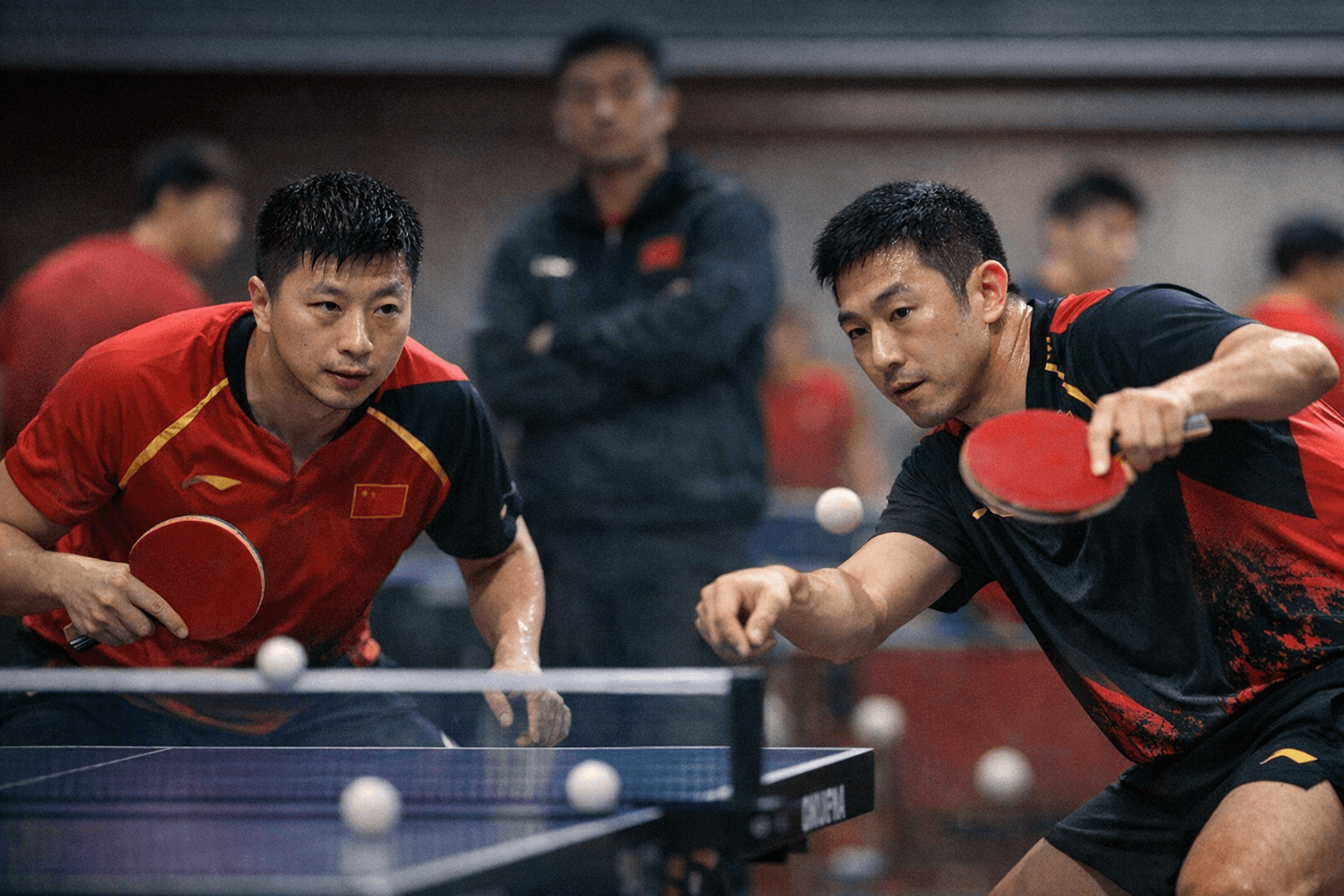
China brings the kind of depth that changes the entire tone of a team Worlds. The women’s lineup is led by world No. 1 Sun Yingsha and includes five of the top eight overall, while the men are headed by world No. 1 Wang Chuqin. On the men’s side, the names that jump off the page are Truls Moregard, Hugo Calderano, and the French brothers Felix Lebrun and Alexis Lebrun, which is a very clean way of saying the medal picture will not be decided by one or two nations alone.
The draw at The Shard set the tone early
The draw ceremony at The Shard on 26 January gave London 2026 its first real shape. Jill Parker MBE conducted the draw alongside the event referee, and Petra Sörling’s framing was the right one: England has hosted the World Championships on seven occasions, but returning to the city where it all began makes this edition especially special.
That matters because a draw is usually just a technical moment. Here, it became part of the storytelling. You could already see the tournament being built as something bigger than a normal Worlds, with the history, the format, and the competition all pulling in the same direction.
London is treating this like a citywide event
The off-table pieces are what make this centenary feel lived-in rather than merely official. Britain’s Greatest Rally on 10 March involved 33 venues and produced 207,343 rallies, more than double the target of 100,000. That is not a token activation; it is a clear sign that the city is being asked to participate in the celebration, not just host it.
The same goes for the gold-table landmark lighting on 13 April, which pushed the centenary identity out into the streets and skyline. Add in the official mascot Ping, named after Table Tennis England’s Ping social-impact programme, and the event starts to feel like a full civic project. Even the plush mascot, priced at £30, is part of the public-facing identity, which tells you the organizers want the centenary to live beyond the arena doors.
The legacy layer is just as important
The Centenary Table Programme is the kind of detail that separates a one-off event from a meaningful one. Special edition tables will be installed at landmarks and later donated to schools, community hubs and social impact projects, which means the centenary is leaving behind equipment, not just memories. That is exactly the sort of legacy move table tennis has always done well when it commits to public visibility.
The Corporate Cup adds another useful dimension, with teams from Google, WeWork, Monzo and Deliveroo taking part. It extends the event’s footprint into workplaces and partner networks, while reinforcing the sense that London 2026 is trying to link elite sport, grassroots access and commercial momentum in one package.
What this guide really tells you
If you care about the sport, this media guide is the clearest signal yet that London 2026 will be remembered as a layered event, not just a strong field. It gives you the schedule, the venues, the seeding logic, the star names and the public-facing pieces that turn a championship into a centenary moment. For table tennis, that is the rare combination that matters: the best players in the world, a city that knows the history, and a setup designed to make both feel inseparable.
Know something we missed? Have a correction or additional information?
Submit a Tip