ITTF Relaunches "My Gender. My Strength." Programme to Fast-Track Female Coaches
The ITTF relaunched "My Gender. My Strength." on March 16, building on 2021 roots when Petra Sörling virtually inaugurated a Brazil course that drew 100+ women.
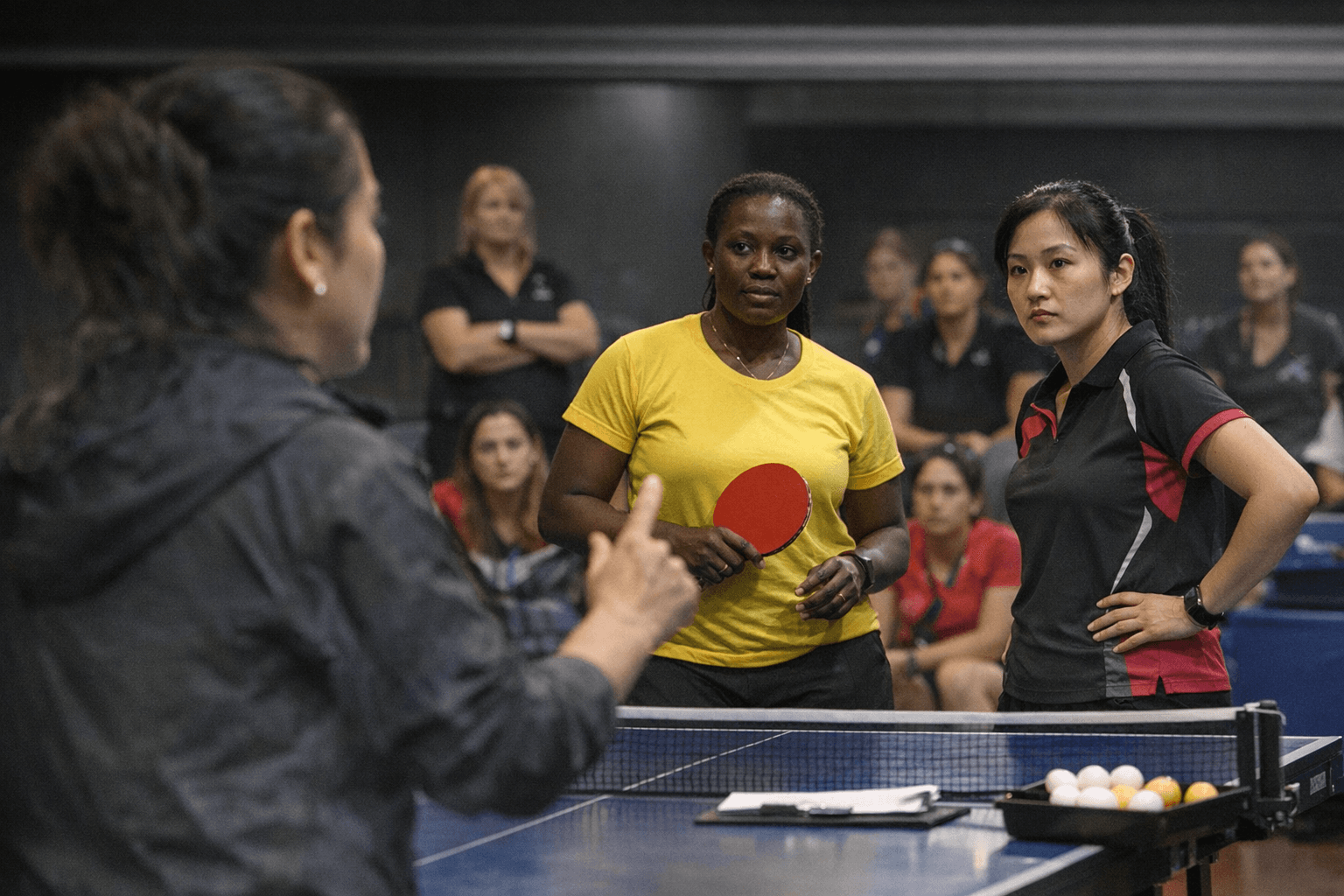
The ITTF brought back its "My Gender. My Strength." programme this month, with the European Table Tennis Union publicising the return on March 16. Described as a multi-stage development pathway designed to identify, develop and fast-track female coaches, the programme's 2026 relaunch signals a renewed push to move more women into coaching roles across the global table tennis structure.
The programme has real history behind it. In 2021, the ITTF delivered three separate "My Gender My Strength" projects with an explicit focus on increasing female participation across players, coaches and administration. The Brazilian leg of that effort stood out: Petra Sörling, then President-elect and the first woman to hold that position in ITTF history, virtually participated to inaugurate the Brazilian Project My Gender, My Strength Course. That course brought together more than 100 women and was, in the ITTF's own assessment, "an absolute success."
Sörling's presence at the Brazilian inauguration, even via video, carried weight beyond ceremony. She was at that point already identified as a landmark figure within the federation's governance, and her connection to a programme explicitly designed to elevate women into leadership and coaching roles was pointed.
The 2021 slate also demonstrated how far the ITTF's development arm was willing to reach. Two para projects ran concurrently in Vanuatu and the Solomon Islands, engaging over 120 people with disabilities combined. The Vanuatu project alone delivered 69 sessions, reached three outer islands for the first time, and counted over 500 total participants, 69 of whom were people with disabilities. A Dream Building project launched in Tonga during the same period.
None of that 2021 activity came easily. Through the first quarter of that year, every development activity went online. Five seminars led by Amir Zulic, Jörg Bitzigeio, Peter Engel, Asko Rasinen and Nevena Kostova collectively drew 853 participants before a single in-person session was possible. Face-to-face work only resumed in May, triggering a packed schedule: Eurotalents Pre-Selection Camps in Montenegro (May 26 to June 2) and Hungary (August 9 to 16), a final selection camp in Slovenia (October 10 to 17), under-13 camps in Luxembourg (August 29 to September 5) and Romania (December 12 to 19), and under-17 camps in Sweden (September 29 to October 6) and the Czech Republic (October 22 to 29).
The 2026 relaunch picks up that thread. Full programme specifics, including the number of stages, selection criteria, target regions and participant goals, had not been released in full as of the ETTU's March 16 announcement, but the framing is unambiguous: the ITTF wants more women holding clipboards and calling timeouts, not just competing at the table.
Know something we missed? Have a correction or additional information?
Submit a Tip