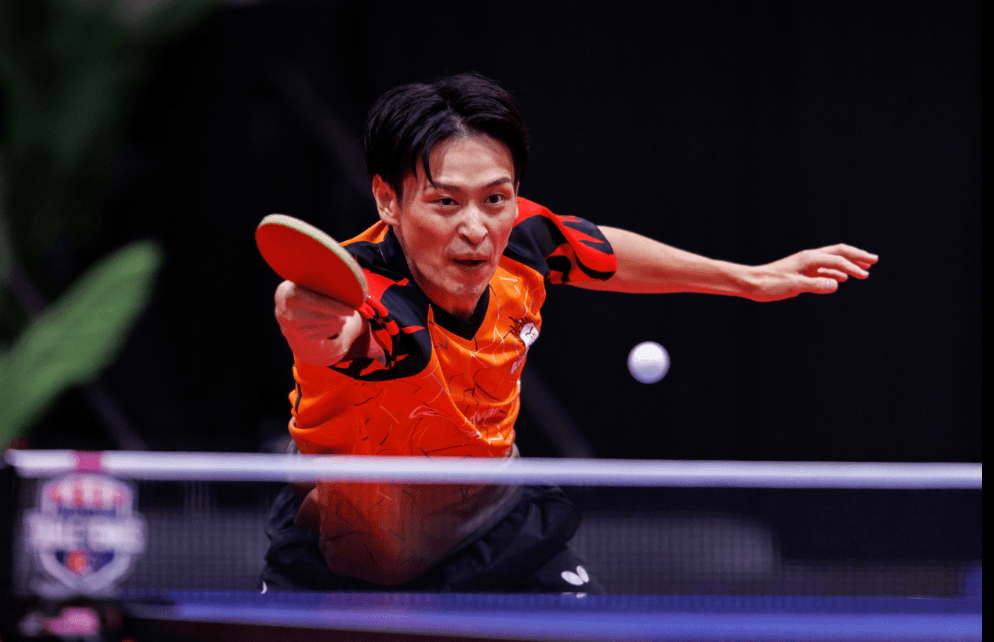
Wang Chuqin, Sun Yingsha Lead ITTF Week 15 World Rankings Update
Sabine Winter climbed from world No. 60 to No. 9 in 16 months; her Macao bronze reveals how event timing and a gutted playing system can rewrite a ranking table overnight.

Sabine Winter matters to the Week 15 ITTF world rankings not as a pleasant surprise, but as evidence of how the ranking system actually works and how deliberately it can be leveraged. The April 6 update, incorporating results from the ITTF Men's and Women's World Cup Macao 2026, pushed the 33-year-old German from outside the Top 10 to World No. 9 in Women's Singles, a career high reached after 16 months of upward movement from No. 60.
The mechanics behind that move expose something about ranking structure that weekly list watchers often overlook. The Macao World Cup, held March 30 through April 5, is an annual, high-points event where a single bronze medal can clear multiple opponents in one calculation window. Winter lost her semifinal 0-4 to Sun Yingsha, but the points generated by that deep run were enough to cross the Top 10 threshold in a single update. This is the spike-event pattern: instead of gradual WTT Contender accumulation over months, a World Cup result compresses significant ranking movement into one week's publication.
For players who follow tournament seedings, that distinction carries real draw consequences. Top seeds at WTT events are protected from facing each other until late rounds; players just outside that bracket encounter elite opponents earlier. Winter's jump recalibrates her placement in every draw she enters from here forward.
What produced those points is worth understanding. In December 2024, Winter overhauled her playing system entirely, switching to an anti-topspin rubber on her backhand. "The complete transformation of my system, including switching to an anti-topspin rubber on the backhand, which I integrated into my uncompromising attacking game, initially felt like a big risk," she said in an interview with the German Table Tennis Association. "In the end, it turned out to be the best decision of my table tennis career." The rubber change disrupted opponents' timing and opened angles a standard inverted setup couldn't generate. The results followed in sequence: a Europe Top 16 title, runner-up at WTT Champions Montpellier, a semifinal at the Singapore Smash, and then the World Cup bronze.
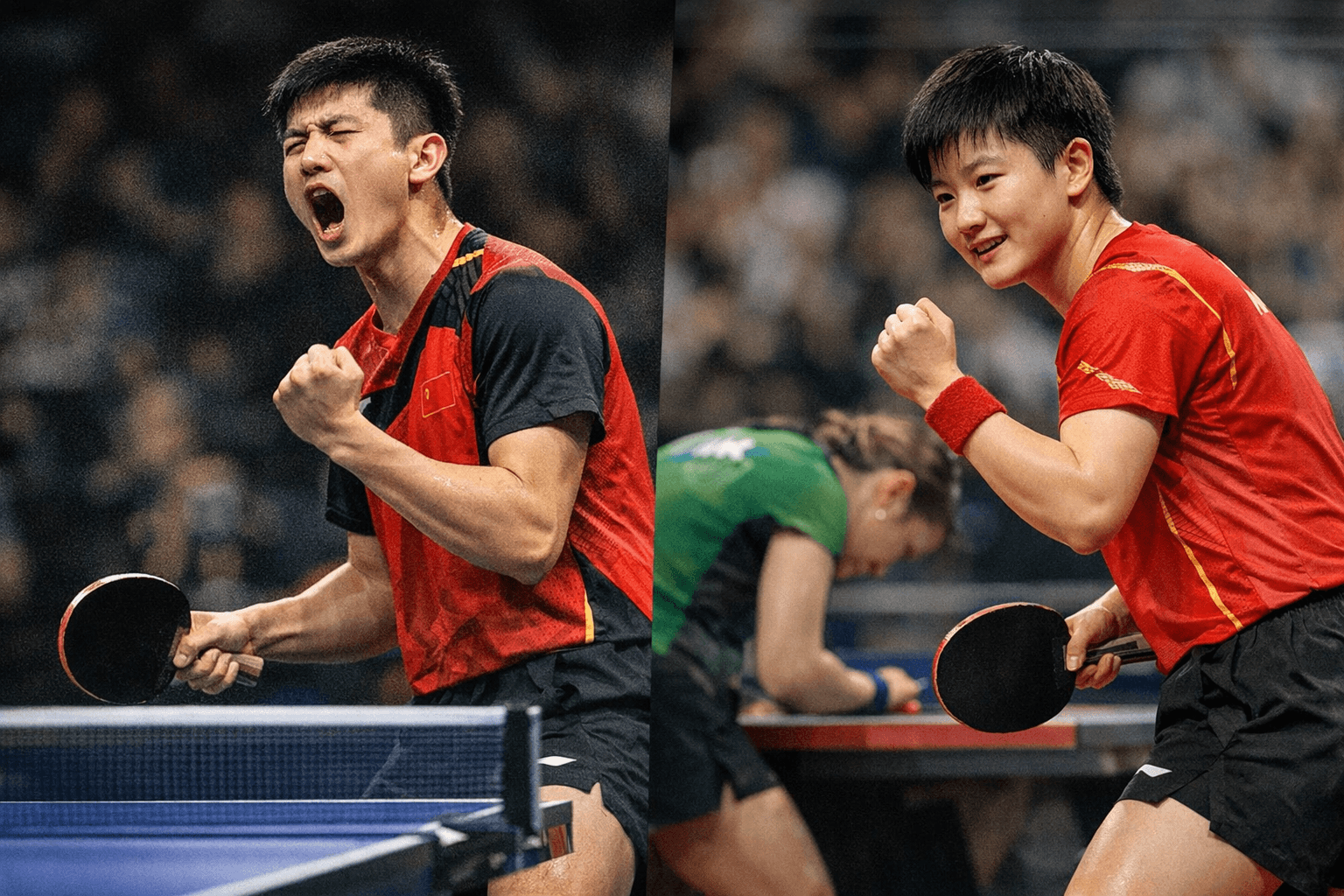
At the top of the Week 15 tables, Wang Chuqin retained Men's No. 1 after defeating Sora Matsushima 4-3 in the Macao men's final, a seventh-game result that underscored the gap between peak performance and cumulative ranking points. Matsushima, who took Wang to a deciding game in a World Cup final, sits at No. 7 in the Week 15 list. Sun Yingsha held Women's No. 1 with her third consecutive World Cup title, defeating Wang Manyu 4-1, just two weeks after reaching 200 consecutive weeks as world number one. Truls Möregårdh and Hugo Calderano occupied second and third on the men's side, with Felix Lebrun at six.
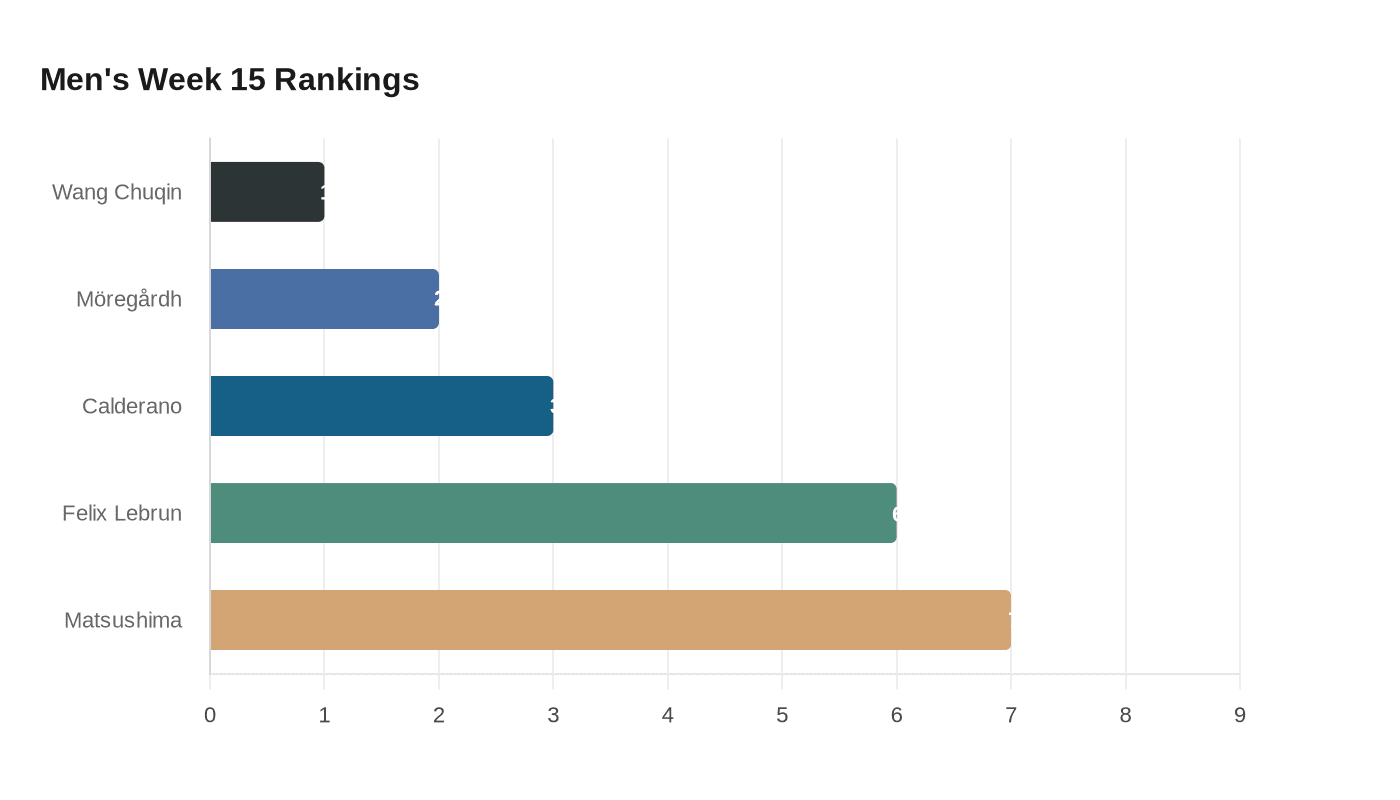
That Matsushima result captures the Week 15 ranking lesson in miniature: the table measures sustained performance across a rolling calculation window, not brilliance on a single afternoon. A player can push the world number one to a seventh game in a major final and still sit three places below him in the standings. The seeding that follows Week 15 reflects who accumulated and defended points across the full prior season, which is precisely why the Winter story resonates beyond one bronze medal. The ranking table doesn't just tell you who won recently; it tells you who engineered their season to win at the right moments.
Know something we missed? Have a correction or additional information?
Submit a Tip