Sabine Winter: 'The Best Decision of My Table Tennis Career' — From System Change to World Top 10
Sabine Winter's anti-spin gamble at 33 took her from world No. 60 to No. 9 in 16 months. Here's the exact system change and what ambitious players can take from it.
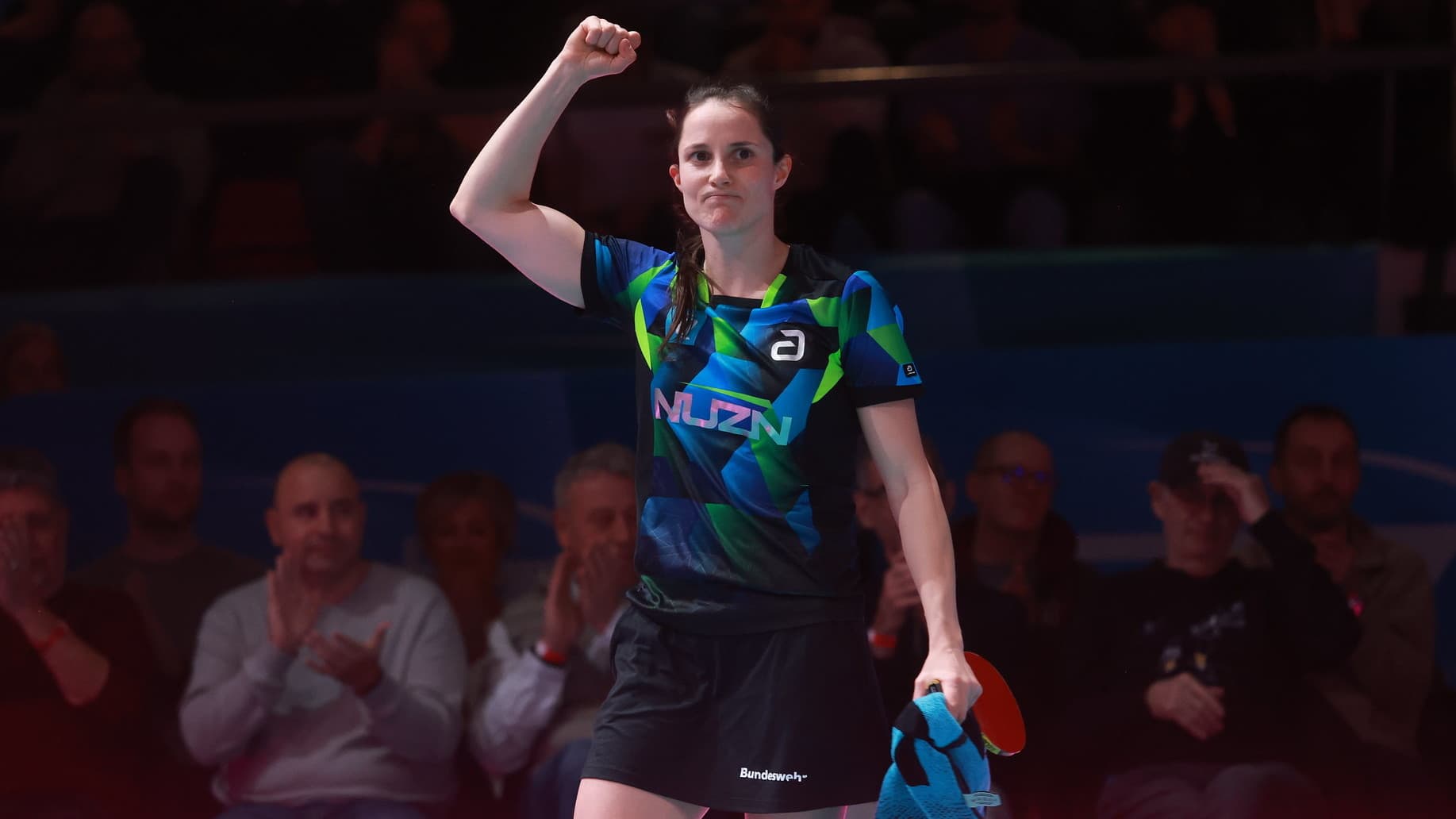
Sabine Winter matters because she did something table tennis at the elite level has told players for two decades is impossible: she reinvented her playing system mid-career, past 30, using equipment the sport's mainstream considers a relic, and it sent her ranking from World No. 60 to No. 9 in 16 months. That number deserves repeating. Sixty to nine. At 33.
The reason to care about how she did it goes well beyond one player's biography. Winter's case is an argument, and it is a loud one, that measured technical reinvention can still produce elite returns deep into a professional career. For ambitious amateurs trying to figure out where their next level actually comes from, her blueprint is worth studying in detail.
The Decision Nobody at the Top Level Makes
In December 2024, Winter undertook what she described as a "very unusual experiment for a professional athlete": a comprehensive transformation of her playing system. The core of it was switching her backhand rubber from a standard inverted sheet to an anti-topspin (anti-spin) rubber. She retained her full attacking orientation on the forehand. Her current setup runs an Andro Novacell OFF blade, the Andro NUZN 55 on the forehand, and a Dr. Neubauer ABS 3 on the backhand.
At professional level, anti-spin is essentially extinct. It carries an amateur reputation, associated with club players who cannot handle heavy spin. Winter knew this. She made the switch anyway, and she called it the best decision of her table tennis career.
The reasoning was brutally honest self-assessment. She had always been a two-wing attacker with a forehand that analysts describe as among the most powerful in women's table tennis, dynamic and driven by full-body rotation. But at 33, keeping pace with the top Asian players in extended two-wing exchanges was becoming her ceiling. Rather than grind against that ceiling indefinitely, she decided to redesign the room.
The Tactical Logic: Disruption First, Destruction Second
The anti-spin rubber on the backhand does something modern table tennis cannot easily accommodate: it returns the ball with minimal spin, or with reversed spin, at speeds and trajectories that break the rhythm opponents have trained thousands of hours to expect. The entire engine of elite table tennis is built around spin continuation, high-loop rallies, and relentless pace. When one side of the bat simply stops playing that game, the opponent's automatisms misfire.
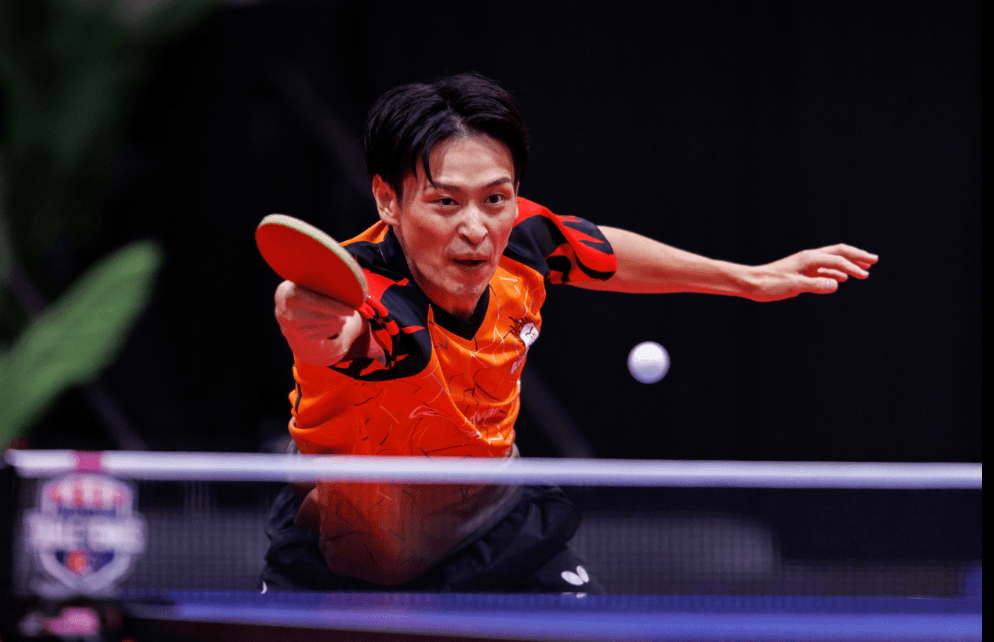
Winter's system layers disruption onto elite-level finishing power. When the ball comes to her backhand, she either blocks or controls with the anti-spin, changing pace and spin and forcing the opponent into hesitation. The moment they play tentatively, she moves and attacks with the forehand. She also twiddles the bat, keeping opponents uncertain about which surface is coming, and has developed an inside-out forehand technique that lets her attack from the backhand side using the inverted rubber, turning a defensive position into an offensive one.
The combination is unusual enough that when she won the Europe Top 16 in Montreux in February 2026, beating Bernadette Szocs 3-0 in the final without losing more than four points in any game, it marked the first European title won by a player using anti-topspin rubber since John Hilton captured the European Championship decades earlier.
Sixteen Months of Evidence
The results since December 2024 form a progression that is hard to argue with. At WTT Champions Montpellier she became the first European woman ever to reach the final of a WTT Champions event. She lost to Wang Yidi on match point, but the milestone stood. At Singapore Smash in March 2026, she knocked out former World No. 1 Zhu Yuling, then beat Wang Yidi in the quarterfinals in a straight reversal of that Montpellier near-miss, reaching the semifinal of a Grand Smash. "I'm not sure if I can already believe it," she said after that run.
Then came the World Cup in Macao. She came through the group stage unbeaten, beat Qin Yuxuan in the Round of 16, dismantled Wang Yidi 4-0 in the quarterfinals with the same controlled-then-explosive pattern, and reached the semifinal before losing 0-4 to the world No. 1 Sun Yingsha. Bronze at the World Cup, and with it the ranking points needed to break into the Top 10 for the first time. World No. 9. "It is the biggest success of my career so far," she told ETTU. "The World Cup may not be stronger than a Grand Smash in terms of field but it is the World Cup. Everyone wants to win it."
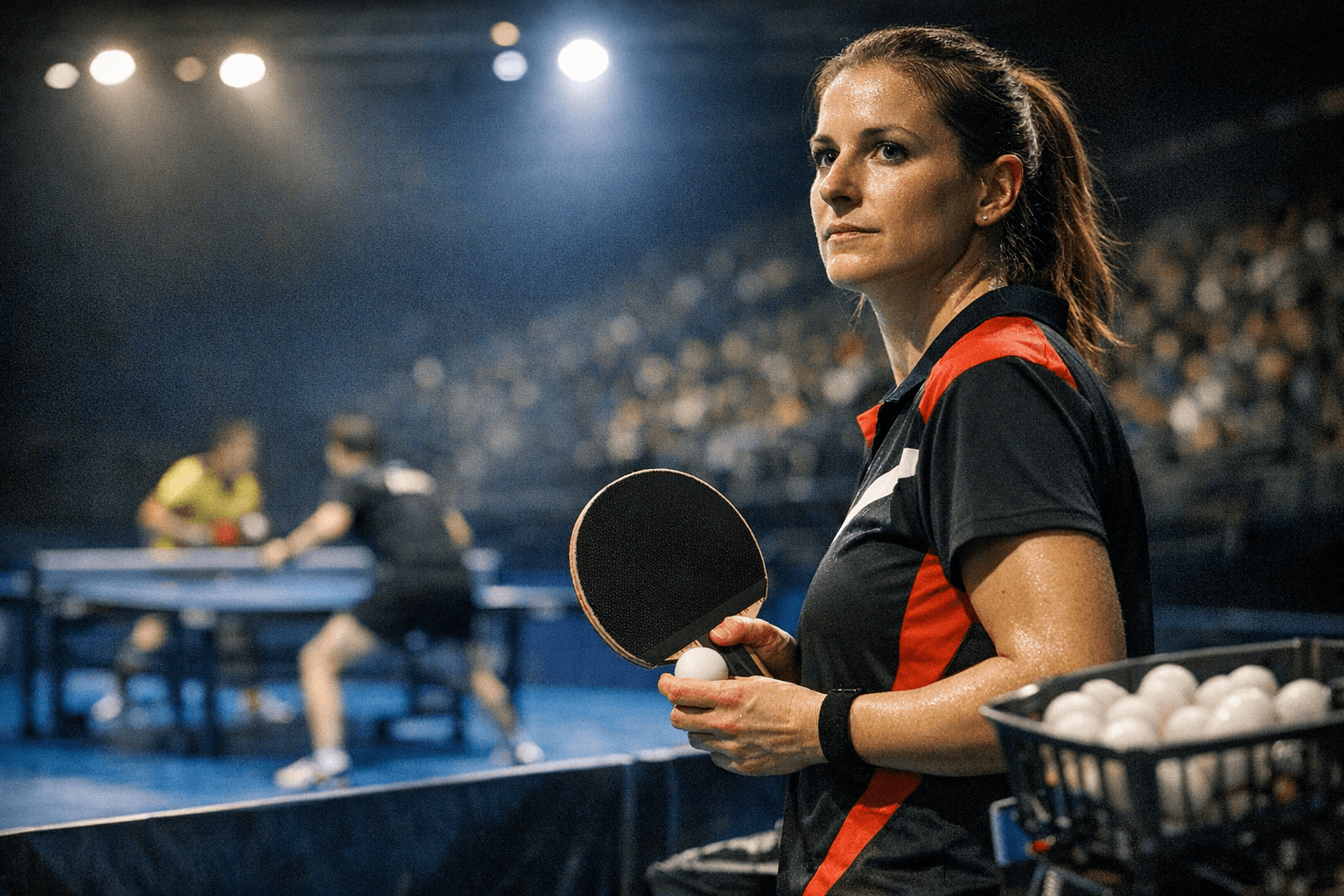
Her first response to the ranking news captured something genuine: "I would never have thought it possible. It all feels completely crazy."
What You Can Actually Copy
The transferable principle in Winter's system change is not the specific rubber choice; it is the structural logic underneath it. She identified the wing that was her ceiling, found a tool that converted that wing from a liability into a rhythm disruptor, and freed her dominant weapon to be more consistently decisive. Any player with a clearly stronger forehand than backhand can apply a version of this thinking.
The measurable signal that the approach is working is specific: you start winning more points because opponents are playing the wrong shot, not because you outspun them. If your practice sessions start generating more "they attacked the wrong ball" or "they pushed when they should have looped" patterns, the system is doing its job. That shift in error type, from your errors to opponent decision errors, is the metric to track.
There is also something in her framing of the ongoing process. She told ETTU that she "really enjoys figuring out what works and what doesn't, in order to optimise my system and become even more dangerous for my opponents." That language matters. She is not describing a completed switch; she is describing active, curious refinement. The experimentation is the point, not just the outcome.
What Is Not Transferable
To be direct about what cannot be borrowed: Winter's forehand is a weapon of a calibre that takes 15-plus years of professional training to build. The anti-spin system works because opponents cannot simply target her backhand and grind; they know the forehand is waiting. If your forehand is not a genuine threat at your level, the disruption alone will not carry you. Anti-spin without a finishing weapon is a delaying tactic, not a system.
She also brought a foundation of technical discipline to the transition. Playing anti-spin at the elite level demands precise reading of spin, excellent timing, and patience under pressure. It is harder, not easier, than playing inverted, because every ball behaves differently and instinctive responses built on years of inverted technique will misfire during the adjustment period.
The Wider Signal for European Table Tennis
Winter's Top 10 breakthrough as a 33-year-old German player carries implications that stretch past her individual results. It provides a concrete counterpoint to the assumption that the gap between Asian and European women's table tennis is structural and unsolvable. It opens a coaching conversation about equipment risk-taking, about when a mid-career overhaul is worth attempting, and about how longevity strategies for top players should factor in tactical reinvention alongside physical conditioning.
For European players watching her dismantle Wang Yidi and reach a World Cup semifinal with a rubber the sport wrote off years ago, the message is simple: the ceiling you think you've hit may be the wrong ceiling. Winter found a different wall to push against, and it turned out to be a door.
Know something we missed? Have a correction or additional information?
Submit a Tip