Beenie Man, Etana and more unite on crowded Riddim 91 release
Beenie Man and Etana lead a crowded Riddim 91 that turns one rhythm into a full-spectrum reggae conversation. Junior Reid, I-Octane and more make the 23-track set feel built for selectors.
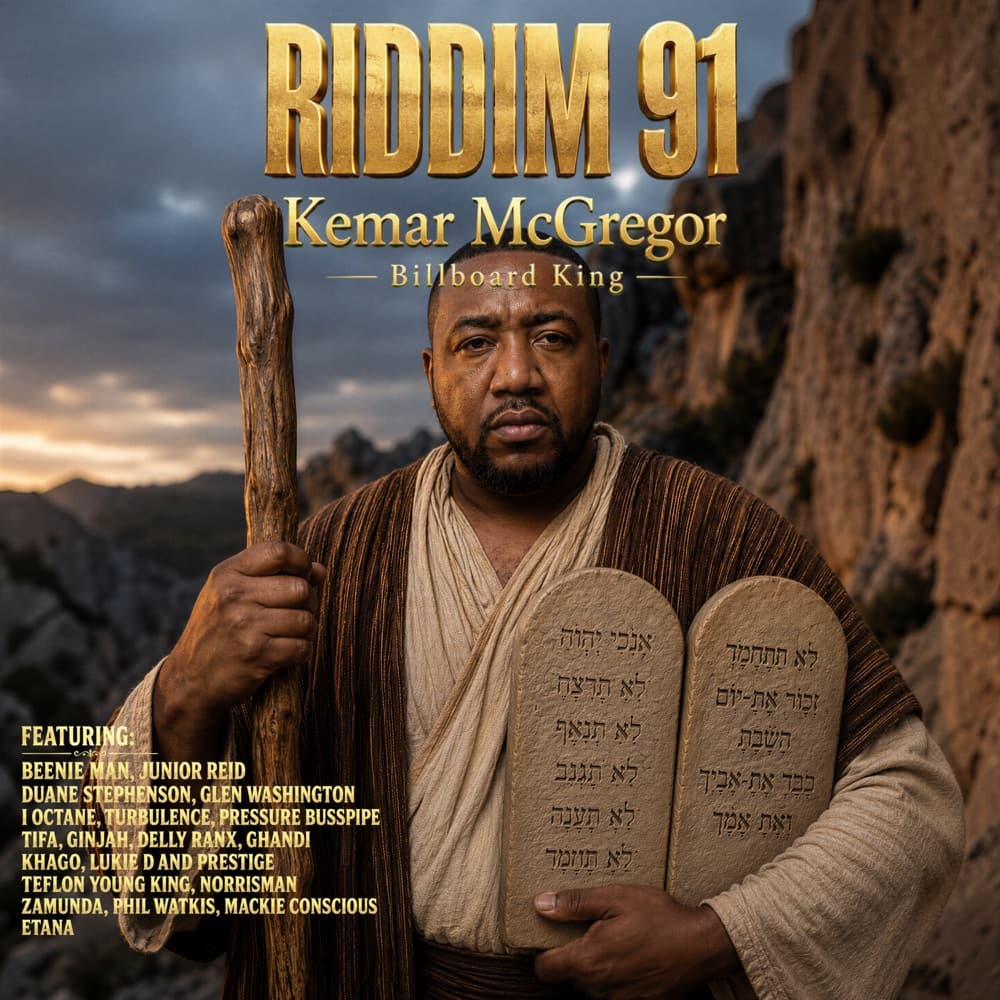
Beenie Man and Etana on the same riddim is already the kind of pairing that makes a release feel bigger than a routine drop. Riddim 91 leans hard into that pull, opening with Guide Over Us and then stretching across a 23-track field that brings together roots veterans, conscious voices and melodic stylists under one roof. The digital release from Billboard King Records landed on June 19, 2026, and the cast alone explains why riddim compilations still have real weight in reggae and dancehall.
The opening cut sets the tone
The first thing that lands is the headline pairing: Beenie Man and Etana on Guide Over Us. Beenie Man gives the project instant name recognition and that familiar star-level snap, while Etana brings the soulful, steadying vocal presence that keeps the track from feeling like a gimmick. That combination tells you exactly what Riddim 91 is going for, a compilation that wants broad reach without losing its roots sense.
That opening matters because it frames the whole release as a conversation rather than a loose bundle of singles. Instead of throwing one artist over the rhythm and calling it a day, the set starts with two strong voices and invites the rest of the roster to answer. It feels deliberate, like a producer lining up the first drop to say: this rhythm is going to work in more than one direction.
The roots backbone keeps the project grounded
Once the opener clears the runway, the deeper roots lineage starts to show itself. Junior Reid, Glen Washington and Ras Shiloh give the release the kind of authority that makes a compilation feel anchored rather than assembled. Their presence ties Riddim 91 to the older currents of reggae, where the vocal tone matters as much as the hook and the rhythm carries the message without getting in the way.
Duane Stephenson fits neatly into that same lane, bringing the kind of melodic control that keeps a riddim compilation smooth instead of scattered. Lukie D also belongs in that pocket, and together these voices help the project avoid the common trap of sounding like a clash of unrelated singles. The result is a stronger through-line, one that lets the same instrumental breathe across different shades of roots and melody.
The conscious-dancehall pulse gives it edge
The modern side of the set comes through in the names that keep reggae’s present tense alive. I-Octane, Khago, Teflon and Turbulence bring the energy of the conscious-dancehall intersection, where the pressure comes from the lyric and the delivery as much as from the beat. Delly Ranx, Tifa and Fyah Stige add more texture to that section of the lineup, making the release feel wide enough to move from uplift to sharper commentary without losing momentum.
Norris Man, Anthony B, Zamunda, Mackie Conscious and Kuanna round out that stretch of the roster and keep the project from narrowing into a nostalgia piece. These are the kinds of names that make a riddim release feel current because they preserve the range that reggae listeners actually want: praise songs, social commentary, lovers-rock shades and plain, unforced uplift. On a project like this, the strength is not just in who is there, but in how many different moods the same rhythm can carry.
Pressure Busspipe widens the reach
Pressure Busspipe stands out for another reason. His presence connects Riddim 91 to the broader Caribbean circuit that fans follow through festivals, releases and DJ sets, and that gives the compilation a travel-ready feel. It is the sort of inclusion that reminds you riddim culture never lived only inside one island, one market or one audience lane.
That matters because compilation records are often strongest when they show how reggae and dancehall move across borders without losing their core language. Pressure Busspipe helps that happen here. He makes the set feel less like a local roll call and more like a regional snapshot, with one rhythm acting as the shared language across different voices and scenes.
Why riddim compilations still work
Riddim 91 is built for selectors and serious reggae listeners first, and that is exactly why it works. A good riddim release gives you a single rhythmic backbone and then asks what each artist can do with it, which means the listening pleasure comes from comparison as much as from any one standout cut. You hear how one singer leans into praise, another into melody, another into tension, and suddenly the same beat feels bigger than it did a track ago.
That is the communal magic of the format. One rhythm becomes a meeting place for generations, styles and island voices, and the compilation turns into a document of who is carrying the conversation right now. In a release calendar packed with albums and singles, Riddim 91 stands out because it does the thing reggae has always done best: take one instrumental and make it speak in a dozen different dialects without losing its centre.
When Beenie Man and Etana open the door, the rest of the roster has room to move, and Riddim 91 uses that space well. With Junior Reid, I-Octane, Pressure Busspipe and the wider cast all weighing in, the release feels less like a stack of tracks and more like a proper dancehall and roots gathering around one rhythm.
This article was produced by Prism’s automated news system from verified source data, official records, and press releases, then run through automated quality and moderation checks before publishing. The system is built and supervised by the people who set the standards it runs under. Read our full AI policy.
Did this article answer your question?