Kranium’s streaming power keeps reggae and dancehall global
Kranium’s stream counts and gold plaques show dancehall still scales globally. From “Nobody Has to Know” to “We Can,” his catalogue keeps converting.
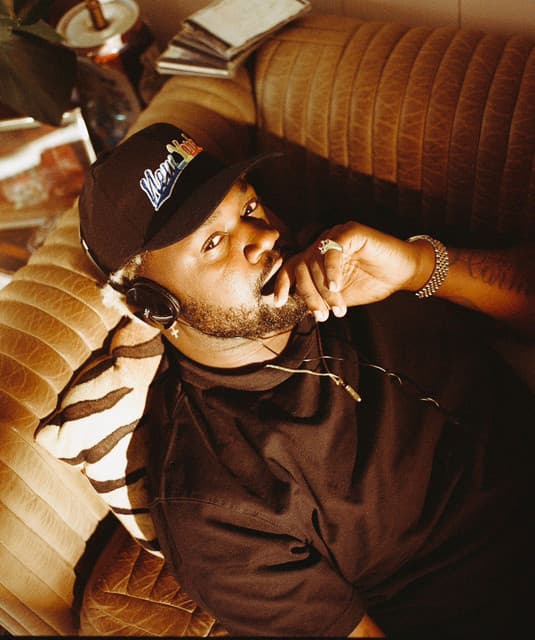
Kranium’s case is simple: the more his catalogue streams, the harder it is to treat him like a nostalgia act. Kemar Donaldson, the Montego Bay-born singer better known as Kranium, still moves enough numbers to matter in Jamaica, across the diaspora and in the wider commercial lane where reggae and dancehall have to fight for attention. The useful part of the interview is not celebrity gloss. It is the proof that his career still runs on audience reach.
Streaming power is the real headline
The cleanest way to read Kranium right now is through the platforms that track repeat listening. Kworb lists him at 882,380,296 Spotify streams across 78 tracks, while Songstats puts him at about 1.91 billion streams and 1.7 million followers. That is not the profile of an artist surviving on old singles alone. It is the profile of a catalog that keeps getting pulled back into playlists, radio mixes and dancehall rotations long after the first wave of attention.
One track in particular shows how deep the well runs. On Kworb, “Nobody Has to Know” sits at 91,170,889 Spotify streams by itself. World Music Views reported in 2023 that Kranium’s debut album, Rumors, had already surpassed 100 million Spotify streams, which tells you the album era still matters for him, not just the one-off single. In a streaming market, those numbers are the difference between being booked as a legacy name and being treated like an active draw.
From breakout single to Atlantic Records
Kranium’s career arc still starts with “Nobody Has to Know,” the 2013 breakout that put his name outside the core dancehall crowd. A 2014 report said the single helped land him a deal with Atlantic Records, which is the kind of move that often separates regional popularity from broader industry leverage. He was no longer only a Jamaican artist with a local buzz record. He was a label-backed act with a path into larger commercial spaces.
That matters because Kranium has always lived in two markets at once. Several bios place him in Montego Bay before he was raised in Jamaica, Queens, New York, and that dual geography shows up in the way his music travels. He sits comfortably inside dancehall and reggae, but his records also lean into R&B listeners and other cross-genre ears without losing the patois, the melodic phrasing or the street-level feel that keeps the base engaged.
His own official site describes him as a platinum-selling international superstar with a catalog of gold and platinum records. That is the language of a career built to cross borders, and it fits the way his songs have circulated between Jamaica, New York, Canada and the United States.
“We Can” shows the catalog still has legs
The sharpest sign of Kranium’s durability is “We Can,” his 2016 collaboration with Tory Lanez. Multiple reports in 2026 said the song was certified Gold by the RIAA in the United States on June 29, 2026, which means it passed 500,000 units sold and streamed. Caribbean National Weekly said it marked Kranium’s second RIAA Gold certification, so this was not a one-time spike. It was another plaque added to a career that keeps compiling.
The production details matter too. Jamaica Observer identified Shama “Sak Pase” Joseph and Marley Waters as the producers behind the track, which puts “We Can” in that polished, radio-ready pocket where dancehall, pop and R&B overlap cleanly. That is exactly the zone where Kranium has been most effective: not abandoning the genre, but packaging it in a way that can travel.
The record had already been working internationally before the U.S. Gold plaque. DancehallMag reported in 2021 that “We Can” had been certified Gold in Canada, and that “Nobody Has to Know” had been certified Platinum there. That earlier Canadian success is the clue here. The U.S. certification did not create Kranium’s crossover. It confirmed a pattern that had been building for years across markets.
Why his numbers still matter for reggae and dancehall
Kranium’s value to reggae and dancehall is that he shows what longevity looks like when the streaming economy is doing the measuring. The old model rewarded a hit run, a strong road mix and a few tour cycles. The current model rewards those things plus catalog depth, follower count, playlist stickiness and the ability to convert a record from one territory to another without losing identity.
That is why his profile lands differently from a standard artist update. A gold-selling reggae and dancehall singer with hundreds of millions of global streams is not just holding position. He is proving that Jamaican music can still scale commercially while staying rooted in the island’s sound. Kranium’s blend of Montego Bay origin, Queens upbringing and genre-blending instincts, including dancehall, reggae and Afrobeats influences, gives him the kind of portability that keeps a career alive after the first hit cycle.
The opening question was whether the numbers still matter. Kranium answers it every time his catalog clears another milestone, and “We Can” turning Gold in the United States makes the point plain. In reggae and dancehall, streaming power is not decoration anymore. It is the market test, and Kranium keeps passing it.
This article was produced by Prism’s automated news system from verified source data, official records, and press releases, then run through automated quality and moderation checks before publishing. The system is built and supervised by the people who set the standards it runs under. Read our full AI policy.
Did this article answer your question?