Love and Harmony Cruise blends reggae, worship, reunions, and nostalgia at sea
On the Love and Harmony Cruise, the biggest moments were not just the sets but the reunions, the worship, and the feeling that reggae family was back together at sea.
A floating reunion with bass, worship, and old friends
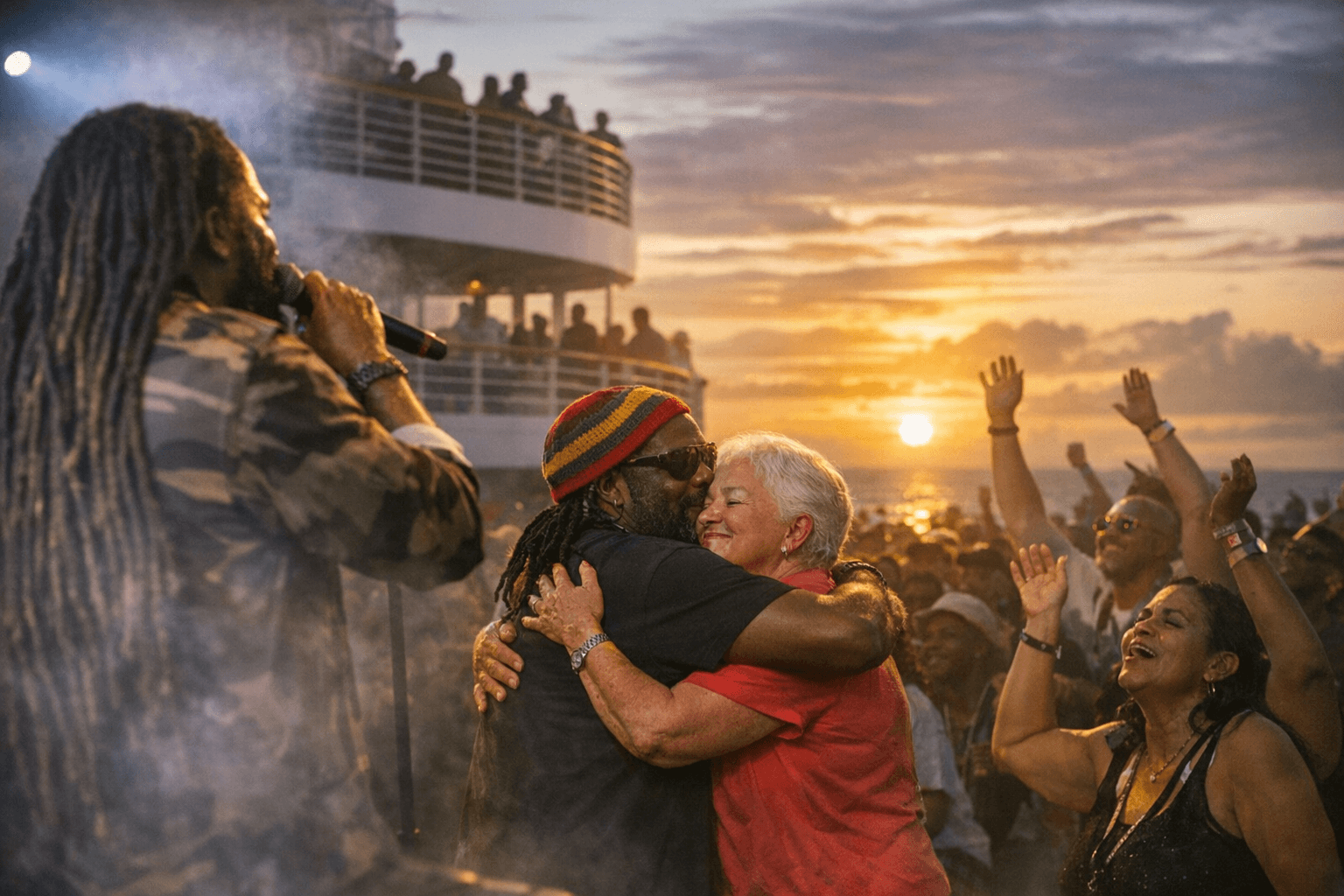
The Love and Harmony Cruise works because it turns reggae into a moving family gathering. On the Norwegian Jewel, artists are not distant names on a poster, they are part of the same hallway, the same elevator, the same dining room conversation, and that closeness is the whole point. This year’s sailing leaned hard into that feeling, with Beres Hammond anchoring the music, Marion Hall bringing worship into the mix, and Tanya Stephens adding the kind of emotional reunion that fans talk about long after the ship docks.
The cruise ran from April 1 to April 6, 2026, sailing out of Miami, stopping in Freeport, Bahamas on April 2, then Ocho Rios, Jamaica on April 4, before returning to Miami on April 6. That route mattered because it placed the whole experience squarely inside Easter week, which gave the organizers room to do something most reggae cruises never attempt. The cabins came with access to concerts, parties, activities, and food service onboard, but the real value was the social atmosphere, the sense that everybody aboard was part of the same extended reunion rather than just a crowd buying access to a show.
Easter at sea changed the tone of the voyage
The sharpest twist in the 2026 sailing was the Resurrection Sunday service led by Minister Marion Hall. This was planned as a first for the franchise, and it gave the cruise a kind of emotional range that is rare on a music ship. Hall, formerly known as Lady Saw, delivered a sermon that shifted the mood from party energy to worship, then later performed on board and even carried out baptisms at sea, which turned the moment into something more than programming. It felt like a true spiritual milestone, not a decorative add-on.
PR representative Ronnie Tomlinson said the gospel element was built in for a reason: Caribbean passengers should not feel like they were missing a holiday tradition just because they were traveling. “Once we realized we were sailing during Easter, we didn’t want anyone to feel like they were missing out on something Caribbean people take very seriously,” Tomlinson said. That instinct paid off, because the response to the gospel expansion was described as overwhelmingly positive, and the service gave the cruise a home-going energy that hit differently from the usual deck-party rhythm.
The timing also gave the voyage a family-travel edge that is easy to overlook in music coverage. Easter is one of those holidays that carries deep weight in Caribbean households, and the cruise made space for that without losing the party. That balance, between Sunday worship and late-night dancing, is exactly why this brand keeps growing.
The reunion moment everyone will remember
If the worship service gave the cruise its spiritual peak, the Marion Hall and Tanya Stephens reconciliation gave it its most talked-about human moment. The two women had been at odds for years, and the fact that they buried the hatchet aboard the cruise made the whole sailing feel even more like a live chapter in reggae history. The exchange happened in an elevator after Tanya Stephens initiated the conversation, which is almost too perfect for a cruise story, because the most meaningful moment happened in one of the ship’s most ordinary spaces.
That is the share hook right there. A reggae cruise is one thing, but a public reconciliation between two major Jamaican voices, in an elevator, during Easter week, on a ship packed with fans, is the sort of detail people repeat because it sounds impossible until it actually happens. It gave the voyage a feeling of healing that stretched beyond music and into memory, pride, and community.
Beres Hammond still sets the emotional center
Beres Hammond remains the anchor that holds this whole event together. On the 2026 sailing, the conversation around his performances made clear that he is still the emotional center of the franchise, the artist who gives the cruise its warmest gravity. His set with his grandson, Kingston Pauyo, was especially moving, because it connected generations on the same stage and reminded everyone why this cruise is as much about legacy as it is about entertainment.
The rest of the lineup backed that up. Busy Signal, Romain Virgo, Pinchers, Carlene Davis, Tanya Stephens, Maxi Priest, and Agent Sasco all helped shape a schedule that moved from roots to lovers rock to dancehall without losing its identity. More artists were still to be announced, including a soca performer for International Flag Night, which kept the lineup open-ended in the best way. The cruise understands something a lot of bigger festivals forget: reggae fans want range, but they want it inside a culture they recognize.
Why the nostalgia hits so hard
The Love and Harmony Cruise is now in its eighth sailing, and that kind of momentum comes from more than novelty. The 2025 voyage drew 3,804 passengers, a number that shows how much appetite there is for a reggae cruise that feels personal instead of corporate. That earlier sailing leaned into a throwback, 1990s-heavy mood and brought in Sports Day, the International Flag Party, and a comedy show, all of which helped make the ship feel like a floating community center as much as a concert venue.
That nostalgic energy is a big reason the format works. People do not just come for the songs they already know, they come for the feeling that they can bump into artists they grew up with, relive the sound of a particular era, and spend a few days inside a world where reggae and dancehall are the main language. The cruise has become a place where the old and the new can sit at the same table, where gospel and dancehall do not cancel each other out, and where a reunion can happen between sets.
What the cruise really sells
At the end of the day, Love and Harmony Cruise sells access, but not the cynical kind. It sells access to the music, access to the people, and access to the feelings that usually get lost once a scene gets big. On this sailing, that meant Beres Hammond as the emotional pillar, Marion Hall as both preacher and performer, Tanya Stephens as part of a healing moment, and a ship full of fans who came looking for more than a vacation.
That is why the cruise keeps mattering in reggae culture. It is not just a festival at sea. It is a living archive of worship, reunion, nostalgia, and performance, with enough history in the room to make every hallway conversation feel like part of the story.
This article was produced by Prism’s automated news system from verified source data, official records, and press releases, then run through automated quality and moderation checks before publishing. The system is built and supervised by the people who set the standards it runs under. Read our full AI policy.
Did this article answer your question?