Miss Lou, Miss Pat, Sonia Pottinger, Sister Nancy honored in reggae legacy
Miss Lou, Miss Pat, Sonia Pottinger and Sister Nancy did more than back reggae, they built its language, its business, its studios and its global sound.
Miss Lou’s voice on Ring Ding, Miss Pat’s shop-floor empire, Sonia Pottinger’s sessions, and Sister Nancy’s “Bam Bam” all point to the same truth: reggae’s backbone was built by women who were not standing at the margins. This Mother’s Day salute puts Louise Bennett-Coverley, Patricia Chin, Sonia Pottinger and Sister Nancy where they belong, in the machinery that carried Jamaican music from local sound to global language.
Miss Lou and the language of reggae
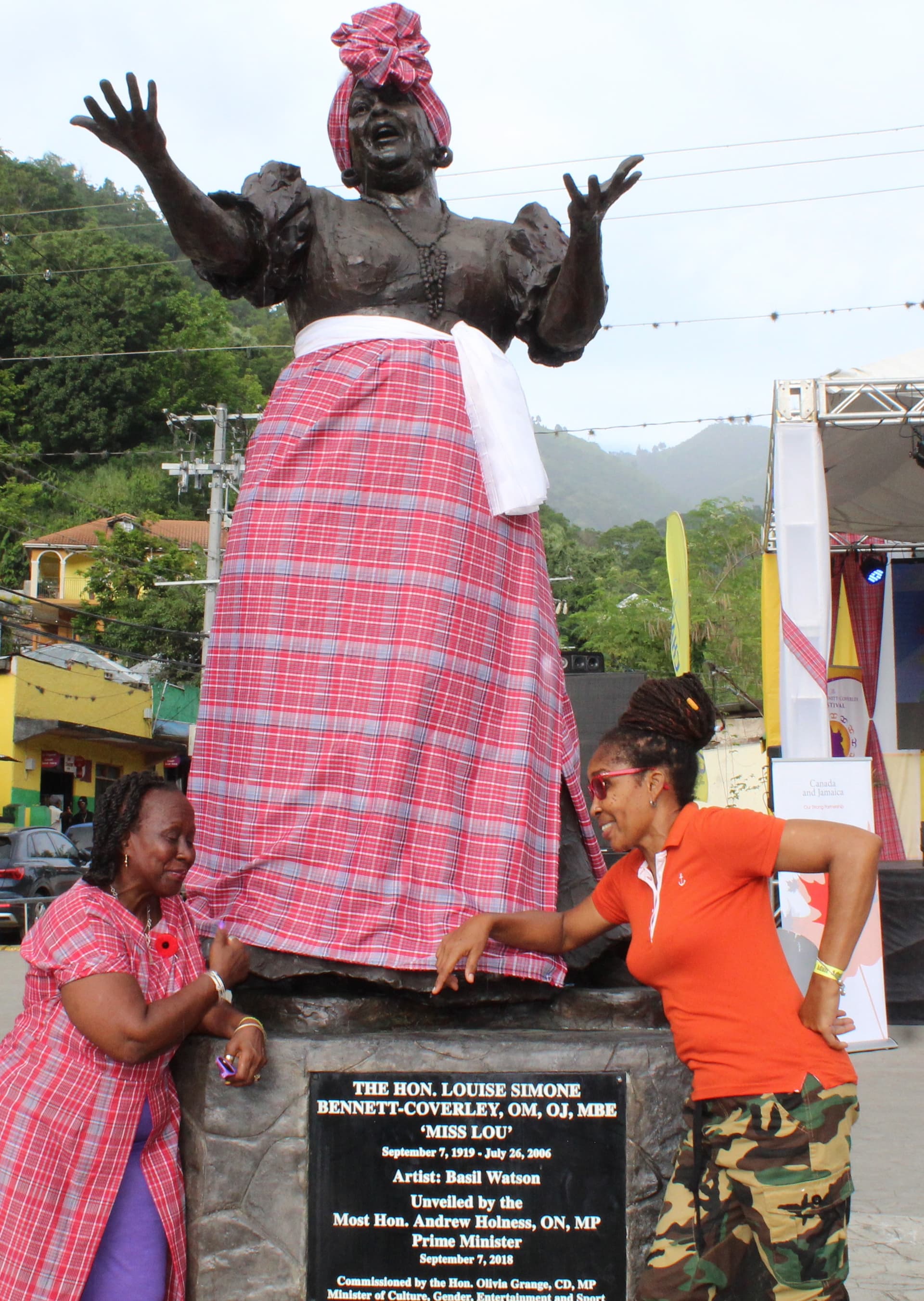
Louise Bennett-Coverley, better known as Miss Lou, did something that still shapes reggae culture today: she made Jamaican speech sound authoritative. Jamaican Creole had spent decades facing disapproval in formal culture, but her poems and performances helped make the language intrinsic to Jamaican literary life, and that shift mattered far beyond the page. When she used dialect on radio and in schools, she was not softening the culture for mass consumption, she was insisting that the culture already had value.
Her run on JBC TV’s Ring Ding made that argument visible every week. The 30-minute variety show ran from 1968 to 1980, and Miss Lou hosted it for 12 years, which made her a household presence for children and young adults. She never recorded reggae herself, but she helped create the atmosphere in which young artists could hear Jamaican identity spoken proudly and without apology. That influence is easy to miss if you only count hit singles, but reggae has always depended on language as much as rhythm.
Patricia Chin and the business of building reggae
If Miss Lou gave reggae confidence in its own voice, Patricia “Miss Pat” Chin helped give it a commercial spine. Alongside her husband Vincent “Randy” Chin, she helped turn Randy’s Record Mart in Kingston into a hub that mattered to The Wailers, The Skatalites, Augustus Pablo, Burning Spear and many more. This was not just a shop or a label story. It was the infrastructure that let reggae move from local scenes into a wider market with real staying power.
VP Records traces its roots to that Kingston operation and says the company was founded in 1977 by Patricia Chin and Vincent Chin. The company’s own history also places VP’s New York City establishment in 1979 after earlier activity in Kingston and Brooklyn, which reflects how reggae business migrated with the diaspora and found a larger platform abroad. VP also describes itself as the world’s leading reggae company, and that claim makes sense when you look at how deeply Miss Pat’s work touches the genre’s international circulation.
The honors have kept coming because the work never really stopped. In 2025, Patricia Chin received a Lifetime Achievement Award at the Jamaica Independence Gala in New York, and VP also said she was honored at the 40th annual IRAWMA in Kingston for reggae and youth philanthropy. Those awards underline the same point: she is not a background figure in reggae history, she is one of the people who made the export system function.
Sonia Pottinger and the producer’s chair
Sonia Pottinger belongs in this conversation because she broke into one of the most male-dominated corners of the industry and stayed there long enough to matter. She is widely identified as Jamaica’s first female record producer, with a producing career that ran from the mid-1960s through the mid-1980s. That timeline matters because it places her at the center of reggae’s development, not after the fact.
Being a producer in that era meant more than signing off on a session. It meant shaping what got cut, what got pressed, and what got heard. Pottinger’s importance is that she proved women could occupy that decision-making space when the studio door was usually guarded by men. In a music history that often celebrates singers while skipping the people who controlled the console, she is a reminder that the producer’s chair is part of reggae’s creative core.
Sister Nancy and the song that kept traveling
Sister Nancy’s story is the clearest example of how reggae and dancehall can outgrow their first audience and come back with international force. Her breakout song “Bam Bam” first appeared on her 1982 debut album One, Two, and the track later became far more famous abroad than it was at first in Jamaica. That kind of second life is part of reggae’s modern history, where a song can travel through clubs, samples and film soundtracks until it becomes bigger than its original release.
Jay-Z sampled “Bam Bam” on his 2017 track “Bam,” featuring Damian Marley, which is one of those moments that tells you a tune has crossed from classic to cultural reference point. The GRAMMY interview also noted that the past 12 months had been among the busiest of Sister Nancy’s 45-year career, a sign that her name still moves in real time, not just in nostalgia. The same interview pointed to the song’s influence on younger women in dancehall, including Lady Saw, Macka Diamond, Spice and Shenseea, which is exactly how a legacy should work: it keeps making room for the next voice.
The women behind the institutions
The tribute also reaches beyond the four names in the headline image. Doris Darlington, mother of Clement “Coxsone” Dodd, was described as the silent backbone of Studio One and a constant presence at the Brentford Road headquarters. Her work at the Music Land record store and her support of her son’s distribution ambitions helped lay the groundwork for one of reggae’s most important catalogues, and that is not small labor. Records do not move themselves, and scenes do not survive on charisma alone.
That is the larger lesson running through this Mother’s Day salute. Reggae’s architecture was built in language, in retail, in production, in distribution, and in cultural advocacy. Louise Bennett-Coverley made Jamaican Creole feel at home in public life, Patricia Chin built the channels that carried the music outward, Sonia Pottinger proved women could run the production room, and Sister Nancy gave the music a track that still travels. Put together, they show that reggae’s legacy was never only about the men on the sleeve. It was built by women who shaped what Jamaican music sounded like, how it moved, and how the world learned to hear it.
This article was produced by Prism’s automated news system from verified source data, official records, and press releases, then run through automated quality and moderation checks before publishing. The system is built and supervised by the people who set the standards it runs under. Read our full AI policy.
Did this article answer your question?