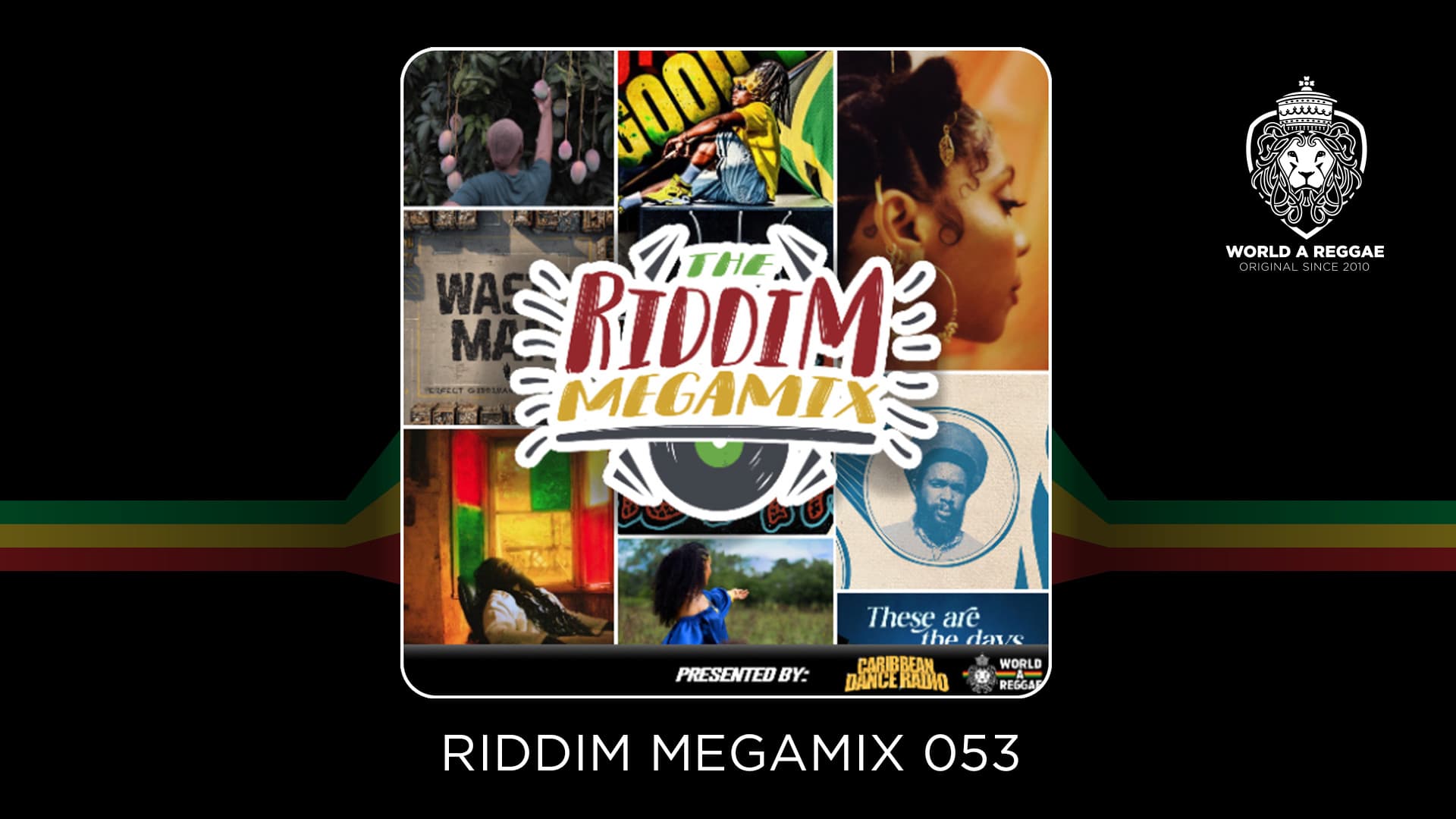
Riddim Megamix Episode 53 maps reggae’s current roots, dub, and new voices
Episode 53 moves like a field report from reggae’s present tense, where roots, dub, and new voices all share the same riddim space.
A mix that sounds like the scene itself
Riddim Megamix Episode 53 lands as a fast read on reggae right now because it refuses to separate foundation and forward motion. The opening run, with conscious cuts from Xana Romeo, Keznamdi, and Micah Shemaiah, plus several selections from Haile’s Spare Room EP, immediately signals the method: this is not a museum piece, it is a living conversation between generations, production styles, and audience expectations.
That is what makes the episode useful as a listening guide. Instead of sorting reggae into clean categories, it lets roots, dub, and modern cuts rub against each other until the overlap becomes the point. The result is a map of the current ecosystem, one where selectors still matter because they know how to move from a veteran voice to a younger one without breaking the spell.
The opening stretch shows where the culture is heading
The first standout transition is the way Episode 53 begins with conscious modern reggae, then quickly widens into a deeper field of voices. Xana Romeo, Keznamdi, and Micah Shemaiah set a tone that is reflective but current, the kind of set-up that keeps one foot in message music and the other in today’s release cycle. Haile’s Spare Room EP enters the picture as more than a collection of tracks; it works like a bridge, showing how recent production still carries enough roots energy to sit comfortably beside older names.
From there, the mix starts revealing a bigger truth about the moment: reggae’s present is not being defined by one generation alone. The episode makes room for singers and selectors who understand the weight of the tradition, but it never freezes them in time. That balance is what gives the mix its pulse, and it is why the opening matters so much. It tells you right away that this is a culture still sorting out how to honor its history while keeping the sound in motion.
Veterans, dub specialists, and crossover voices share the same frame
The next major shift comes when the tracklist expands into a broad field of names that would rarely feel like a single lane in a less careful set. Hempress Sativa, Paolo Baldini DubFiles, and Tiken Jah Fakoly on “Rastaman A Chant” bring heavyweight presence, while Hollie Cook’s “Frontline” gives the mix a sleek, melodic turn that still fits the roots-and-sound-system logic. Lawgiver the Kingson’s “The Ancestors” and its dub version underline how much of reggae’s present still lives in version culture, where a song and its dub counterpart are both part of the story.
That same stretch also puts the mix’s curatorial strength on display. Ras-I appears with Kabaka Pyramid, Blvk H3ro, Perfect Giddimani, and Yungg Trip, creating a section that feels like a snapshot of how collaborative and cross-generational the scene has become. These are not isolated appearances. They point to a wider reality in which newer singers, established lyricists, and dub-minded producers are all part of the same circulation of sound.
The foundation section reminds you that reggae’s past is still active
One of the most revealing transitions in Episode 53 is the move into Linval Thompson, Al Campbell, and Keith and Tex. These names do important work in the mix because they anchor the whole set in the deeper roots of reggae’s recorded history. Rather than feeling like a detour, they make the surrounding selections hit harder. When foundation voices sit beside newer cuts, the through-line becomes clearer: reggae has always been built through continuity, not replacement.

That matters even more in a culture shaped by sound-system memory. Caribbean Dance Radio describes Riddim Megamix as a podcast, radio show, and sound system that drops exclusive releases, dubplates, remixes, and 45s, and that identity is audible here. The episode behaves like a selector’s crate rather than a streaming playlist. It trusts the listener to hear the relationships between eras, and it uses the foundation records to prove that the present is still in conversation with the archive.
Current release cycles give the mix its real-time feel
The most practical reason to hear Episode 53 is that many of its names connect directly to active release traffic. Mortimer, Samory I, and Busy Signal all appear in the orbit of Zion High Productions’ 2026 Fruits Ripe Riddim, alongside Micah Shemaiah, Pressure Busspipe, and Jesse Royal. That makes the mix feel less like a retrospective and more like a live snapshot of a working scene, where riddim projects still organize attention and keep multiple voices moving at once.
Hollie Cook’s “Frontline” adds another layer of present-tense relevance. It was issued ahead of her fifth studio album, Shy Girl, as part of the Shy Girl / Frontline 7-inch release, which gives the track a clear place in a larger rollout rather than treating it as a standalone cut. The same goes for the set’s other contemporary names, from Yeza with Rorystonelove to Romain Virgo, Alaine, Protoje, and Azizzi Romeo with Ted Ganung. Episode 53 is valuable because it makes those connections audible without over-explaining them.
The wider Jamaican frame is part of the story too
Episode 53 also sits inside a much larger cultural backdrop. World A Reggae says it was founded in August 2010 to share reggae music and Jamaican culture with people around the world, and that mission matches the way the mix works here: it is both curation and cultural circulation. UNESCO added reggae music of Jamaica to its intangible cultural heritage list on November 29, 2018, recognizing a form that originated in Western Kingston and draws from earlier Jamaican, Caribbean, North American, Latin, soul, and rhythm-and-blues influences.
That deeper heritage still matters because reggae in Jamaica remains publicly celebrated rather than merely remembered. Reggae Month, officially proclaimed in 2008, marked its 17th anniversary in 2026 with more than 60 events and a launch on January 21 at J. Wray and Nephew Limited head office in New Kingston. Put next to Episode 53, that calendar tells the same story from another angle: reggae is not only archived and honored, it is actively programmed, performed, and exported through institutions, parties, radio, and digital mixes.
What Episode 53 reveals about reggae in April 2026
The clearest takeaway is that reggae’s center of gravity is still communal. Episode 53 shows a scene held together by selectors who can move from Xana Romeo and Keznamdi to Linval Thompson and Keith and Tex, then on to Hollie Cook, Busy Signal, Romain Virgo, and Protoje without making the journey feel forced. That range is the story. The sound is still rooted, still dub-conscious, and still open to new voices that know how to carry the message.
If you want a quick read on where the genre sits right now, this is the kind of mix that does the job. It points to a reggae world where riddim projects, 7-inch releases, dub versions, and heritage celebrations all coexist in the same ecosystem. Listen to it on SoundCloud or Apple Music, and it plays less like a playlist than a dispatch from a culture that is still very much in motion.
This article was produced by Prism’s automated news system from verified source data, official records, and press releases, then run through automated quality and moderation checks before publishing. The system is built and supervised by the people who set the standards it runs under. Read our full AI policy.
Did this article answer your question?