Rohan Budhai’s A Hit Mek traces Jamaica’s music history beyond reggae
A Hit Mek widens Jamaica’s music story far beyond reggae, linking Kumina, Mento, sound systems, and colonial-era roots in one 560-page map.
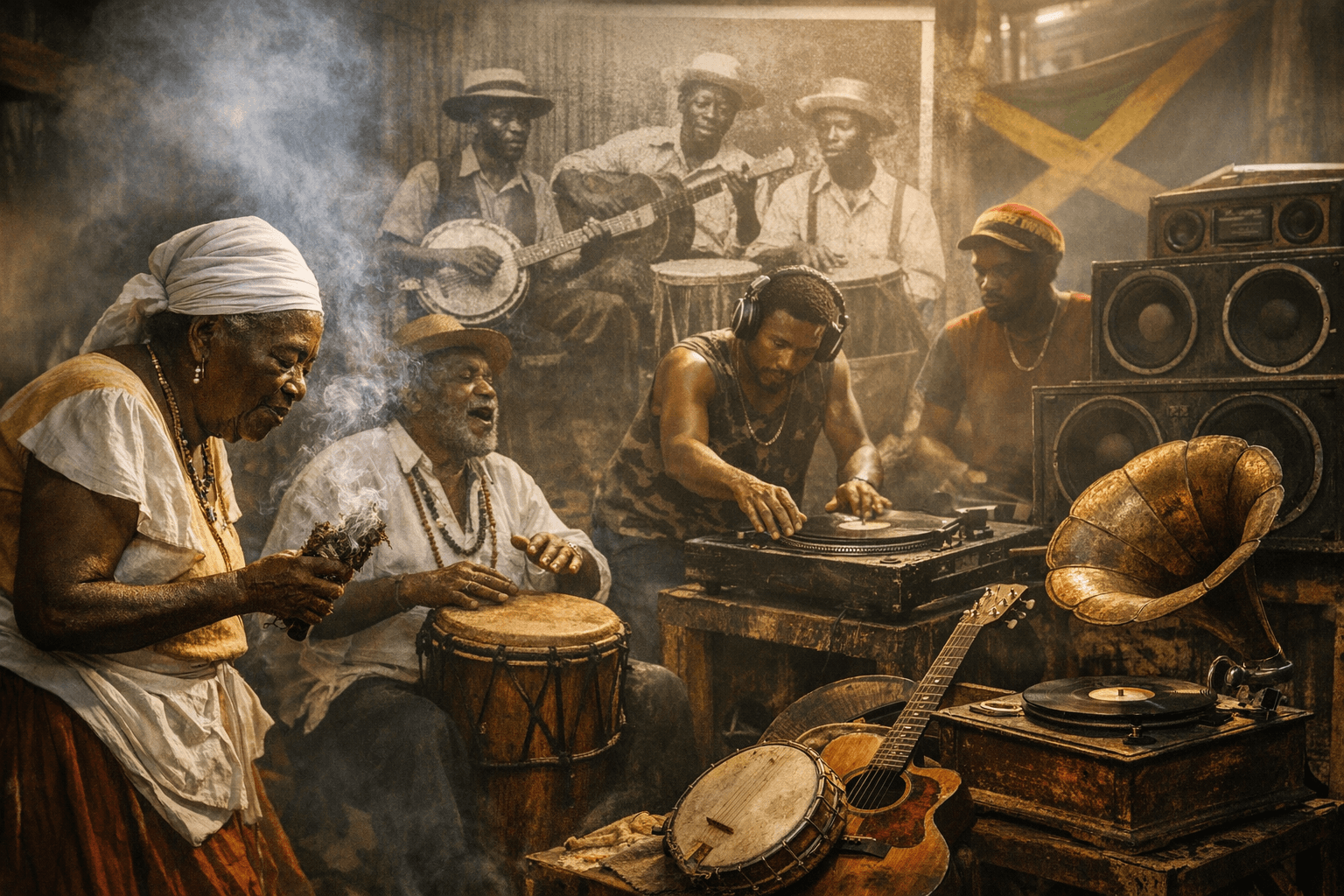
A Hit Mek widens Jamaica’s music story far beyond reggae, and that is exactly why it matters. Rohan Budhai’s 560-page book treats reggae as the center of a much larger musical universe, then traces the roads that led there through Taíno encounter, colonial rule, African survival, and the sound system culture that helped carry Jamaican music across the world.
Why this book lands now
Budhai did not set out to write another narrow reggae chronicle. He began the book in 2021, finished it in 2025, and built it as a corrective to the idea that Jamaica’s music history has already been fully mapped. That approach gives A Hit Mek a sharper edge than the usual heritage release: it is a reference work, yes, but it is also a challenge to the standard story that stops at ska, rocksteady, and reggae.
The timing matters because reggae’s global status is already established. UNESCO inscribed Reggae music of Jamaica on its Representative List of the Intangible Cultural Heritage of Humanity in November 2018, and Jamaica’s National Commission for UNESCO notes that Kingston was designated a UNESCO Creative City of Music in December 2015. Budhai’s book fits into that same international conversation, but it pushes the frame wider, asking what gets left out when reggae becomes the whole story.
The deeper timeline Budhai is drawing
One of the boldest choices in A Hit Mek is the way it starts before the modern record business and before reggae itself. The book traces Jamaica’s musical story from the late 15th century, beginning with the encounter with the Taíno people, then moving through Spanish and British colonialism and the transatlantic slave trade. That longer timeline matters because it shows Jamaican music as something formed under pressure, not as a style that simply appeared fully formed in the 1960s.
Budhai also folds in the contributions of African, Maroon, indentured, and mixed communities, along with the role of churches and colonisation-era musical forms. That gives the book a much broader cultural map than a genre-by-genre history. It recognizes that the rhythms, chants, and performance habits later heard in popular Jamaican music were shaped by communities that are often treated as footnotes in mainstream coverage.
The genres that make the book stand out
The strongest part of A Hit Mek is the range. Instead of treating reggae as the destination, Budhai places it alongside Kumina, Mento, Calypso, Ska, Rocksteady, Dancehall, and offshoots like dub and lovers rock. That list alone tells you this is not a casual overview. It is a serious attempt to show how one island’s music grew by absorbing, reshaping, and exporting many different forms.
Kumina and Mento are especially important inclusions because they remind you how much of Jamaica’s musical identity predates the reggae era that most outsiders know. Ska and rocksteady mark the steps that led directly into reggae’s rise, while Dancehall and dub show how the story keeps moving long after the classic roots period. Lovers rock and reggae fusion push the narrative outward again, into styles that connect Jamaica to broader Caribbean, British, and global pop conversations.
What Budhai gets right about reggae itself
Budhai does not diminish reggae by placing it in a larger frame. He makes it stronger. The book describes reggae as a fusion shaped by West African roots as well as R&B, jazz, and soul, and that is the right way to talk about it if you understand how porous Jamaican music has always been.
UNESCO’s own description of reggae backs up that view. It says reggae originated in a cultural space shaped by marginalized groups in Western Kingston and drew on earlier Jamaican forms plus Caribbean, North American, Latin, neo-African, soul, and rhythm-and-blues influences. That is the key point many casual histories miss: reggae was never isolated. It emerged from a busy, multilingual, cross-rhythmic environment, then went on to influence dub, lovers rock, reggae fusion, hip-hop, and electronic music.
That broader influence is why a book like this feels useful right now. It is not just about honoring roots. It explains why reggae still matters in modern sound, from bass-driven club music to sampling culture and diaspora identities.
Sound system culture is not a side note
If you care about Jamaican music, sound system culture is not decorative history. It is infrastructure. Budhai’s emphasis on sound systems is one of the most important things in the book because it recognizes how music moved from local spaces to global force. The dance, the selector, the dubplate mentality, the competitive energy, all of that helped shape how reggae and its descendants travelled.
That is also why A Hit Mek should appeal to selectors, collectors, and anyone who follows the lineage of Jamaican music beyond the obvious hits. Sound system culture connects the dots between roots reggae, dub, dancehall, and the broader bass culture that has echoed far outside Jamaica. In other words, this is not an optional chapter in the story. It is one of the engines.
The title itself carries the lineage
The title A Hit Mek is not just clever wordplay. It clearly nods to Desmond Dekker’s 1969 song “It Mek,” a title that places the book inside Jamaica’s recorded-music canon while tipping its hat to one of the island’s most recognizable crossover voices. That is the kind of detail that makes the project feel rooted rather than academic.
Amazon lists the book under ISBN 9798899506093 and shows alternate language editions in Spanish and French, with additional context pointing to Portuguese as well. That tells you the book is already being positioned for readers beyond Jamaica, which makes sense for a title that is trying to explain the island’s music history as a global story, not a sealed archive.
Why this release matters to reggae people
A Hit Mek is useful because it does something most books about Jamaica’s music still do not do well enough: it treats reggae as one brilliant chapter in a much larger book. The payoff is not just historical detail. It is perspective. Once you see Kumina, Mento, church forms, colonial-era influence, sound system culture, ska, rocksteady, dancehall, dub, and lovers rock in one connected line, reggae stops looking like an isolated miracle and starts looking like what it really is, the most visible expression of a much deeper musical inheritance.
For reggae readers, that is the point. This is not a book that narrows the field. It opens it up, and in doing so, it gives Jamaica’s music the scale it has always deserved.
This article was produced by Prism’s automated news system from verified source data, official records, and press releases, then run through automated quality and moderation checks before publishing. The system is built and supervised by the people who set the standards it runs under. Read our full AI policy.
Did this article answer your question?