Willie Stewart’s Rhythms of Africa honors Jamaica, reggae icons in Miramar
Willie Stewart turned Miramar into a Jamaica-first gathering, pairing reggae icons, youth drumming, and Hurricane Melissa relief into one powerful community night.
A Miramar night built for Jamaica
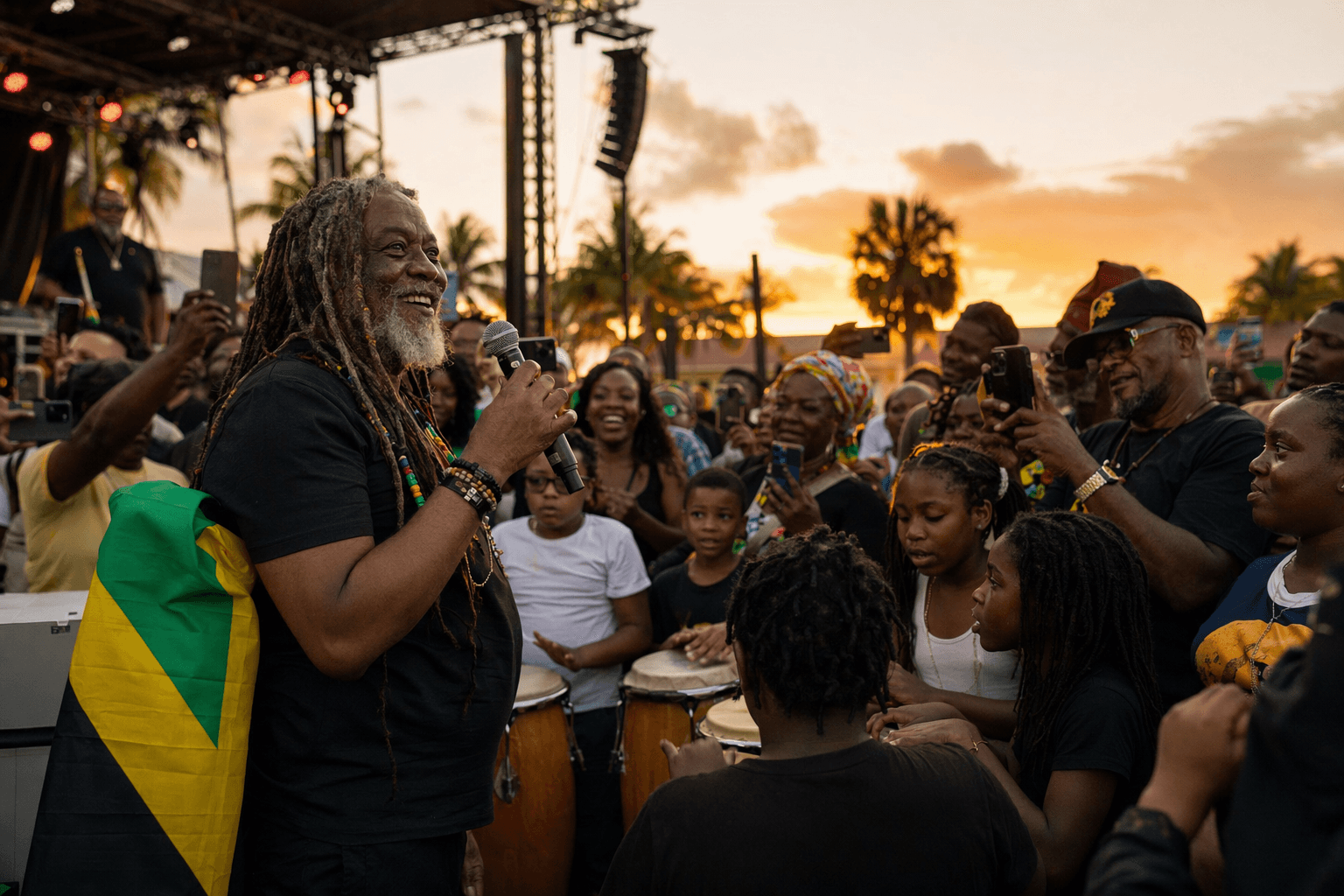
Willie Stewart’s Rhythms of Africa landed in Miramar with a purpose bigger than the stage lights. The 13th annual edition, staged April 18 and 19 at Miramar Cultural Center under the banner “Run Di Riddim: Every Beat For Jamaica,” brought together a packed South Florida Caribbean crowd, guest performers Richie Stephens, J C Lodge, and Gem Myers, and a clear humanitarian message centered on Jamaica’s recovery after Hurricane Melissa.
The show mattered because it was not treated like a private vanity project. The City of Miramar and Miramar Cultural Center framed it as a community celebration of Jamaican culture and heritage, and that civic backing matched the mood in the room: this was a diaspora gathering with a Jamaica-centered purpose, not just a concert recap. In a region where South Florida has long functioned as an extension of the island’s reggae family, Rhythms of Africa once again proved that Miramar has become one of the places where Jamaican memory, music, and mutual aid come together in public.
A tradition that keeps growing
Stewart launched Rhythms of Africa in 2010, and the 2026 presentation showed how deeply the series has taken root. What began as an Afrocentric music event has become one of those fixtures people in the reggae world plan around, the kind of annual date that carries both artistic expectation and community responsibility. This year’s edition was described as especially personal, and the packed-house energy that has followed the event since its early years gave the concert a feeling of continuity and return.
That continuity also comes from Stewart’s work offstage. He has taught more than 2,000 children in South Florida the rudiments of drumming, a staggering number that explains why the youth-orchestra element carried so much weight. In a genre built on rhythm and lineage, that kind of teaching is not a side note. It is infrastructure, and it is one reason the audience response in Miramar felt so rooted in the future as well as the past.
The sound onstage: youth, roots, and lovers rock
The musical arc of the night moved with the confidence of a seasoned community event. Stewart performed with his percussive youth orchestra, creating the kind of rhythmic backbone that gave the entire showcase its pulse. Around that center, Richie Stephens brought veteran polish, J C Lodge added lovers rock warmth, and Gem Myers gave the evening another strong contemporary voice.
That mix made the showcase feel like a cross-section of reggae’s living community rather than a nostalgic museum piece. The youth players connected the event to the next generation, while the guest singers reminded the crowd that the genre’s emotional range still stretches from roots consciousness to romance to uplift. The result was a program that spoke to families, elders, musicians, and younger listeners all at once.
A tribute section shaped by loss
The celebratory atmosphere did not erase grief. The event included a sombre tribute segment for Jimmy Cliff, Cat Coore, and Sly Dunbar, three names tied to reggae’s international reach and its local emotional core. Sly Dunbar’s death on January 26, 2026, at age 73, sharpened the sense of recent loss, and the tribute section gave the night a reflective gravity that sat naturally beside the dancing and applause.
Honoring those figures inside a live Jamaican community event matters because reggae has always held memory and resistance in the same hand. Jimmy Cliff helped carry Jamaican music to global audiences, Cat Coore shaped the sound and spirit of generations, and Sly Dunbar’s drumming defined an era. By placing them in the center of the evening’s emotional frame, Stewart kept the showcase tied to the lineage that made the whole gathering possible.
Have A Little Faith and the aftermath of Hurricane Melissa
The strongest community-action thread of the night came through “Have A Little Faith,” the humanitarian song Stewart wrote and co-produced with Sean Wedderburn in response to the resilience Jamaicans showed after Hurricane Melissa. The storm made landfall on October 28, 2025, and its devastation became the emotional backdrop for both the song and the showcase. This was not abstract solidarity. It was a direct artistic reply to disaster, shaped by a singer and producer’s instinct to turn anguish into coordination and hope.
The recorded version of the song brought together a wide circle of reggae and gospel voices, including Leroy Sibbles, Carlene Davis, Dwisdom, Gem Myers, Glen Washington, J C Lodge, Wayne Armond, Alecia Marie, Patrick Ulysees Pinkney, and Carl McDonald. That cast makes the project feel communal by design, not incidental. It is the kind of lineup that signals a whole network of artists stepping into the same shelter, each voice adding a different kind of testimony.
Stewart said the crowd reaction moved him, describing it as feeling “almost like the song was being born onstage for the first time.” That line fits the way the project traveled from heartbreak to performance to circulation. By May 4, 2026, “Have A Little Faith” had climbed to number one on the South Florida Top 25 Reggae Chart, giving the song a measurable local footprint to match its symbolic one.
Why South Florida keeps answering the call
The power of Rhythms of Africa lies in how naturally it fits the region it serves. South Florida has long been one of the strongest Jamaican and Caribbean outposts outside the island, and Miramar’s annual celebration keeps proving that reggae here is not background music. It is part of civic life, family memory, and transnational responsibility. When Stewart brings together youth drummers, respected vocalists, and a humanitarian song built for Jamaica’s recovery, he is not simply staging a show. He is organizing a cultural response.
That is why this edition resonated so strongly. The concert advanced a national and charitable cause, honored reggae’s fallen giants, and reminded the South Florida community that its relationship with Jamaica is active, not symbolic. Rhythms of Africa has become a durable part of the calendar because it offers what reggae does best when it is working at full strength: rhythm with purpose, grief with dignity, and celebration that can still carry the weight of a country’s healing.
This article was produced by Prism’s automated news system from verified source data, official records, and press releases, then run through automated quality and moderation checks before publishing. The system is built and supervised by the people who set the standards it runs under. Read our full AI policy.
Did this article answer your question?