FB Neo June 18 update improves stability and Windows builds
FB Neo's June 18 build tightened Windows compilation and cleaned up driver dependencies, a small patch with big payoff for cabinets and RetroArch cores.
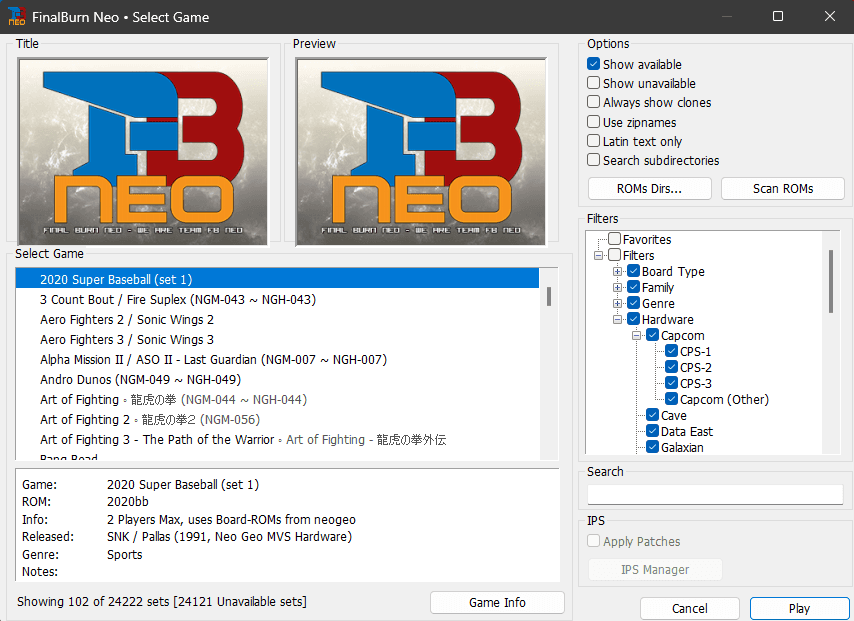
FinalBurn Neo’s June 18 maintenance build did not chase a flashy new feature, but it did remove the kind of friction that can quietly derail a cabinet, a RetroArch setup, or an older Windows install. The update focused on driver dependency fixes and a simpler path for Win32 UI compilation, with additional revisions to nes and tukipaco.
That work landed as GitHub commit #2631, titled “Fix driver dependencies and simplify Win32 UI compilation,” and it fit into a broader June 2026 stretch of build-system cleanup, including related Meson consolidation work in the repository tree. For people who rely on FBNeo as a daily driver, especially on Windows, those changes matter because they lower the odds that a small codebase shift turns into a broken build or a stubborn compile error.

The official repository describes FinalBurn Neo as an emulator for arcade games and select consoles, descended from FinalBurn and older versions of MAME. Its README also frames the project around accurate emulation and high performance, with netplay, rewinding, and shader effects among the supported features. That combination helps explain why seemingly modest maintenance can reach far beyond the source tree: FBNeo is not just a standalone emulator, but a core that shows up in a lot of arcade-focused and lightweight console setups.
The June 18 changelog’s mention of nes and tukipaco is another reminder that FBNeo still keeps an eye on smaller systems and edge cases, not just the marquee arcade boards. In a scene where people often remember the emulator only when something goes wrong, keeping those corners in shape is part of what makes the project dependable across old hardware, frontends, and custom builds.
The repository also points to an official forum and Discord, a sign of the active user and developer community around the code. That community is exactly who benefits when a build trims dependency knots and simplifies Windows compilation, because the best emulator maintenance is often the kind that leaves no drama behind, only a core that still loads cleanly the next time it is needed.
This article was produced by Prism’s automated news system from verified source data, official records, and press releases, then run through automated quality and moderation checks before publishing. The system is built and supervised by the people who set the standards it runs under. Read our full AI policy.
Know something we missed? Have a correction or additional information?
Submit a Tip