GearSystem Git Build Adds Debugger Improvements and Trace Logger Feature
GearSystem's latest Git build introduces a trace logger tool and debugger enhancements, plus a fixed libretro build for RetroArch users.
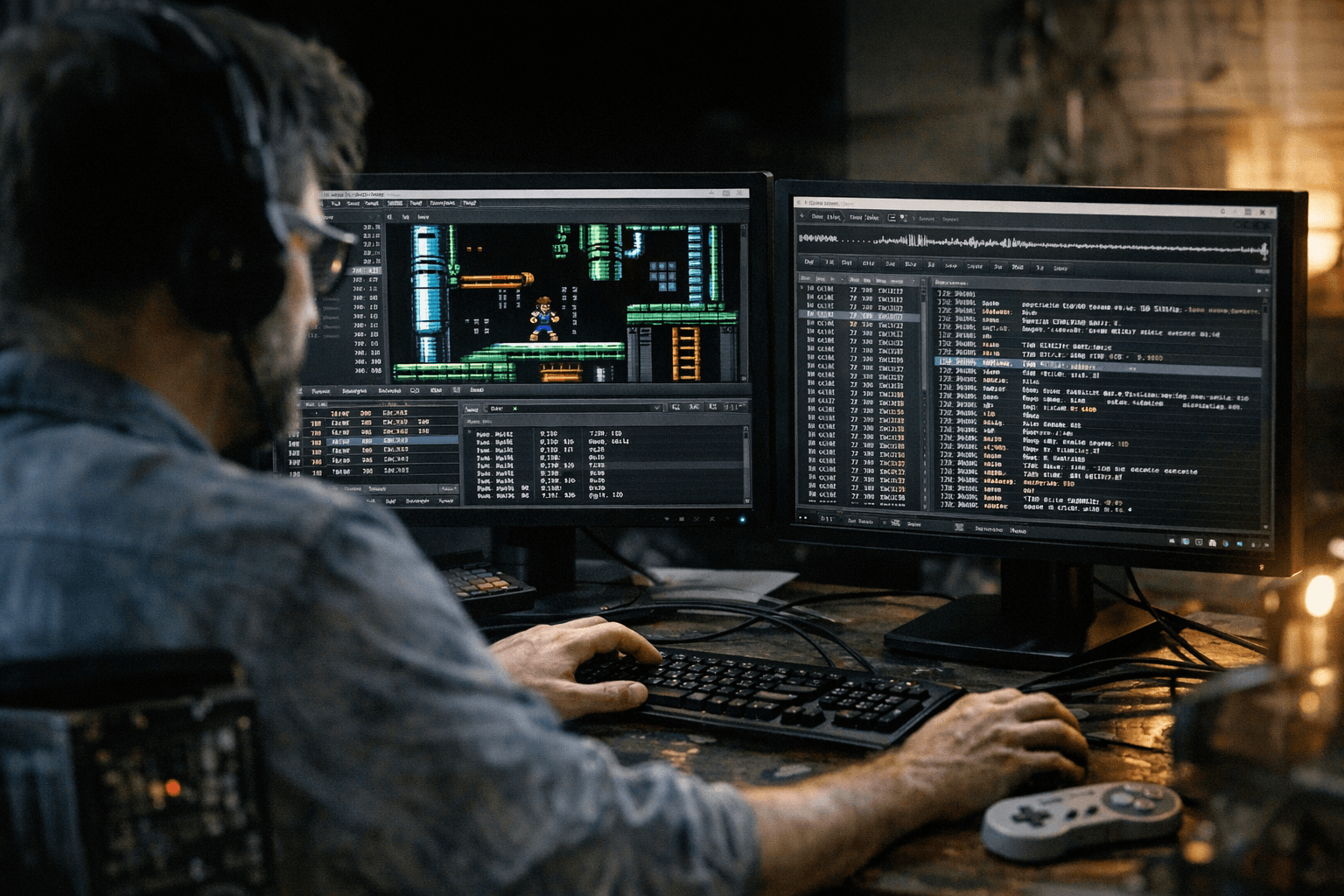
GearSystem is a cross-platform Sega Master System, Game Gear, and SG-1000 emulator written in C++ that runs on Windows, macOS, Linux, BSD and RetroArch, with an embedded MCP server for debugging and tooling. A new Git build compiled on March 25 pushed the project's developer tooling forward in several meaningful ways, with the headline additions being a freshly introduced trace logger tool and a round of debugger improvements that bring the emulator's analysis capabilities closer to what serious homebrew developers and ROM hackers need.
The five-item changelog tells the story concisely. The libretro build received a fix, clearing a compatibility issue that had been blocking RetroArch users from running the latest code. A compiler warning was resolved alongside that. On the developer tooling side, two distinct entries address the trace logger: "[mcp] Introduced trace logger tool" added the feature through the emulator's embedded MCP server layer, while "[debugger] Enhanced trace logger" extended it within the debugger interface itself. Rounding out the build, "[debugger] Improved PSG viewer" tightened up the panel used to inspect the sound chip in real time.
The full debugger already includes a just-in-time disassembler, CPU breakpoints, memory access breakpoints, code navigation, debug symbols, automatic labels, a memory editor, an IO inspector, and a VRAM viewer covering tiles, sprites, backgrounds, and palettes, so the trace logger and PSG viewer improvements slot into an already substantial suite rather than arriving in a vacuum.
The embedded MCP server supports AI-assisted debugging with tools compatible with GitHub Copilot, Claude, ChatGPT, and similar platforms, exposing controls for execution, memory inspection, hardware status, and more. The addition of a dedicated trace logger tool on the MCP side means those AI-assisted workflows now have a structured mechanism for capturing execution traces, a capability that is genuinely useful when hunting down timing bugs or reverse-engineering unfamiliar ROM behavior.
The core focus of GearSystem has always been readability of source code alongside very high compatibility, built on a highly accurate Z80 core with multi-mapper support covering SEGA, Codemasters, and ROM-only cartridges. Automatic region detection covers NTSC-JAP, NTSC-USA, and PAL-EUR. The emulator also supports the YM2413 OPLL FM sound chip, placing it well above the baseline for Master System accuracy.
Debug symbols are loaded automatically when opening a ROM: for a file like path_to_rom_file.sms, GearSystem will attempt to load path_to_rom_file.sym from the same location. Supported symbol file formats include sjasmplus/Pasmo (EQU), SDCC/NoICE (.noi), wla-dx, and vasm/generic formats, covering most of the assemblers active in the 8-bit homebrew scene today.
The drhelius/Gearsystem repository carries 1,389 commits at the time of this build, and the project is licensed under the GNU General Public License v3.0. Development is made possible by community backers, and the project welcomes sponsorship from anyone who finds it useful. The March 25 build is available through the GearSystem Git download link on the reporting page, with source accessible directly through the GitHub repository.
This article was produced by Prism’s automated news system from verified source data, official records, and press releases, then run through automated quality and moderation checks before publishing. The system is built and supervised by the people who set the standards it runs under. Read our full AI policy.
Did this article answer your question?