Guest CRT shader update boosts RetroArch performance and CRT accuracy
Guest’s latest CRT shader pass added double internal-resolution support and up to a 10% speed boost, tightening RetroArch’s CRT look without a heavy frame-time hit.

If your RetroArch setup has ever nailed the scanlines but lost the race on handhelds, mini PCs, or a living-room box, Guest’s latest CRT shader update was built for that exact tradeoff. The newest version, dated 2026-06-20, pushed both crt-guest-sm and crt-guest-advanced with a tuning pass aimed at making the picture look more like a real tube without turning every frame into a budget problem.
The practical change that stands out first is double internal-resolution support. That gives the preset logic a better path for higher-rendered sources before the CRT stage kicks in, which matters when a setup is already running a heavier core or a sharper internal render. The update also adds a compatibility mode for the fastest version, a sign that Guest R. is still trying to keep the family usable across a wider spread of hardware instead of chasing accuracy only on high-end desktop GPUs.
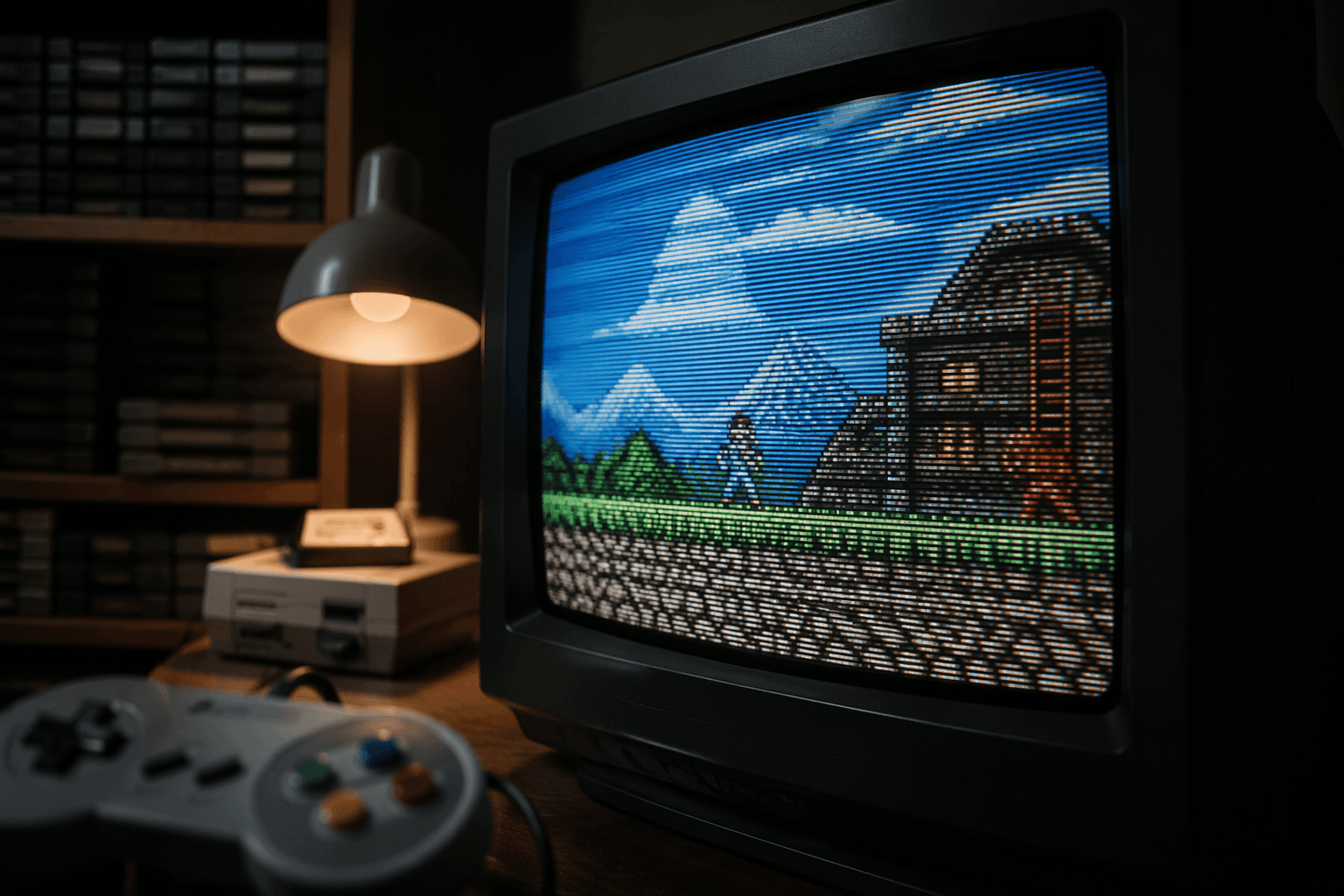
The performance claim is not subtle either. The thread says the new build can deliver up to a 10% speed boost, alongside broader optimizations and stronger filtering options. For players building around RetroArch shader chains, that is the difference between a preset that looks good in a screenshot and one that holds frame time during actual play. The same pass also reworks bloom, halation, mask behavior, and scanline shaping, with a new option for cleaning up mask and scanline interaction in brighter tones. Mask boost, magic glow, and contrast all got revised as well.
That matters because Guest’s shaders have always lived in the narrow space between nostalgia and legibility. Libretro’s own shader docs place the Guest family alongside the Dr. Venom and -2 variants, the lower-requirement Fast version, and the SM variant, which uses a different method of generating scanlines. In other words, this is not a single preset for one type of machine. It is a family built to scale from weaker hardware to setups that can afford more exacting CRT simulation.
crt-guest-advanced has become the reference point for that balance, with a RetroArch guide calling it an excellent mix of accuracy and performance and one of the most popular CRT shaders in the community. The long-running thread around Guest’s work also shows active preset makers and shader authors still building on it, which is why small changes to mask cleanup or internal-resolution handling land like real upgrades rather than minor housekeeping. For anyone trying to make modern displays stop looking off, this was the kind of update that changed the whole default.
This article was produced by Prism’s automated news system from verified source data, official records, and press releases, then run through automated quality and moderation checks before publishing. The system is built and supervised by the people who set the standards it runs under. Read our full AI policy.
Did this article answer your question?