Libretro forum buzzes over build-your-own DuckStation-libretro core
Goosestation v0.2 pushed DuckStation-libretro toward self-built cores, adding macOS, Switch, and Windows fixes that drew 59 replies and 1,843 views.

Goosestation v0.2 pushed DuckStation-libretro deeper into do-it-yourself territory, with a reproducible builder now aimed at RetroArch users who want their own PS1 core instead of waiting on prebuilt binaries.
The Libretro thread was still active on May 31, 2026 and had drawn 59 replies and 1,843 views, a solid level of attention for a post about packaging and compiling rather than a flashy new emulator release. The v0.2 post, published on May 17, added instructions for packaging a personal Goosestation build and spelled out the practical changes: macOS build support, Nintendo Switch build support in .nro form, a native Deko3D driver for RetroArch, and a fix for Vulkan on Windows through static library linking.
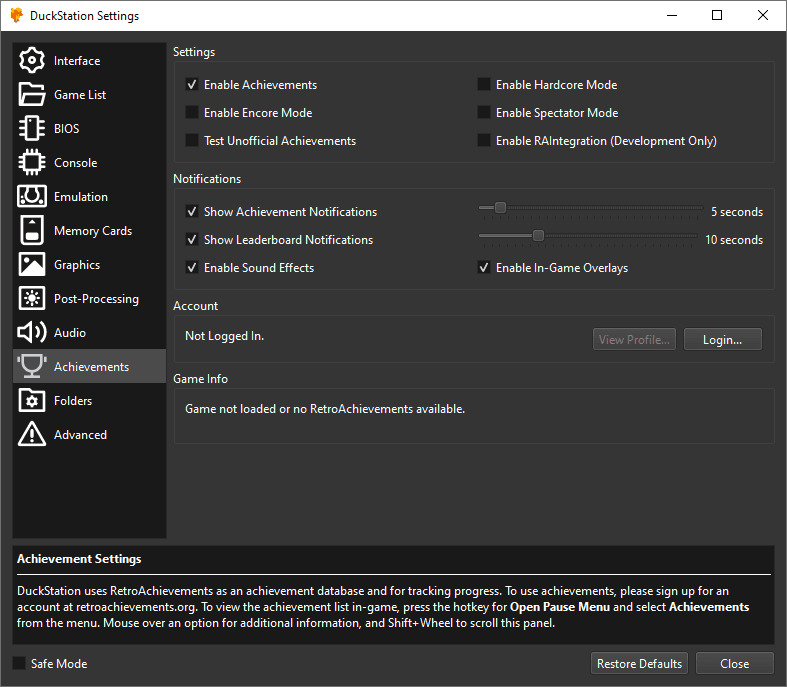
That is the part that matters for regular PS1 workflows inside RetroArch. DuckStation and its Libretro offshoots already live in the middle of a familiar setup pattern, where users load a core, point it at a BIOS, and rely on standardized controls and front-end integration. The upside of a custom build is obvious to anyone who has chased a stubborn regression or wanted a platform-specific fix sooner than the main distribution cycle could deliver it. The downside is the same one that has followed unofficial emulator builds for years: extra setup, extra dependency checks, and more chances to break something when swapping cores.
Goosestation Builder is trying to make that tradeoff less painful. Its repository describes the project as a reproducible builder that fetches a pinned upstream DuckStation tarball, runs goosify.sh, and then builds the Libretro core for the selected target. The README lists native targets for Linux as .so, Android as .so, Windows as .dll, macOS as .dylib, and Switch as .nro. Native builds require cmake 3.22 or later, curl, tar, bash, ed, and GCC or Clang with C++20 support, which makes clear that this is aimed at users who are comfortable living in a build environment.
The thread feedback showed that friction in real time. One Windows user hit a Docker volume-path error and was told to use an absolute path, while the maintainer later said the project had been rebased to the latest rolling release and had fixed Vulkan scaling, with a hoped-for fix for a Windows crash. Another user reported successful builds on Ubuntu Server 26.04 inside VirtualBox and on Windows 11 Pro with Docker Desktop 4.73.0, but still could not get Vulkan working on Windows.
That history gives the new push its context. RetroPie had already described lr-duckstation back in June 2021 as an experimental but actively developed PlayStation 1 emulator that needed RetroArch 1.9.1 or later and a compatible BIOS. Libretro’s SwanStation fork later framed itself as a hard fork built for playability, speed, and long-term maintainability, with hardware rendering, software rendering, upscaling, PGXP, and save states. The DuckStation project page says its Libretro port keeps most of the full frontend within Libretro’s limits.
Taken together, Goosestation v0.2 looked less like a curiosity and more like a serious new lane for advanced users who want to tune their own DuckStation-libretro builds. It was still niche, but it pointed to a useful shift: in the Libretro world, the best PS1 core may increasingly be the one you build yourself.
This article was produced by Prism’s automated news system from verified source data, official records, and press releases, then run through automated quality and moderation checks before publishing. The system is built and supervised by the people who set the standards it runs under. Read our full AI policy.
Did this article answer your question?