RAManimator adds animated graphics to emulated games without ROM edits
RAManimator lets mGBA users animate Game Boy and GBA sprites in memory, opening a ROM-safe way to refresh old games with new motion.
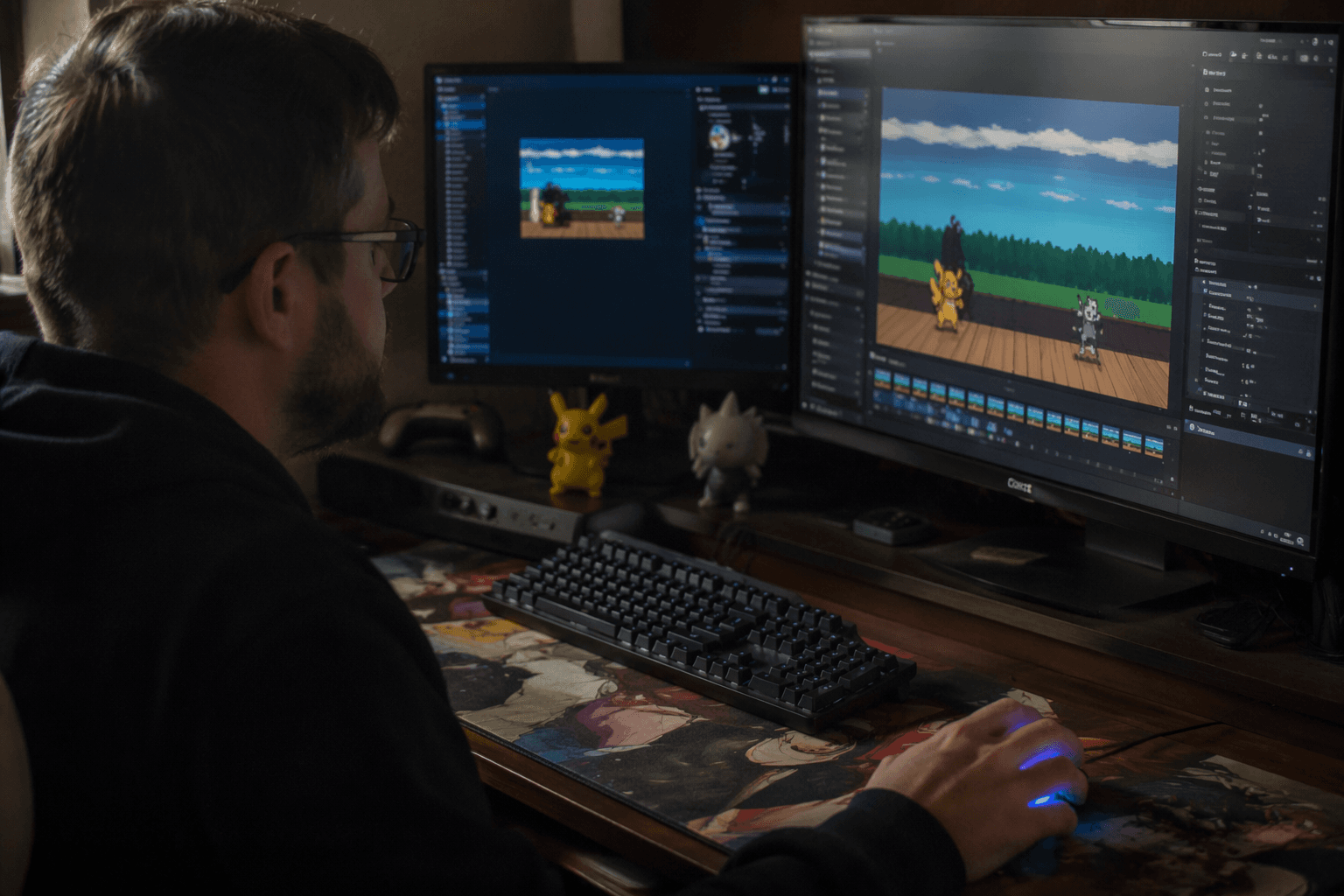
RAManimator turns emulator RAM into a live canvas for Game Boy and Game Boy Advance graphics, so sprites can be animated without touching the ROM file itself. The project ships as a set of scripts for mGBA and, in its first release, includes an Aseprite extension for building those animations into something the emulator can use at runtime.
That makes the tool especially appealing for Pokémon-era projects, where a lot of familiar artwork is static. RAManimator’s own documentation says it already covers the mainline games from generations 1, 2 and 3, with generation 2 front sprites adapted from Crystal intro loops and 32 Kanto monster back sprites animated as well. For generation 3, the project ports fifth-generation sprites where possible, and demo footage shows Ruby, Sapphire, FireRed, LeafGreen and Emerald displaying the effect with the right setup.

The workflow is direct, but it is not one-click simple. RAManimator asks for mGBA 0.10.5 or later, then has users open a game, go into Tools and Scripting, and load startup.lua from the package. New animations can be created from Aseprite or GIFs, and the docs note that background color is taken from the top-left pixel of idle.gif. There is even an automatic upscale path for 48x48 generation 2 back sprites when they are sent to generation 1.
The line between enhancement, hack and mod sits in the way RAManimator works. It is strongest at replacing static sprites already sitting on screen, and the docs warn that it has trouble with objects that are already animated. When native frames are both present in memory, twin slots can mirror a frame across multiple entries, which gives the tool enough flexibility to override a game’s built-in animation logic when needed. That is what makes RAManimator feel preservation-friendly and experimental at the same time: the ROM stays untouched, but the presentation can still be pushed well beyond stock behavior.
This article was produced by Prism’s automated news system from verified source data, official records, and press releases, then run through automated quality and moderation checks before publishing. The system is built and supervised by the people who set the standards it runs under. Read our full AI policy.
Did this article answer your question?