Rare three-screen Ridge Racer is dumped, now playable in MAME
A phantom three-screen Ridge Racer is now playable in a custom MAME build, after ROM dumping and C139 linkup work finally brought the lost cabinet back.

The rare three-monitor Ridge Racer variant has been dumped and made playable in MAME, turning a cabinet once treated as lost media into something preservationists can boot, test, and watch running again. VideoGameEsoterica showed gameplay from the build, giving the arcade scene its clearest look yet at a machine believed to be one of only a single-digit number still in existence.
The cabinet is a monster. It uses three large CRTs to create a wraparound display, and each screen is driven by its own arcade board linked with Namco C139 serial links. That meant preservation had to start with the ROMs themselves, which had not been preserved in any major archive. From there, the emulation work turned into a hardware puzzle as much as a software one, with a custom MAME build written to run three synchronized instances while adding C139 linkup code to make the boards talk to one another.
The result was described as rough and janky, but it worked. The ROM dumps were said to be with the Dumping Union and expected to be mirrored, which matters because this is the point where an obscure one-off stops being a rumor and becomes something other people can study, test, and improve. For arcade preservation, that jump from private machine to documented, emulated setup is often the difference between a curiosity and a recoverable piece of history.
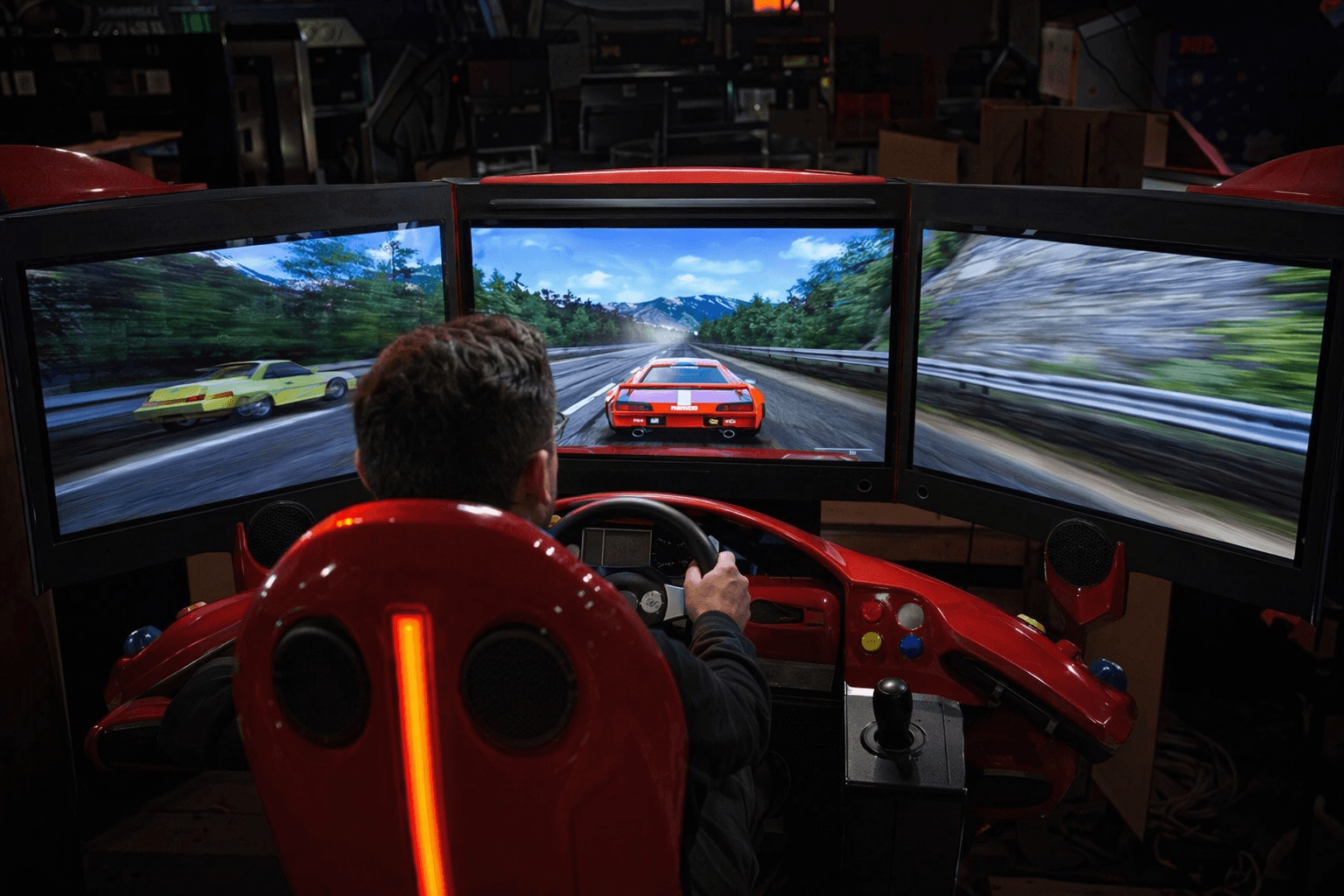
This particular cabinet also carries a neat wrinkle in Ridge Racer’s timeline. Its owner described it as the last Ridge Racer variant to arrive in arcades, landing in 1994, after the other versions in 1993. It combined the three-screen hardware of the Full Scale version with a sit-down deluxe cabinet, making it both extravagant and physically punishing, especially with those heavy monitor assemblies. A former owner said the machine was sold so John could dump it and get it running again, with plans for it to head to Insane Arcade once it works for public play.
The reaction from the preservation crowd was immediate, and not just because the machine is rare. Kenji Sasaki, who worked on Ridge Racer, recognized the three-monitor setup, underscoring how unusual it was even to people who knew the game from the inside. That recognition lands alongside Ridge Racer’s own legacy: it was the first arcade game with real-time 3D texture-mapped visuals, and its 1994 PlayStation port became one of Sony’s early killer apps. Seeing the three-screen arcade version come back through emulation feels like a clean summary of where arcade preservation is headed, from mythology to something running on a modern screen.
This article was produced by Prism’s automated news system from verified source data, official records, and press releases, then run through automated quality and moderation checks before publishing. The system is built and supervised by the people who set the standards it runs under. Read our full AI policy.
Did this article answer your question?