Sharp X68000 MiSTer FPGA Core Update Improves Accurate Japanese Computer Emulation
The Sharp X68000 MiSTer FPGA core has received a long-awaited new update, bringing improved accuracy to one of retro computing's most overlooked Japan-only platforms.
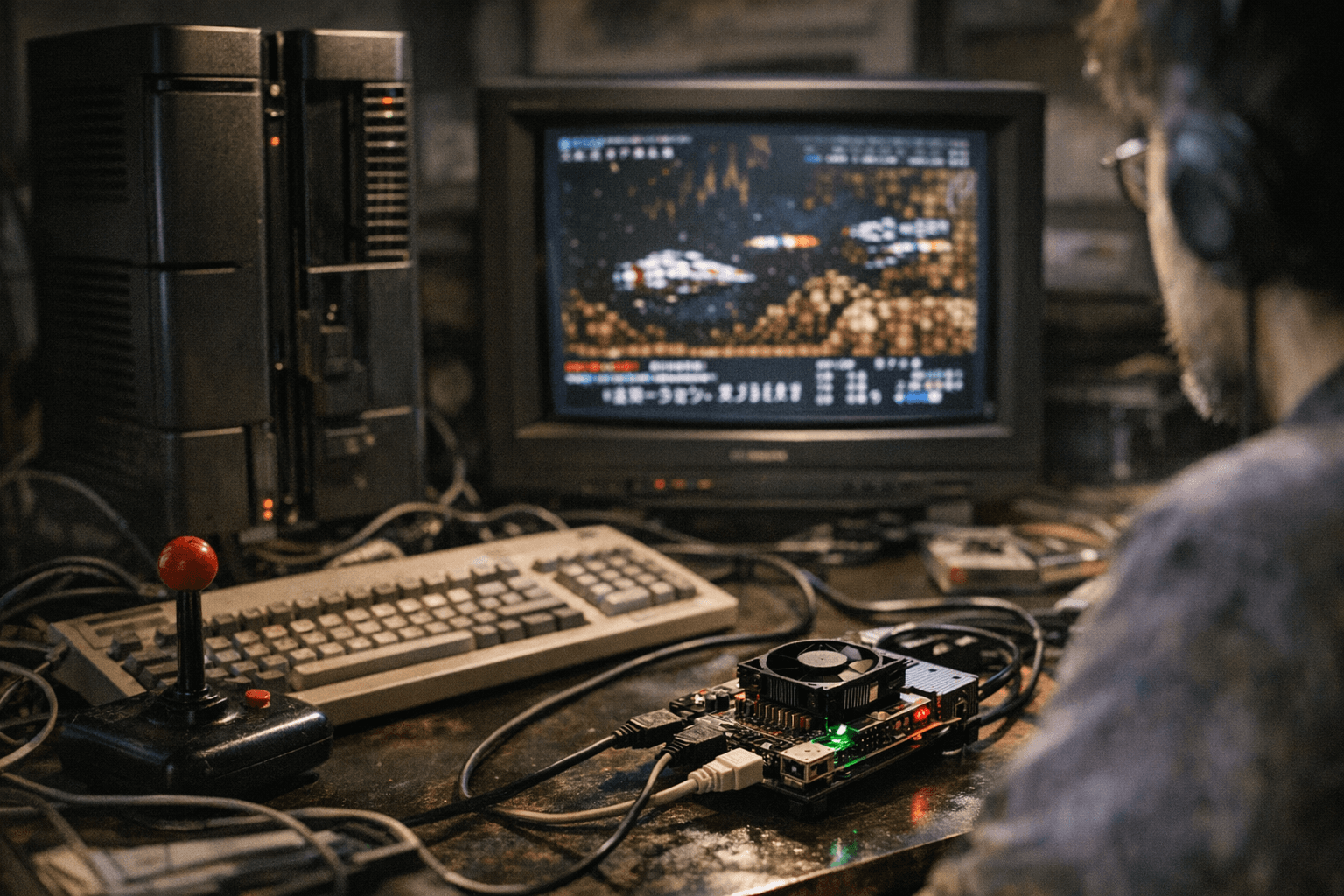
The Sharp X68000 MiSTer FPGA core received a fresh update that VideoGameEsoterica documented with the kind of "finally" energy that tells you everything about how long the community had been waiting. The X68000 MiSTer FPGA core is a port by developer Puu-san, and it represents one of the more compelling unlocks available on the platform today, covering a Japanese home computer that most Western collectors have never touched original hardware for.
The official MiSTer-devel core incorporates the FX68K cycle-accurate CPU implementation alongside Jotego's YM2151 FM sound core. That combination matters more for the X68000 than for most cores because Sharp's machine was built around precise FM audio synthesis via the YM2151 chip. Akumajo Dracula, the X68000 version of Castlevania, is widely considered the definitive home release of that game, and its soundtrack is an immediate tell for whether a core is handling the OPM audio accurately.
Cho Ren Sha 68k, the vertical shooter developed natively for the platform, runs at 55Hz rather than the standard 60Hz. The core has been noted for its handling of Cho Ren Sha 68k's proper framerate. A core that locks output to 60Hz plays the game at the wrong speed, making the bullet patterns feel off in ways that compound quickly. Final Fight has served as a long-running community benchmark for the core's ability to handle sprite-heavy action sequences, and its behavior across updates has tracked the core's overall progress well.
Getting set up is now significantly cleaner than it was in earlier revisions. Copy the .rbf to your SD card and place boot.rom and boot3.vhd into the Games/X68000 folder. The core no longer requires a secondary SD card, which removed the single biggest friction point from every older setup guide. Floppy images go in D88 format; hard disk images use HDF. If you hit a black screen at boot, confirm your BIOS files are correctly named and cap your RAM setting at 6MB in the OSD, since some titles reject anything higher.
Keyboard layout is configurable through the OSD; Puu-san provides a full keyboard layout spreadsheet and a PDF version that can be deployed directly on your MiSTer at /media/fat/docs/X68000. For MT32-pi users, the core supports the MT32-pi over the USER I/O port, bringing enhanced MIDI output to titles that took advantage of it on original hardware.
Input mapping for standard gamepad use is straightforward, but account for the X68000's original two-button layout when configuring arcade ports. Most titles map cleanly once that constraint is understood. The X68000 hard disk set on archive.org contains approximately 300 games, and with the core actively receiving attention again, working through that catalog in accurate form is now a realistic project rather than an exercise in frustration.
This article was produced by Prism’s automated news system from verified source data, official records, and press releases, then run through automated quality and moderation checks before publishing. The system is built and supervised by the people who set the standards it runs under. Read our full AI policy.
Did this article answer your question?