Windows CE boots on Nintendo 64 in wild homebrew project
Throaty Mumbo got Windows CE 2.11 to boot on a real Nintendo 64, then loaded apps from an EverDrive SD card inside the desktop.

Windows CE 2.11 is now booting on a real Nintendo 64, and the part that matters is not the novelty screenshot. Throaty Mumbo has turned the console into a working CE machine with a desktop, taskbar, file browser, window dragging, modal dialogs, controller-driven cursor input, and even third-party apps loaded straight from an EverDrive-64 X7 SD card.
That is a strange fit only until you look at the hardware. Nintendo’s own technical details put the N64’s CPU in the custom MIPS 64-bit RISC family at 93.75 MHz, which is exactly the kind of overlap that makes this stunt possible instead of pure fantasy. Throaty Mumbo’s repository says the project is stock Microsoft Windows CE 2.11 running on a real Nintendo 64, with a custom HAL dropping the unmodified kernel onto the machine’s VR4300 MIPS processor. The repo is explicit that Microsoft never shipped an official Windows CE 2.11 port for N64, which makes this a hobby reverse-engineering job, not a buried retail mode waiting to be uncovered.
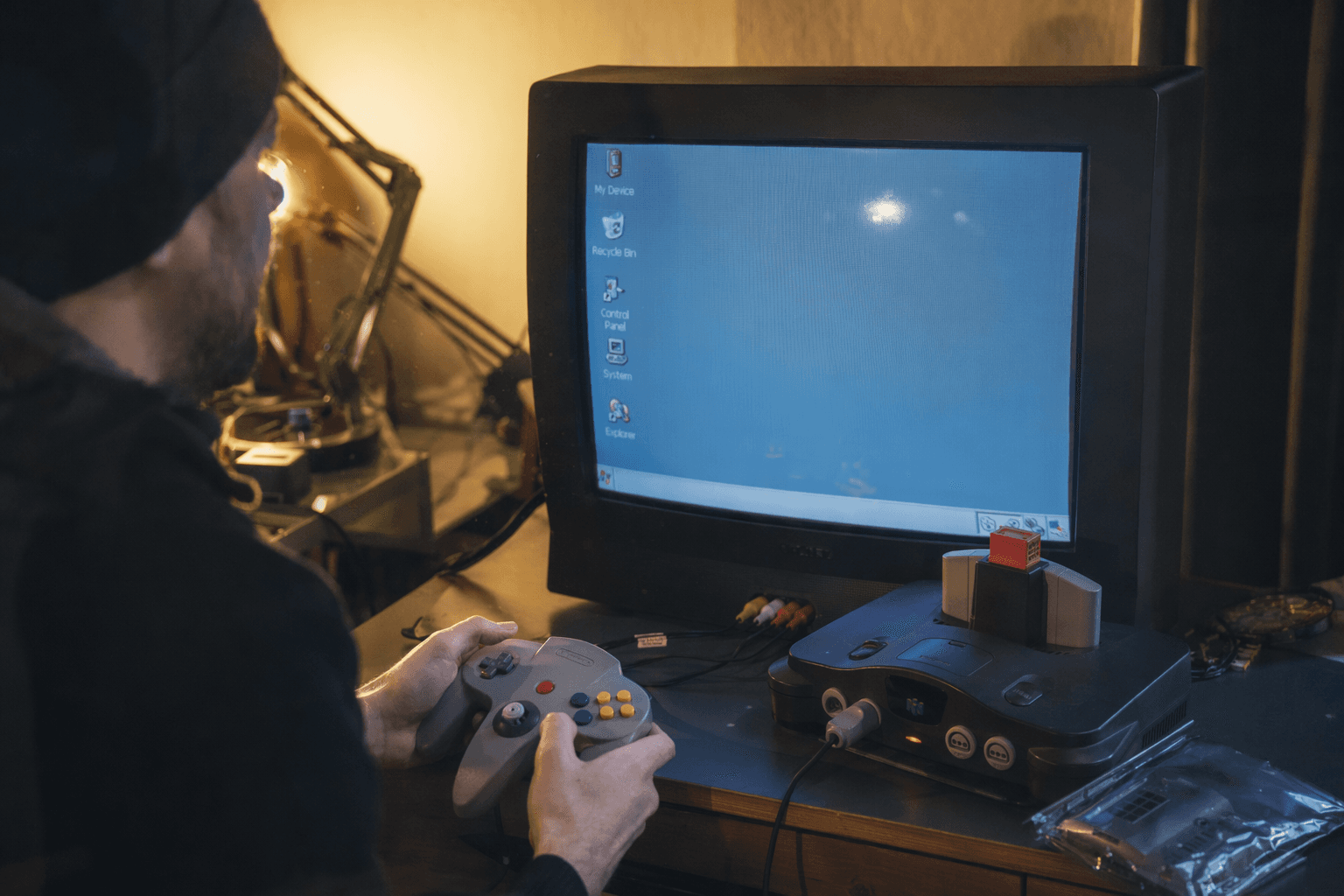
The practical tricks are what make WinCE64 feel useful to emulation tinkerers, not just funny. The SD card on the EverDrive-64 X7 mounts as \SDCard, and CE 2.11 EXEs can launch directly from it. Audio is routed through the N64’s AI hardware using the standard CE wave stack, and the project already includes an RDP-accelerated 3D demo called cube3d.exe. In other words, this is not just a boot screen. It is a working environment with enough pieces in place to show how far a late-1990s console can be pushed when homebrew, flash hardware, and low-level platform knowledge all line up.
That is what makes the project matter to the retro scene. The Nintendo 64 was built, as Nintendo UK likes to put it, as a party machine with four controller ports, and Nintendo’s technical pages still underline how capable the box was for its era, with 4 MB of main memory on the base system and support for 8 MB with the Expansion Pak. WinCE64 takes that flexible, unusual architecture and stretches it into something it was never meant to be: a tiny incompatible PC that still boots, still responds to a controller, and still runs code from removable storage. The result is less a joke than a map of the console’s hidden assumptions, drawn in the language of homebrew.
This article was produced by Prism’s automated news system from verified source data, official records, and press releases, then run through automated quality and moderation checks before publishing. The system is built and supervised by the people who set the standards it runs under. Read our full AI policy.
Did this article answer your question?