Evcode 1.0.0 brings async terminal IDE to Rust developers
Evcode 1.0.0 bet that a Rust IDE could stay under 10 MB and still edit 1M-line files without lag.
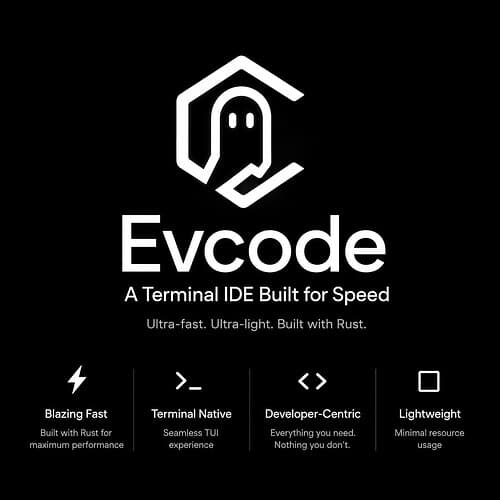
Evcode 1.0.0 landed with a blunt pitch to Rust developers: a terminal IDE that keeps the editor fast, the memory footprint tiny, and the UI out of the way. Emil Poghosyan posted the release to The Rust Programming Language Forum on May 26, 2026, framing Evcode as a lightweight Rust-built environment with rope-backed storage, async LSP support, native mouse handling, and claimed RAM use in the 7 MB to 10 MB range.
That performance story is the real point of the release. Poghosyan said Evcode used ropey for storage and could handle 1M-plus lines with zero-latency editing behavior, a claim that puts it squarely in the conversation Rust developers have been having about what terminal-first tooling can do when it is engineered for large buffers instead of polished chrome. The release also moved language-server work onto Tokio so diagnostics and other background tasks would not block the UI, a design choice aimed straight at the latency complaints that still separate terminal editors from the smoother end of modern IDEs.

The project’s GitHub README fills in the rest of the shape. Evcode is built on Ratatui and Crossterm, and it ships with Ghost Snap, which stores snapshots in RAM and duplicates them to disk under .evcode/snaps/. It also includes Ghost Mode and Diff, clipboard integration, a file tree, a terminal, and a session manager, which pushes it beyond a simple text editor and into the territory of a compact terminal development environment. The architecture is modular too, with separate editor, LSP, terminal, session, and snapshot-manager components.
The timing matters because Poghosyan had already made the same case earlier in May, saying the project was born from frustration with VS Code loading slowly over SSH. In the May 26 release note, he said version 1.0.0 replaced a standard String buffer with a rope-based engine, added viewport virtualization so only visible lines render, and kept async LSP on a Tokio worker thread communicating with the UI over mpsc channels. That is the practical tradeoff Evcode is making for Rust users choosing between Helix, Neovim, and Zed-style workflows: less desktop weight, more async responsiveness, and built-in IDE pieces that are already usable in terminal sessions.
The project still reads like a performance-first bet, but that is exactly what makes Evcode interesting. It was not trying to mimic a heavyweight GUI editor feature for feature. It was trying to prove that a terminal-native Rust IDE can feel modern when the editing core, diagnostics pipeline, and memory budget are all treated as first-class parts of the product.
This article was produced by Prism’s automated news system from verified source data, official records, and press releases, then run through automated quality and moderation checks before publishing. The system is built and supervised by the people who set the standards it runs under. Read our full AI policy.
Did this article answer your question?