hyper user survey shows Rust web stack centered on v1, Tokio, rustls
Hyper’s user survey shows a production stack that has already settled on v1, Tokio, and rustls, with 206 respondents mostly split between server and client roles.
Hyper’s first user survey cuts through the usual library lore and lands on a sharper reality: Rust web services built on hyper are already standardized around v1.x, Tokio, and rustls. Sean Monstar published the results on May 26, and the 206 unique respondents gave the maintainer team a picture of how hyper is actually assembled in production, not just how it is described in examples.
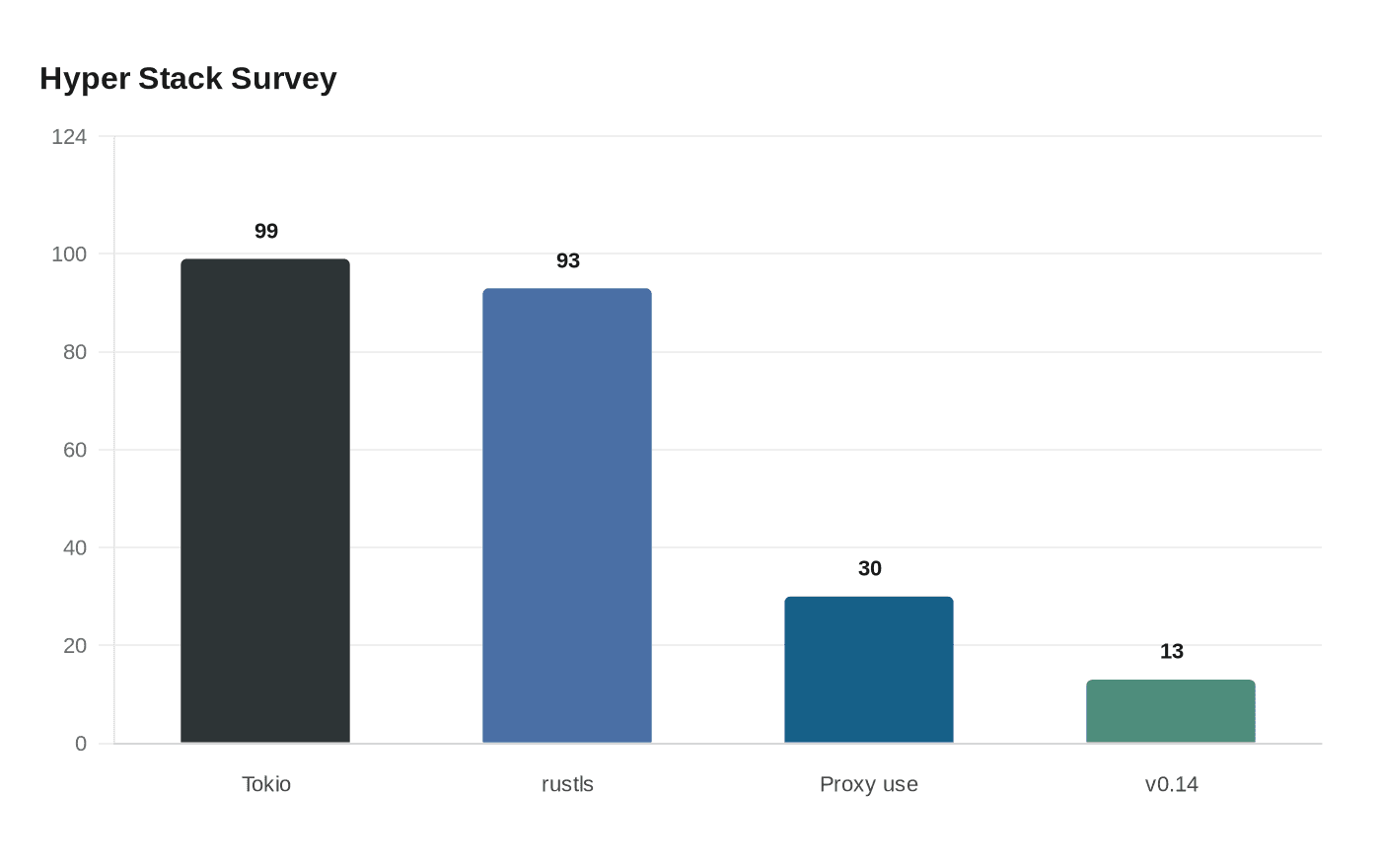
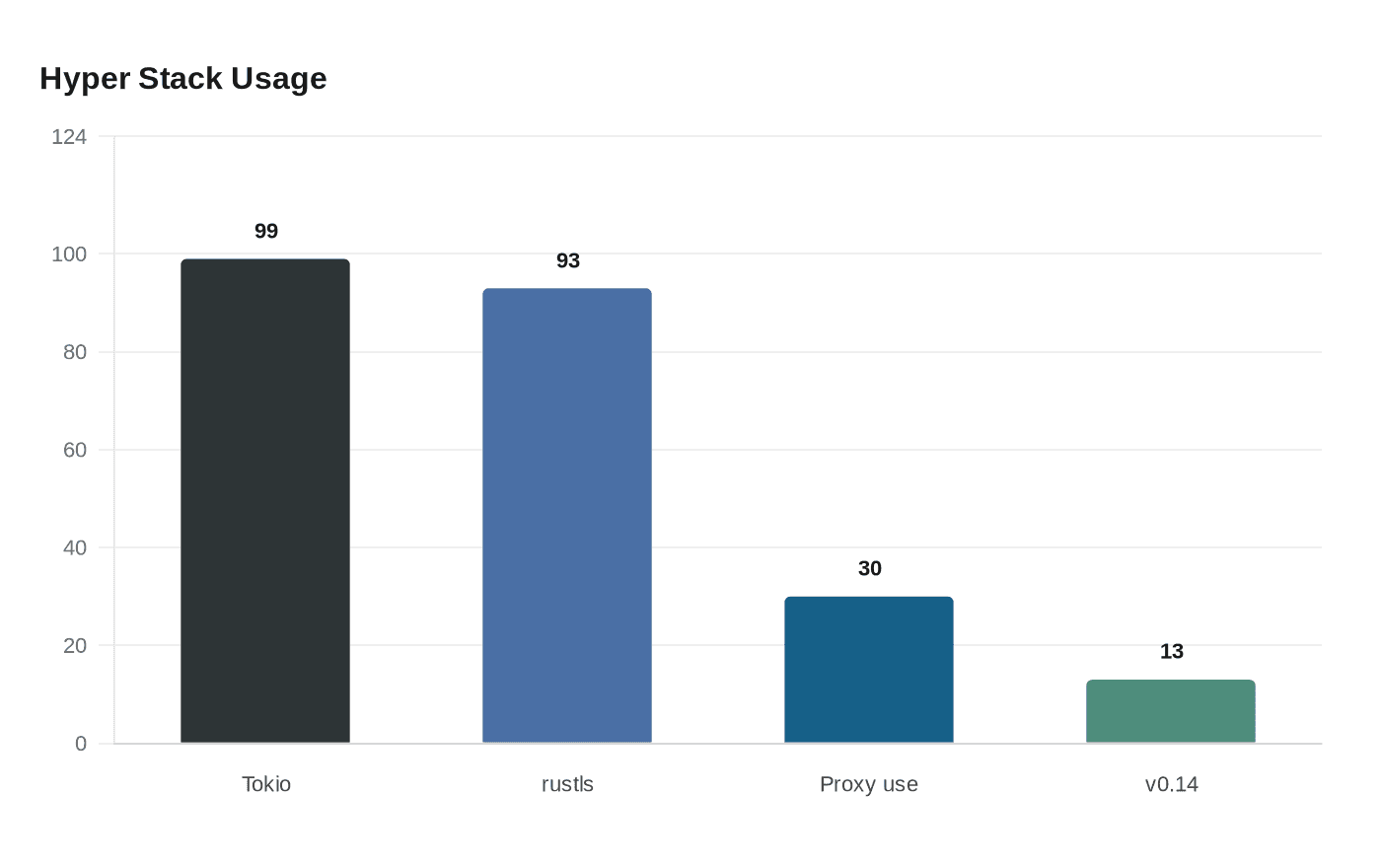
The concentration was striking. Nearly every respondent said they were on hyper v1.x, while about 13% were still carrying the end-of-life v0.14 line. More than 80% used hyper in a server role, a similar share used it on the client side, and roughly 30% used it in both modes through a proxy. In practice, that means hyper is sitting in the middle of a lot of real traffic paths, not just tucked away in a one-off HTTP client or a demo server.

The rest of the stack looked just as settled. Tokio dominated runtime use at 99%, and rustls was the TLS choice for 93% of respondents. Above hyper, users reported heavy use of reqwest and Axum, while Tower also came up often, though Monstar noted that some respondents may have picked Tower because it ships as a dependency of Axum. The picture that emerges is less of a scattered ecosystem and more of a recognizable Rust web lane: hyper at the transport layer, Tokio underneath, rustls for crypto, and framework or client tooling layered on top.
That alignment matters because hyper is not trying to be the whole web framework. Monstar has long described it as a lower-level HTTP library, a building block for libraries and applications, and v1.0 was announced on November 15, 2023 with asynchronous HTTP/1 and HTTP/2 server and client APIs that let users bring their own IO and runtime. The survey shows what happened after that release landed: most users moved to v1.x, but a meaningful tail remained on 0.14, giving maintainers a clear sign that legacy support still shapes the migration path.
The organizational side was just as revealing. Half of respondents said they and maybe one colleague were the only people at their company using hyper, but others came from teams of 4 to 10, 11 to 50, and even more than 50 engineers. Most had used hyper for one to three years, with another large block at four to six years. Monstar’s roadmap work has already leaned on user interviews, and he framed the survey as a way to focus on the right problems instead of guessing. That is the real takeaway here: hyper’s future is being shaped by a production stack that has already chosen its defaults.
This article was produced by Prism’s automated news system from verified source data, official records, and press releases, then run through automated quality and moderation checks before publishing. The system is built and supervised by the people who set the standards it runs under. Read our full AI policy.
Know something we missed? Have a correction or additional information?
Submit a Tip